Yogi Adityanath targets Congress, SP over “Jinnah” remarks at Shamli project event
Uttar Pradesh Chief Minister Yogi Adityanath used a Shamli development event to attack the Congress and Samajwadi Party, accusing “worshippers of Jinnah” of…
Mei Lin ·
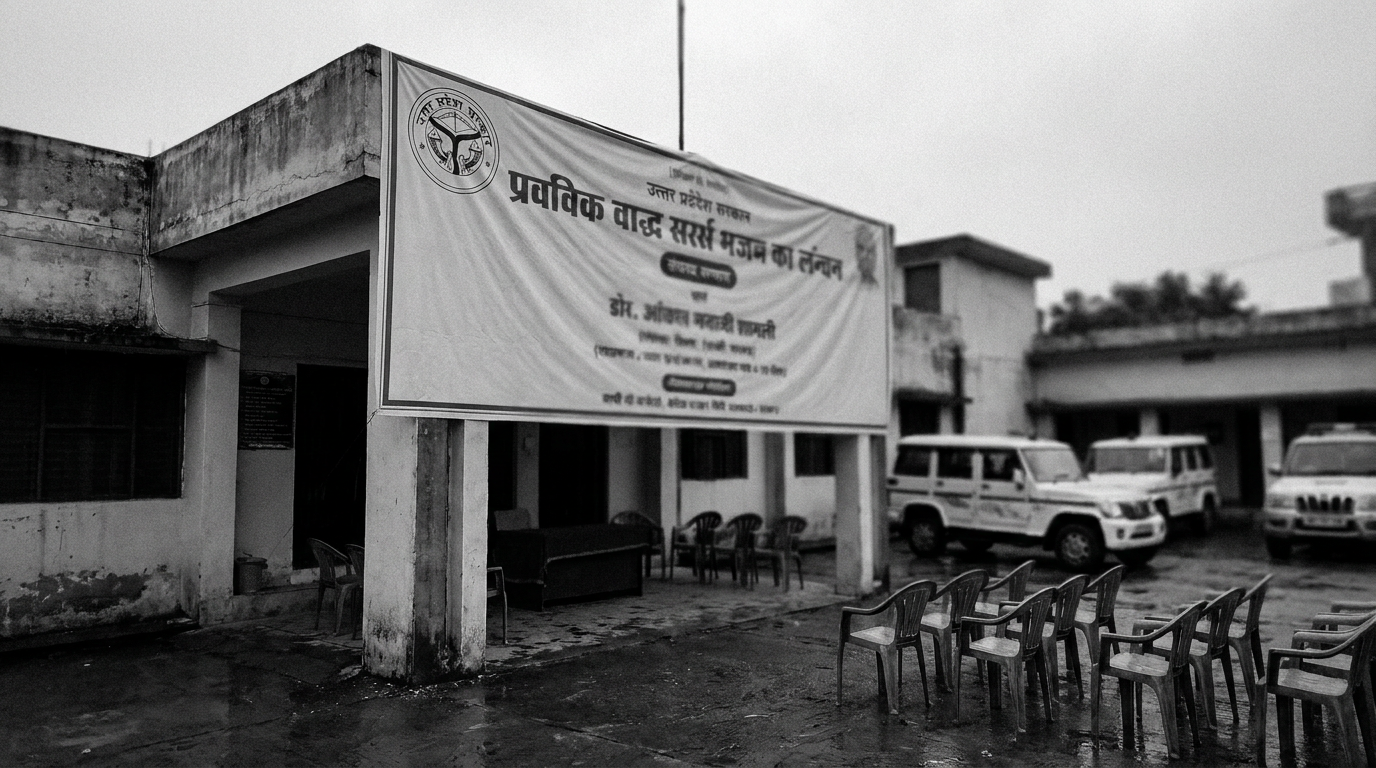
# Yogi Adityanath targets Congress, SP over “Jinnah” remarks at Shamli project event
Uttar Pradesh Chief Minister Yogi Adityanath delivered a sharp political attack on the Congress and the Samajwadi Party (SP) during a public event in Shamli, where he also inaugurated and laid foundation stones for government development works. His remarks invoked Muhammad Ali Jinnah, a historical figure tied to the 1947 Partition of British India, framing references to Jinnah as an attempt to polarize voters.
Yogi Adityanath
The comments came as the Uttar Pradesh government showcased local infrastructure spending, with Adityanath using the stage to fuse governance messaging with identity-linked political critique.
Muhammad Ali Jinnah was a central leader of the All-India Muslim League and is widely associated with the political trajectory that led to the Partition of 1947 and the creation of Pakistan. In contemporary Indian politics, Jinnah’s legacy often resurfaces less as a historical debate and more as a proxy for arguments about nationalism, minority politics, and “appeasement” narratives.
In Uttar Pradesh, India’s most populous state and a pivotal electoral battleground, speeches about national identity and historical memory routinely intersect with campaign strategy. Adityanath, a senior leader of the Bharatiya Janata Party (BJP) and the state’s chief minister, has a record of framing political contests in civilizational and cultural terms, while the Congress and SP have often been targeted as opponents on questions of secularism, minority outreach, and historical symbolism.
Adityanath’s remarks illustrate how governance events in India’s
Adityanath’s remarks illustrate how governance events in India’s states can double as campaign platforms, particularly in regions where political competition is intense and messaging discipline matters as much as budgets. Even when the stated purpose is development delivery, the rhetoric can shape local media cycles, party talking points, and the tone of inter-party competition.
There is also a broader spillover beyond state politics. When historical figures tied to Partition become central to political argument, it can influence community relations and, at times, complicate India’s external messaging in South Asia by amplifying identity-based narratives. That can indirectly feed into risk perceptions among businesses and investors watching domestic stability, social cohesion, and the temperature of electoral politics in a key market.
Track whether senior leaders from the Congress and the Samajwadi Party respond by escalating the exchange, or whether the episode stays localized to Uttar Pradesh event coverage. A clear observable signal by 2024-08-15 is whether multiple campaign speeches and party statements repeat the Jinnah-linked framing across different states and rallies, suggesting it has become a coordinated national line, rather than a one-off attack.