

Yemeni Forces Withdraw from Strategic Bab Al Mandeb Strait Positions
The withdrawal of government-aligned forces from the Bab Al Mandeb strait increases Houthi leverage over a vital maritime chokepoint, raising risks for…
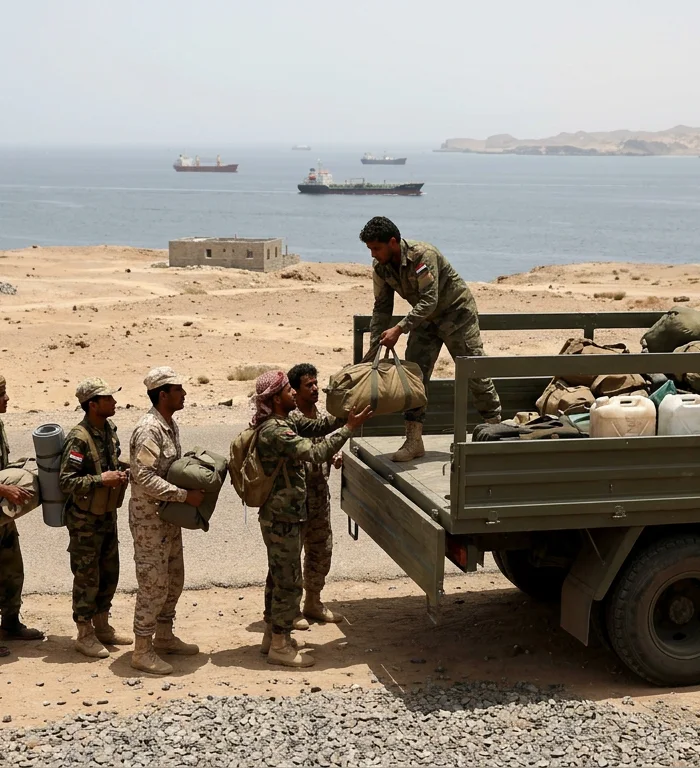
Forces aligned with the internationally recognized Yemeni government have initiated a withdrawal from positions overlooking the Bab Al Mandeb strait, including the Dhubab airport area. This redeployment shifts control of territory adjacent to a critical maritime chokepoint, potentially increasing Houthi influence over international shipping lanes. The Bab Al Mandeb strait serves as a vital conduit for global trade, and any disruption in this sector poses significant security risks to maritime logistics and regional energy transit.
Official statements indicate the withdrawal is intended to consolidate defensive positions around Aden and neighboring governorates. Military leadership claims the redeployment aims to prioritize the breaking of the Houthi-imposed siege on Taiz city, where humanitarian conditions remain critical. The operation is reportedly coordinated with the Saudi-led coalition, suggesting a strategic pivot rather than a total abandonment of the western front.
Bab Al Mandeb
This movement follows a period of heightened volatility in the region, characterized by the collapse of previous truce agreements and an intensification of the broader conflict involving Iran-backed factions. The Houthis have demonstrated an increased capacity to target critical infrastructure, including Saudi oil facilities and export hubs. The shift in territorial control near the strait complicates the security environment for global crude exporters and commercial shipping interests.
Analysts should monitor the impact of this redeployment on the stability of the Red Sea coastline. The potential for increased Houthi leverage in the area may necessitate adjustments to maritime security protocols and risk assessments for vessels transiting the strait. Continued instability in Taiz and the surrounding western governorates remains a primary driver of regional insecurity and humanitarian strain.
More stories
- Germans oppose Ukraine aid as poll shows support slipping
- Kim Jong-un receives 10 envoys after constitutional shift
- Ukraine claims Libya strike sinks Russian naval corvette
- COP31 climate talks collapse over fossil fuels and funds
- Russian military faces 1,087 recorded suicides in Ukraine war
- US faces China, Russia in Africa minerals contest
- Trump, Putin and Xi to hold historic trilateral in Shenzhen
- UK and EU seek 3 deals in Burnham reset
- Canada seeks EU carbon-tax relief as energy ties deepen
- Johor-Singapore SEZ draws projects tied to 28,755 jobs
Latest news
- Trump prepares tariffs on China and other major exporters
- New-car buyers pay record average $50,087 in October
- Banks face ECB reserve debate over liquidity and profits
- Investors see Anthropic debut gains fade below $83 a share
- Iraq orders federal control over Kurdish-area oilfields
- Nvidia shares retreat as AI rally cools before PCE data
- Macy’s parade faces balloon limits as storm winds approach