

China Declares Full Normalization of Diplomatic and Trade Relations With Australia
China and Australia have declared a full restoration of bilateral ties, though outstanding trade barriers and strategic security disagreements regarding…
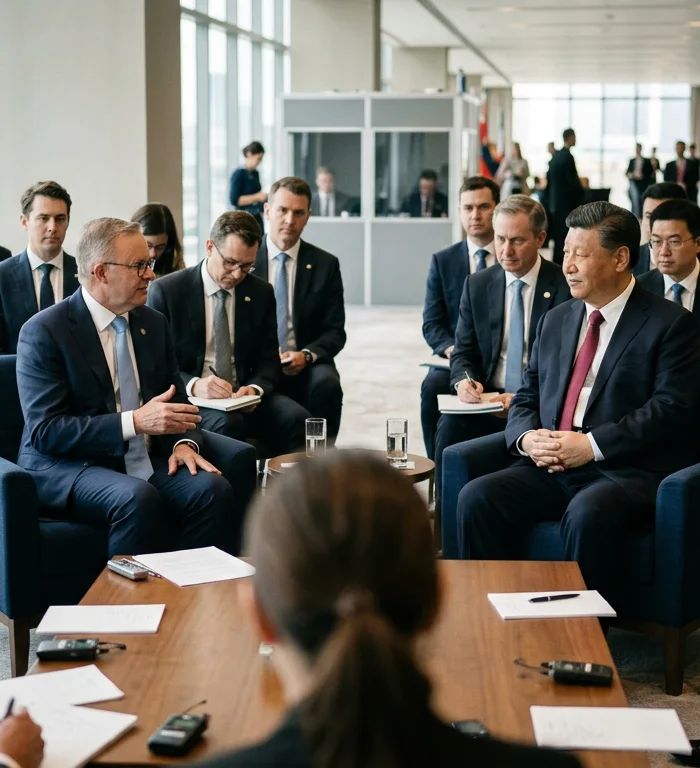
China and Australia have formally declared a "full turnaround" in bilateral relations following a high-level meeting between President Xi Jinping and Prime Minister Anthony Albanese on the sidelines of the APEC summit. This development marks the conclusion of a multi-year period of diplomatic friction and trade instability that previously saw approximately $20 billion in punitive tariffs imposed on Australian exports, including barley, wine, beef, and coal.
While the majority of these trade barriers have been removed, the Australian government continues to pursue the resolution of remaining market access issues, specifically targeting current quota-based tariffs affecting the beef industry. The stabilization of the relationship is intended to facilitate a "Comprehensive Strategic Partnership," though both nations acknowledge that underlying differences in security and geopolitical alignment remain.
President Xi Jinping
Despite the improved diplomatic tone, several points of friction persist that could impact future bilateral stability. The Australian government maintains its commitment to terminating the 99-year lease held by a Chinese firm at the Port of Darwin, a process currently stalled by international legal proceedings. Furthermore, Canberra is navigating the complexities of its security architecture, including planned joint military exercises with the United States, Japan, and India, as well as a recent critical minerals agreement with the U.S. administration.
Beijing has signaled intent to monitor Australia’s deepening cooperation with Washington regarding artificial intelligence and defense technology. Prime Minister Albanese is scheduled to conduct further formal discussions in Beijing, focusing on business cooperation and the management of these outstanding strategic concerns. The trajectory of the relationship will depend on the ability of both administrations to balance economic integration with their respective national security mandates.
More stories
- Germans oppose Ukraine aid as poll shows support slipping
- Kim Jong-un receives 10 envoys after constitutional shift
- Ukraine claims Libya strike sinks Russian naval corvette
- COP31 climate talks collapse over fossil fuels and funds
- Russian military faces 1,087 recorded suicides in Ukraine war
- US faces China, Russia in Africa minerals contest
- Indonesia seeks Google explanation for 19,372 YouTube removals
- San Antonio faces scrutiny over 50,000-hog farm approvals
- French police officers face up to 15 years over 2020 beating
- Saudi officials report Aramco tower damage after attack
Latest news
- Trump prepares tariffs on China and other major exporters
- New-car buyers pay record average $50,087 in October
- Banks face ECB reserve debate over liquidity and profits
- Investors see Anthropic debut gains fade below $83 a share
- Iraq orders federal control over Kurdish-area oilfields
- Nvidia shares retreat as AI rally cools before PCE data
- Macy’s parade faces balloon limits as storm winds approach