Xi Jinping Egypt visit puts AI ties under new US scrutiny
Xi Jinping's Egypt visit highlights Cairo's balancing act as Huawei's planned AI data-center bid draws US concern over Chinese technology infrastructure.
Mei Lin ·
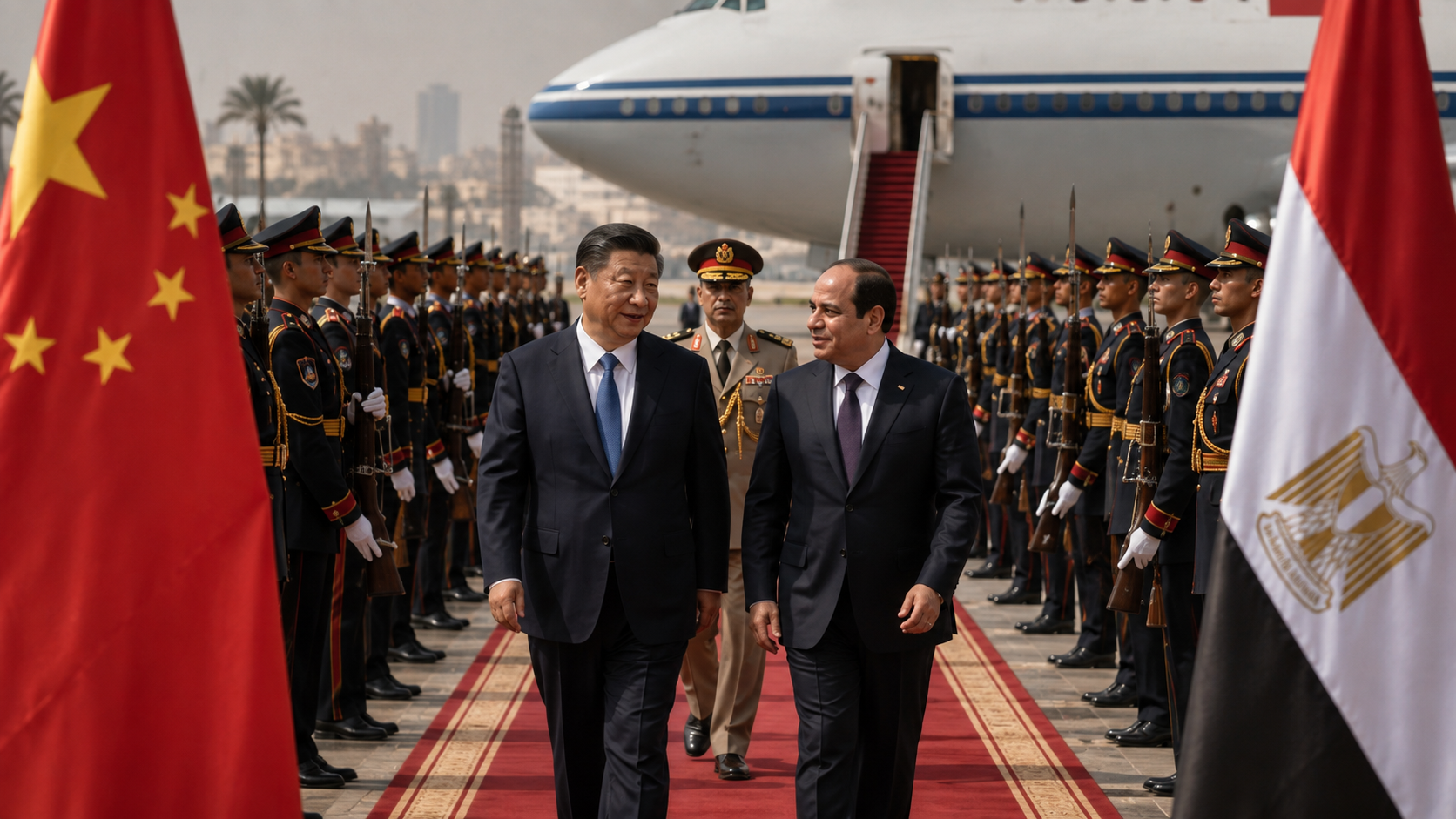
Xi Jinping Egypt visit brings Cairo’s China ties into focus as Huawei’s AI data-center plan draws concern from Washington.
Huawei bid tests Cairo
Xi is due to arrive in Cairo on Wednesday at the invitation of Egyptian President Abdel-Fattah El-Sisi, returning to the country about a decade after his last regional tour. The trip comes as Egypt has expanded its infrastructure links with China while trying to keep close working relations with the US and other powers.
The sharper issue around this visit is technology. Huawei Technologies Co. is planning to bid to build artificial intelligence data centers for Egypt’s government, a proposal that has drawn alarm in Washington, according to the source material.
“China sees Egypt as a very important connector of supply chains when it comes to the future industries,” said Ahmed Aboudouh, an associate fellow at Chatham House who also heads China research at the Emirates Policy Center. He said Egypt may prefer less advanced technology if it comes with financing support.
Sisi’s capital projects expand
Egypt looks different from the country Xi visited in 2016. A new administrative capital has taken shape east of Cairo, while highways, rail links and monorails now connect more of the capital region.
China has been involved in some of those projects, though Egypt has avoided relying on a single foreign partner. El-Sisi’s government has also pushed resort development on the Mediterranean and Red Sea coasts and expanded the Suez Canal investment zone as a trade and industrial platform.
The 2016 trip placed Xi in Riyadh, Cairo and Tehran shortly after sanctions on Iran had been lifted by the US and European Union. This week’s visit takes place in a region disrupted by war and with US sanctions again weighing on Tehran.
Egypt balances rival capitals
Cairo’s diplomatic model is to keep multiple doors open. Egypt has maintained security and economic ties with Washington while deepening commercial relationships with Beijing, a posture that gives it more financing options but exposes it to pressure from both sides.
For China, Egypt offers geography as much as market size. The country sits at the junction of Africa, the Middle East and Mediterranean trade routes, and the Suez Canal remains one of the world’s most visible shipping corridors.
For the US, Huawei’s potential role in Egyptian government AI infrastructure turns a long-running telecom dispute into a broader data and security issue. Washington has previously pressed allies and partners to limit Chinese participation in sensitive networks, and AI data centers would add computing capacity to that debate.
Three paths from Cairo
If Egypt proceeds with Huawei-backed AI infrastructure, Beijing would gain a stronger corporate foothold in a country that connects regional logistics, energy routes and government procurement. That path could support Chinese technology suppliers, give Huawei a larger public-sector reference project and push rival vendors to compete more directly on financing terms.
If Cairo slows or narrows the Huawei plan after US objections, the macro effect would be less about one contract and more about the cost of alignment. Huawei would face a smaller opening in Egypt, while the wider tech sector would read the decision as a signal that AI infrastructure is moving closer to national-security policy.
If Egypt splits contracts among Chinese, US, Gulf and other partners, it would preserve its multi-alignment strategy while making project execution more complex. The main open question is whether financing, security approvals and technical standards can be balanced without delaying Egypt’s broader digital infrastructure plans.