Brazil AI election rules target deepfakes before first vote
Brazil's AI election rules face a court test as the TSE weighs deepfake limits before the October 4 first-round vote.
Lauren Collins ·
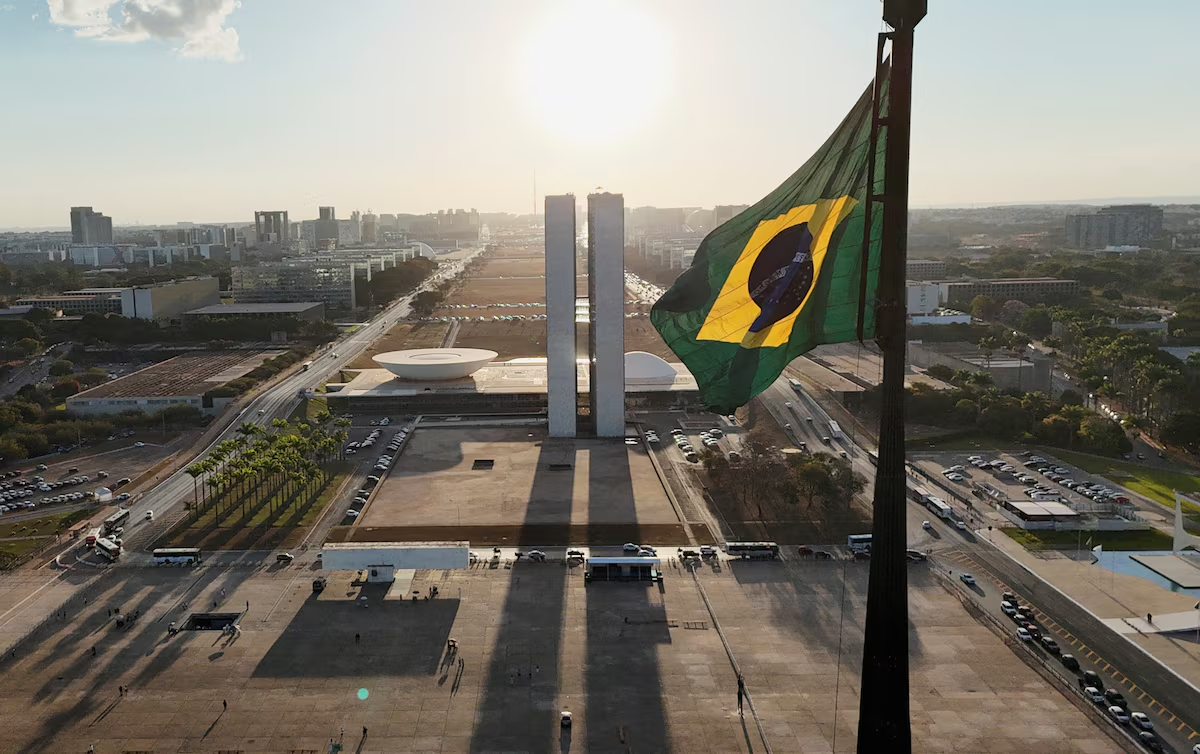
Brazil's top election court is weighing AI election limits before the October 4 vote, a test of how campaigns can use synthetic media.
October 4 vote tightens timetable
The Superior Electoral Court, known as the TSE, is expected Tuesday to draw firmer boundaries around AI-made or altered campaign material. The ruling is set against a first-round presidential vote scheduled for October 4, leaving regulators little time to refine rules already in force.
The immediate dispute centers on Senator Flávio Bolsonaro, a leading right-wing presidential candidate. His July party convention featured an AI avatar of his father, Jair Bolsonaro, who was under house arrest and barred from addressing the public, according to the legal challenges brought after the event.
The case has made a technical question into an electoral one: when does synthetic campaign content become a prohibited deepfake? The TSE has already banned deepfakes, required labels on AI-generated campaign material and barred systems that recommend or rank candidates.
Hundreds of labeled AI posts
AI has become a visible part of the campaign before the court has settled the line between permissible promotion and manipulation. Politicians aligned with Bolsonaro and President Luiz Inácio Lula da Silva shared hundreds of labeled AI posts over a 15-day stretch, according to Instituto Democracia em Xeque.
Much of the material described by campaign monitors was low-risk political theater. Examples included a gubernatorial candidate using AI to place a ballot number across Amazonas landscapes and a Lula ally appearing in a synthetic dance clip with the president.
The Bolsonaro camp has used the format more openly than Lula's campaign, according to the campaign activity described by monitors. Its AI material has included a campaign song, a video showing Bolsonaro and his running mate as dancing dolls, and an animation portraying Bolsonaro as a muscular figure in swimwear that generated follow-on memes.
Nineteen cases reach court
The court's harder problem is content that makes voters believe a false event occurred. João Victor Archegas, legal coordinator at the Institute of Technology and Society of Rio de Janeiro, said the risk lies in the setting and purpose of the material rather than in the software alone. "It is not the tool itself that is the problem. It is its potential use in certain contexts that may lead to dangerous outcomes for our democracy," he said.
The TSE received 19 AI-related cases in the first 11 days of this year's campaign, according to court data. In early August, TSE Justice André Mendonça ordered the removal of a video that depicted Bolsonaro with Daniel Vorcaro, the former banker tied to a fraud scandal, in situations the court found had not occurred.
The scale of AI use gives those disputes wider reach. AI is already part of daily life for yüzde 75 of Brazilians, according to a Fundação Itaú Observatory survey, while a May survey by Projeto Brief found nearly yüzde 63 of voters were willing to consult AI tools about candidates.
Chatbots strain 2026 rules
The TSE's 2026 rules prohibit generative AI systems, including ChatGPT, from recommending or ranking candidates, even when users ask for that guidance. An ITS Rio study found that seven of the most widely used chatbots in Brazil ranked or ordered candidates in yüzde doksan of their responses, a rate that points to enforcement problems beyond campaign accounts.
If the court adopts a broad definition of deepfakes, campaigns would face tighter limits on satire, avatars and synthetic endorsements. That path would likely shift compliance costs toward parties, creators and platform moderation teams while reducing one source of election-related political risk watched by investors.
If the court instead draws a narrower line around realistic fabrications of events, campaigns could keep using labeled AI for humor and mobilization while regulators focus on deceptive depictions. The open question is whether chatbot providers, campaigns and social platforms can apply the same boundary fast enough before the October 4 vote.