

SpaceX Starship Recovery Milestone Advances Lunar Program Logistics
SpaceX’s successful recovery of the Starship upper stage advances its reusability goals, though orbital refueling and booster reliability remain critical…
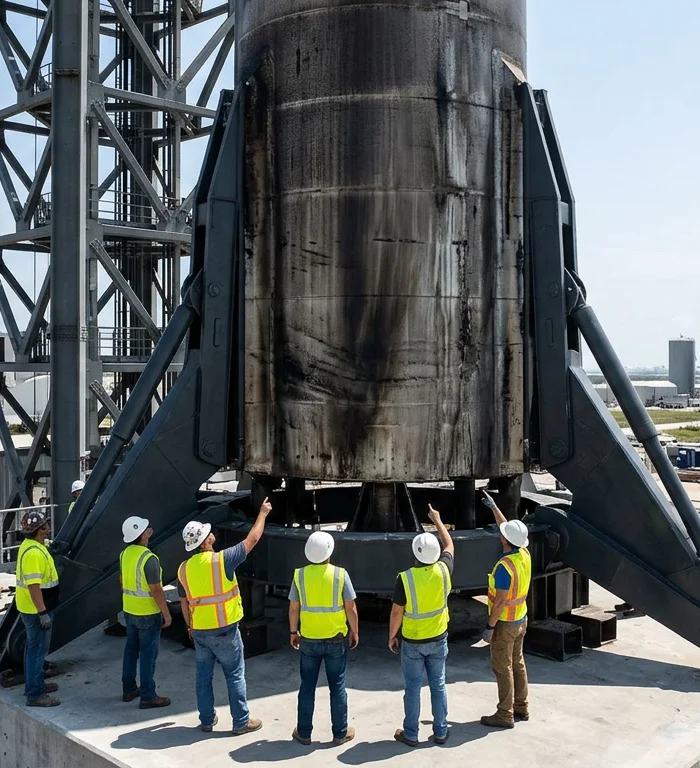
SpaceX successfully executed a mid-air recovery of the Starship upper stage at its South Texas facility following an orbital flight. This maneuver, which involved mechanical arms securing the descending spacecraft, validates the technical feasibility of rapid hardware recovery. While the company failed to recover the Super Heavy booster during the same mission due to a guidance anomaly, the successful retrieval of the upper stage marks a critical step toward achieving full, rapid reusability.
Rapid reusability is essential for the economic viability of the Artemis lunar program, which relies on the Starship Human Landing System (HLS). NASA has committed approximately $7 billion to the HLS program to date, with total projected expenditures exceeding $18 billion by 2030. The ability to recover and relaunch vehicles without extensive refurbishment is intended to reduce the cost and logistical complexity of the multiple launches required for lunar missions.
Despite this progress, significant technical hurdles remain before the system can support crewed lunar landings. The current architecture requires orbital refueling, a process that has not yet been demonstrated at the scale necessary for deep-space transit. Estimates regarding the number of tanker launches required for a single lunar mission vary significantly, ranging from six to over 20, creating uncertainty regarding the operational timeline and mission reliability.
SpaceX must now demonstrate the ability to perform large-scale propellant transfers and maintain cryogenic fuel temperatures in orbit. Furthermore, the company must address the reliability of the Super Heavy booster recovery process to ensure consistent launch cadence. While NASA maintains a target of 2028 for a crewed lunar return, internal oversight bodies continue to flag technical challenges and schedule risks associated with the HLS development. Future testing will focus on refining the recovery process, verifying heat shield integrity, and executing uncrewed lunar demonstration flights.
More stories
- Europe faces attribution gap after 16 cyber, physical incidents
- PIF backs Grand Theft Auto as Saudi players embrace game
- Signal limits screenshots to curb AI access to messages
- Cognition runs Devin Mac workspaces on EC2 in 6 AWS regions
- Salesforce engineers cut 600-failure triage to 90 minutes
- Türkiye Desk: GTA 6 puts console access and network demand in focus
- FURSOY posts 500 MHz Linux-capable RISC-V core
- SpaceX catches Starship upper stage but loses its booster
- AI devices face privacy test as smart glasses gain users
- Beijing slows robot IPOs as valuations face closer tests
Latest news
- Trump prepares tariffs on China and other major exporters
- New-car buyers pay record average $50,087 in October
- Banks face ECB reserve debate over liquidity and profits
- Investors see Anthropic debut gains fade below $83 a share
- Iraq orders federal control over Kurdish-area oilfields
- Germans oppose Ukraine aid as poll shows support slipping
- Kim Jong-un receives 10 envoys after constitutional shift
- Ukraine claims Libya strike sinks Russian naval corvette