AI devices face privacy test as smart glasses gain users
AI devices are colliding with privacy objections as Meta, Samsung and startups test whether wearables can move beyond phones without losing public trust.
Jason Kwon ·
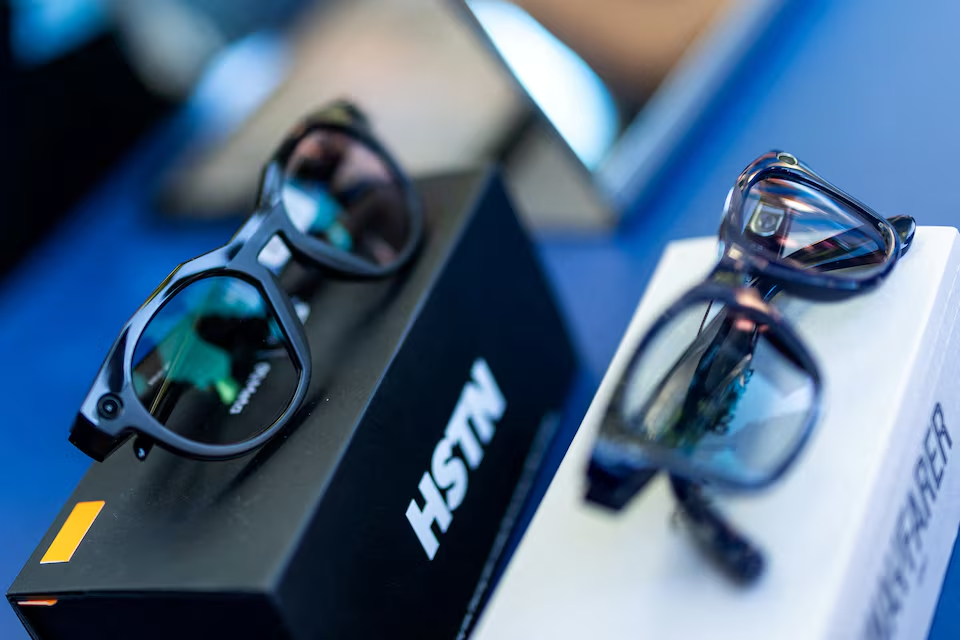
AI devices are meeting a privacy test as smart glasses, recorders and pendants seek a foothold beyond the $600 billion smartphone market. The tension is clearest around Meta’s Ray-Ban glasses, which pair EssilorLuxottica frames with AI features from the social media company.
The products can see, hear and respond to their surroundings, which is also the source of public resistance. Courts are weighing privacy claims, some users fear covert recording, and several UK venues, including Wetherspoon pubs, have limited use of the frames.
Meta glasses draw legal scrutiny
Meta is expected, according to media reports, to show camera-free smart glasses as early as Wednesday at its Connect conference. The move would place the company more directly in a design debate that could determine how far AI wearables travel beyond early adopters.
A lawsuit against Meta and Luxottica of America alleges that recordings captured by smart glasses were uploaded to Meta servers and viewed by human annotators for AI training. The complaint says some material showed people changing clothes, using bathrooms and handling financial information.
Meta has disputed the allegations and said it will contest them. The company said a filming light that cannot be disabled alerts bystanders, that the camera stops working if the light is covered or altered, and that it removes identifying information when reviewing user data to improve products.
Samsung chooses partners over replacement
Samsung plans to enter smart glasses later this year through partnerships with Gentle Monster and Warby Parker. Jay Kim, executive vice president in Samsung’s mobile division, said in a July interview that the company does not view the devices as substitutes for smartphones.
The South Korean group is positioning the category as an extension of mobile computing, not a replacement cycle. Kim said users will want AI systems that remain secure and under their control as software takes on more tasks.
OpenAI CEO Sam Altman has described a different destination: an always-on device that understands a user’s surroundings and knows when to intervene. In December, he said such products would likely need more local data processing, rather than continuously sending information to cloud servers, and that scaling processors could take a couple of years longer.
Camera-free designs gain ground
Some startups are trying to make restraint the selling point. Even Realities, founded in Shenzhen by former Apple engineer Will Wang, introduced camera-free G1 glasses in 2024 and launched its G2 model in November 2025.
Wang said in July that consumers increasingly link smart glasses with hidden recording and that cameras should wait for stronger safeguards. Even Realities reached a $1 billion valuation in July, expects to end the year with a few hundred thousand users, and says consumers generate about 90% of sales.
Other companies are narrowing the recording function rather than removing it. San Francisco-based Pocket says about 170,000 of its phone-mounted recorders were in use eight months after launch, including among workers at DoorDash, Michelin and Santander; users must press a button before capturing conversations.
Plaud, which sells card-shaped and wearable AI recorders, has put similar emphasis on visible activation. Its $249.99 Plaud One Explorer Edition earbud-and-case system records only after activation and can alert bystanders with lights or an audio announcement; the company says it has 2.5 million users and more than $100 million in annual recurring revenue.
Consent becomes the adoption test
Jitesh Ubrani, a director at research firm IDC, said smartphones faced similar unease as cameras and microphones became ordinary features. “As a society, we want to make sure there’s consent and awareness when people are being recorded,” he said.
If camera-free models gain traction, the global effect would be a slower shift from phones toward ambient computing, while Meta would face pressure to adjust hardware choices and rivals would compete on restraint. If courts, venues or regulators push harder against recording devices, Meta’s glasses could face narrower use cases and the wider wearable sector would have to build clearer consent signals into design.
If local AI processing improves enough to reduce cloud uploads, companies could argue that privacy risks are more contained. That path would support higher-end devices, give OpenAI and chip partners a clearer hardware rationale, and make processing power a more important competitive line across the AI wearables industry.