SpaceX AI satellite deal brings Nvidia platforms to orbit
SpaceX AI satellite plans advanced with Nvidia, pointing to orbital data centers as grid pressure clouds Earth-based AI expansion.
Jason Kwon ·
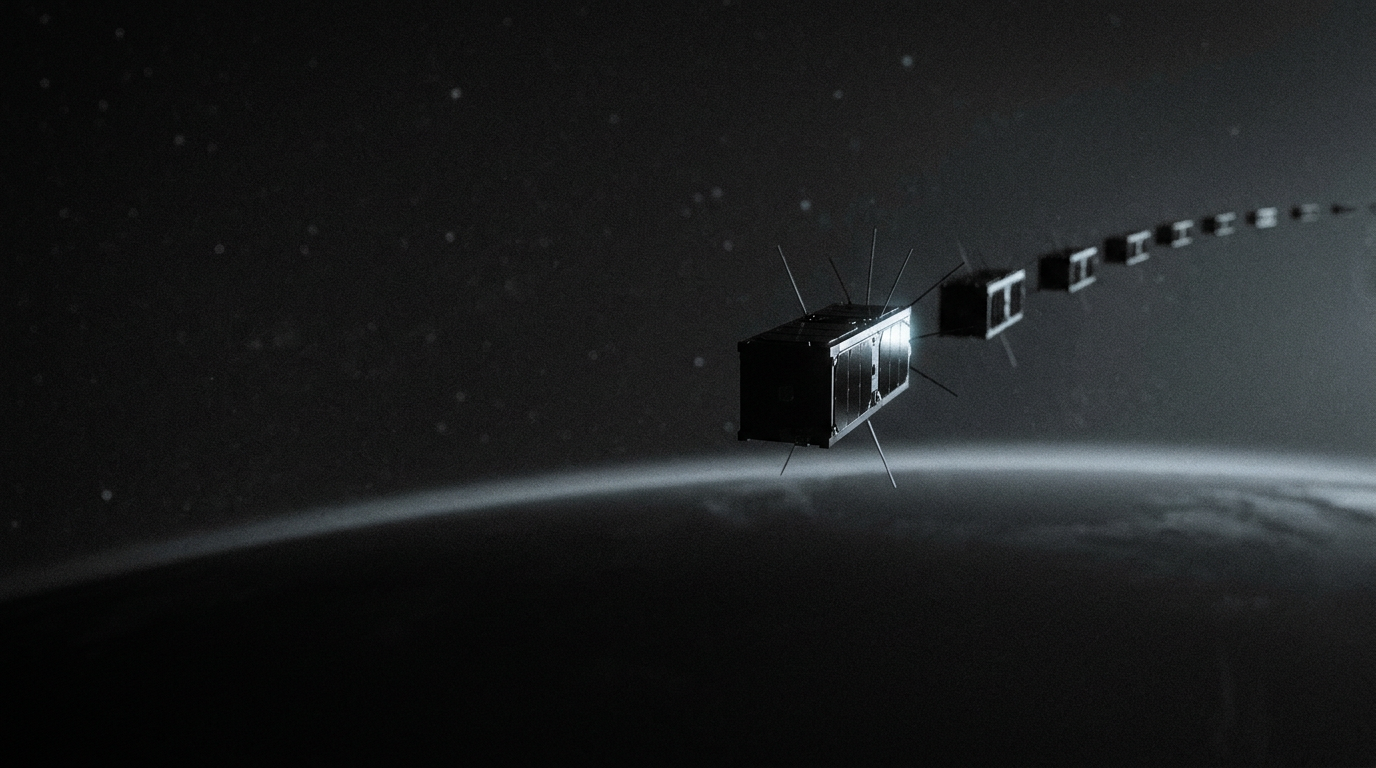
SpaceX AI satellite plans moved forward with Nvidia as the companies announced a venture to build an orbital platform for artificial intelligence.
The project is the clearest step yet in Elon Musk’s effort to move some computing capacity off the ground and into orbit. It also arrives as AI data centers face tighter scrutiny on Earth, including a Texas pause on new data approvals as electricity demand strains the grid.
Nvidia joins the orbit push
SpaceX is still pressing ahead with orbital data centers, according to the supplied material, despite doubts over whether the model can work at commercial scale. The new venture with Nvidia would focus on an AI satellite, placing one of the world’s central AI chip companies inside a space-computing strategy rather than only supplying terrestrial facilities.
Nvidia had already signaled interest in orbital computing platforms in March. The SpaceX tie-up gives that idea a more concrete operating partner, combining launch capability with computing hardware ambitions.
Musk has framed the market in unusually large terms. In February, he said that by 2031 the amount of compute launched into space each year would exceed all computing capacity currently on Earth.
Earth’s grid becomes a constraint
The timing reflects pressure building around ground-based AI infrastructure. AI data centers need large and steady electricity supplies, and their rapid expansion has pushed power availability from a local permitting issue into a central business constraint.
Texas is an important signal because it has been associated with relatively permissive approvals. Its moratorium on new data approvals, as described in the supplied material, shows that even business-friendly power markets can reach political and physical limits when demand rises quickly.
For SpaceX, that friction strengthens the pitch for orbital computing: put hardware where land, cooling and grid interconnection are less binding. The harder question is whether launch costs, satellite durability, communications latency and maintenance limits can offset the advantages of operating beyond terrestrial power bottlenecks.
Economics decide the satellite model
The central uncertainty is not whether AI demand exists. It is whether a satellite-based system can deliver useful compute at a price customers will pay after accounting for launch, orbital operations, hardware replacement and data transfer.
If SpaceX and Nvidia can prove that specialized AI workloads can run efficiently in orbit, the project could open a new infrastructure category. SpaceX would gain another reason to sell launch capacity and satellite services, Nvidia would extend its computing platforms into a new environment, and data-center developers would face a fresh competitor for workloads that do not require low-latency proximity to users.
If the economics fail, orbital AI may remain a narrow demonstration rather than a mainstream alternative. In that case, the pressure would return to terrestrial solutions: more power generation, faster grid connections, new cooling systems and stricter permitting fights around data-center clusters.
A middle path is also plausible. Space-based compute could begin with high-value or specialized tasks, while most AI training and inference remain on Earth because existing networks, technicians and power contracts are easier to scale.
The macro effect depends on which path holds. If orbital capacity becomes viable, it could shift part of AI infrastructure spending from land and utilities toward launch services, satellite manufacturing and space operations; if it does not, grid investment and electricity policy will stay at the center of the AI buildout.
For Nvidia, the venture tests whether its platforms can move beyond conventional data centers without losing the performance advantages that made them central to AI growth. For SpaceX, it is a test of whether launch economics can support not just communications and transport, but computing itself.
The next markers are concrete: technical details for the AI satellite, any launch timetable, disclosed financing, early customers and proof that orbital compute can handle real workloads. Until those emerge, the venture is best understood as a serious bet on a bottleneck, not proof that data centers are ready to leave Earth.