

Vance opens backchannel to Iran as Trump demands Gulf readiness
Vice President Vance is leading a delegation to engage Iranian security chief Mohsen Rezaei, signaling a potential shift in U.S. regional strategy.
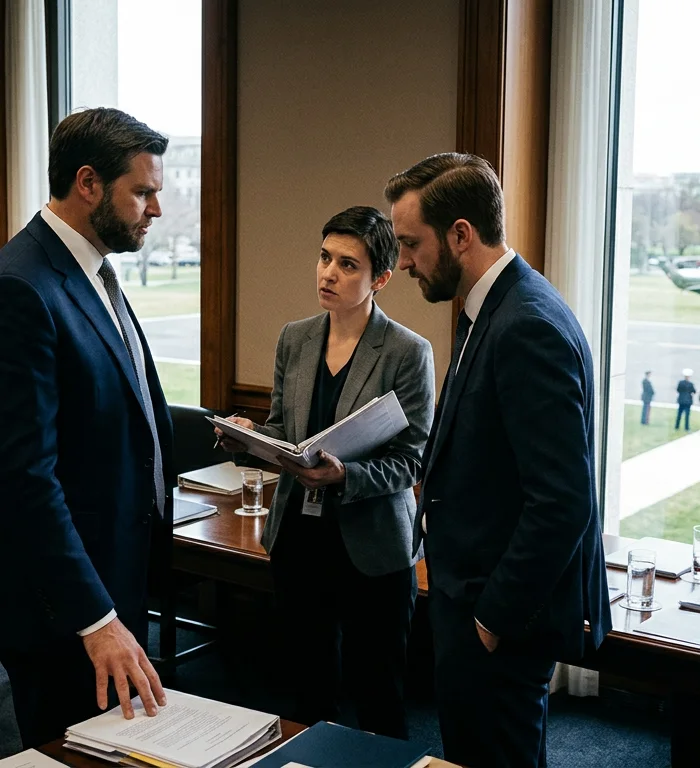
Direct diplomacy marks strategic pivot
Vice President J.D. Vance has initiated a formal communication channel with Iranian security chief Mohsen Rezaei, according to diplomatic correspondence circulating in Washington this week. The outreach, aimed at restarting stalled peace talks, marks a significant departure from the previous administration's long-standing reliance on unilateral sanctions and maximum-pressure tactics.
The development coincides with a stern message from President Trump, who advised Gulf partners to prepare for shifting regional alignments. The warning has prompted an immediate review of security protocols across capitals in the Gulf Cooperation Council (GCC) as officials analyze the potential for a U.S.-led diplomatic realignment.
The legacy of maximum pressure
Vice President
The Trump administration’s initial regional policy was defined by the withdrawal from the Joint Comprehensive Plan of Action (JCPOA) and the subsequent imposition of extensive economic sanctions. This approach intended to isolate Tehran by leveraging the military and economic weight of regional partners, particularly Saudi Arabia and the United Arab Emirates. By 2025, the limitations of this strategy became apparent as regional powers, facing increased risk of confrontation, pursued their own detente efforts. Recent history saw GCC states engaging in direct bilateral talks with Tehran to stabilize energy transit corridors, an effort that effectively bypassed Washington’s containment framework. Security architecture under pressure The prospect of a direct U.S.-Iran diplomatic track creates significant uncertainty for the existing security architecture. GCC nations have long predicated their domestic economic growth on the stability afforded by U.S. security guarantees, including the stationing of personnel and advanced weapons systems in the region.
pivot leads to a reduction in the American
If the U.S. pivot leads to a reduction in the American security footprint, regional states may be forced to seek alternative bilateral arrangements to secure shipping lanes in the Strait of Hormuz. Observers are tracking whether this diplomatic opening will include meaningful parameters for controlling proxy activity or if it will simply leave current security vacuums unaddressed.
Global macro spillover
The energy markets remain sensitive to any change in the probability of conflict. A successful de-escalation could theoretically lower the risk premium currently embedded in oil prices, though traders are hedging against the possibility that a U.S.-Iran rapprochement could destabilize the existing GCC alliance structure.
The risk of capital flight from regional markets is rising as investors weigh the possibility of a weakened U.S. commitment to regional stability. While the current engagement is limited to a correspondence, the potential for a broader restructuring of Middle Eastern alliances is already impacting sentiment in regional sovereign wealth funds.
More stories
- Germans oppose Ukraine aid as poll shows support slipping
- Kim Jong-un receives 10 envoys after constitutional shift
- Ukraine claims Libya strike sinks Russian naval corvette
- COP31 climate talks collapse over fossil fuels and funds
- Russian military faces 1,087 recorded suicides in Ukraine war
- US faces China, Russia in Africa minerals contest
- Boakai seeks Liberia mining investment with $30m survey
- South Africa health department faces call on boys' HPV shots after 3.6M girls vaccinated
- Philippine House passes under-13 social media curbs
- Pakistan lacks China, Uzbekistan and Tajikistan backing for strikes
Latest news
- Trump prepares tariffs on China and other major exporters
- New-car buyers pay record average $50,087 in October
- Banks face ECB reserve debate over liquidity and profits
- Investors see Anthropic debut gains fade below $83 a share
- Iraq orders federal control over Kurdish-area oilfields
- Nvidia shares retreat as AI rally cools before PCE data
- Macy’s parade faces balloon limits as storm winds approach