USS Abraham Lincoln deployment draws families’ demands
USS Abraham Lincoln families pressed Navy leaders in San Diego over a 259-day Iran-linked deployment, citing shipboard issues and no return date.
Mei Lin ·
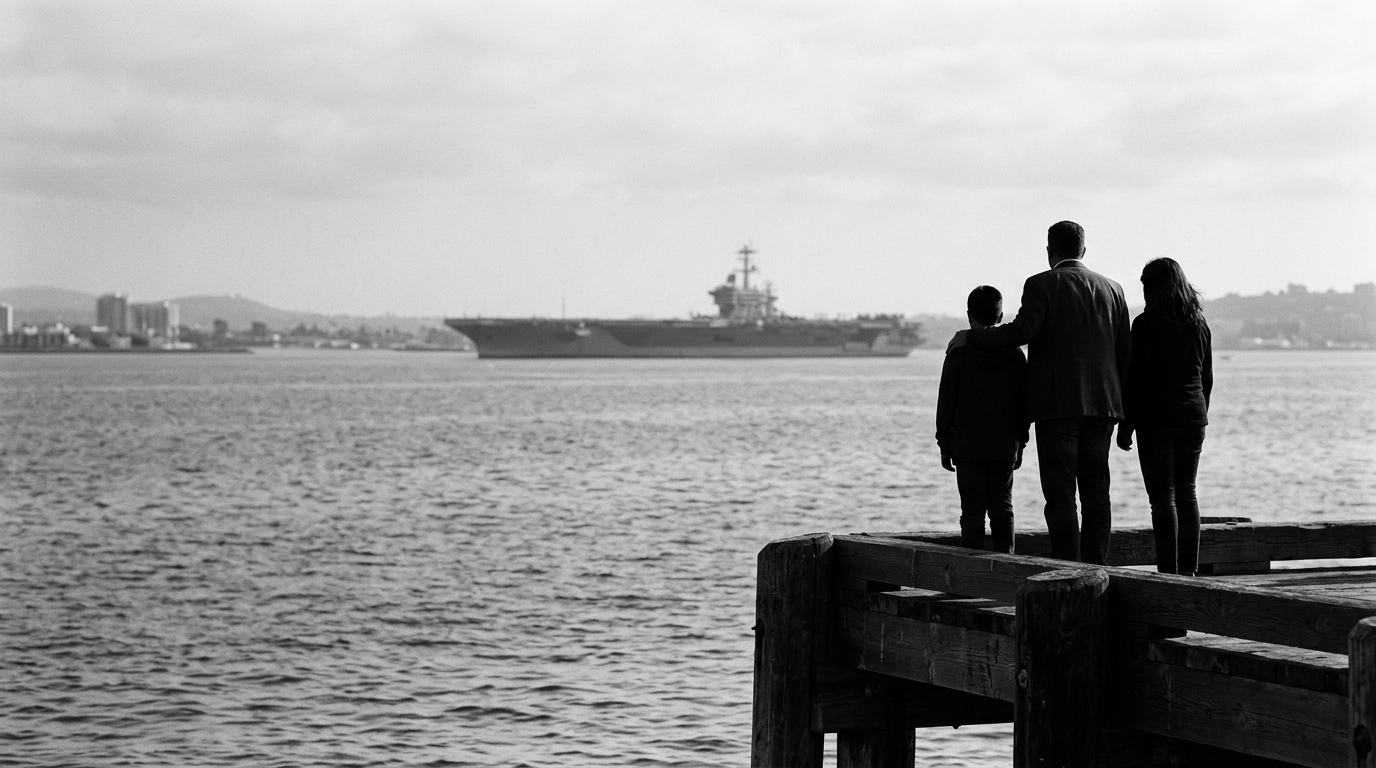
Families of sailors assigned to the USS Abraham Lincoln challenged senior US Navy leaders in San Diego over the aircraft carrier’s 259-day deployment connected in the source material to the Iran war, arguing that the mission’s length is deepening fatigue and worsening living conditions onboard.
Relatives said the ship’s prolonged time away from home is amplifying stress for both the crew and those waiting ashore. They described problems that include food and mail delays, bathroom conditions, suspected mold, water quality concerns, and broader safety issues.
Conditions raised as the carrier nears 208 straight days at sea The complaints came as the USS Abraham Lincoln marked 208 consecutive days at sea, a figure cited in the source account. Families said the cumulative effect of extended operations is compounding exhaustion and making daily life aboard the carrier more difficult.
Navy officials acknowledged logistical challenges and recognized that the deployment is placing strain on sailors and their families. However, according to the source material, the service did not provide a confirmed timeline for when the carrier will return.
Relief planning involves USS Theodore Roosevelt, but timing is unclear The source material says the USS Theodore Roosevelt carrier strike group is being prepared to eventually relieve the USS Abraham Lincoln. No date or handover sequence was provided in the account, leaving the practical schedule for the transition unresolved.
USS Abraham Lincoln
The lack of a stated return or relief timeline is a central uncertainty for families seeking clarity. A near-term, checkable marker highlighted in the source is whether the Navy publicly sets a defined relief or return schedule once preparations for the USS Theodore Roosevelt carrier strike group are finalized.
Overlapping carrier demands across regions add pressure
According to the source material, US carrier deployments in the Indo-Pacific and the Middle East have increasingly overlapped as Washington balances multiple security commitments. The report notes that longer stretches at sea can increase pressure on maintenance cycles and affect crew readiness.
The USS Abraham Lincoln’s role as a US aircraft carrier gives it deterrence value and rapid strike capability, and the source material links its current posture to an active conflict-related environment. The same operational flexibility, the report adds, can also translate into longer periods away from home port.
Broader availability questions tied to extended rotations
The confrontation took place in the United States, but the source material states that prolonged carrier operations can influence Asia-Pacific security dynamics by shaping how many US naval assets are available for patrols, exercises, and contingency planning at any given time.
The report also says that if a carrier strike group relief plan slips, rotations for other ships and air wings supporting US operations across the Western Pacific can become tighter. It adds that extended deployments can ripple through defense logistics and supply chains tied to Asia, including maintenance backlogs, parts availability, and port-visit planning.
For regional partners monitoring US force posture, the source material notes that uncertainty over carrier availability can complicate signaling and deterrence calculations. For now, the open question in the account is whether the USS Abraham Lincoln’s at-sea stretch continues without a firm end date.