Strait of Hormuz talks stall after UAE ship attack
The U.A.E. said an Iranian missile hit an oil-linked ship in the Strait of Hormuz, adding pressure to stalled reopening talks.
Omar Farouk ·
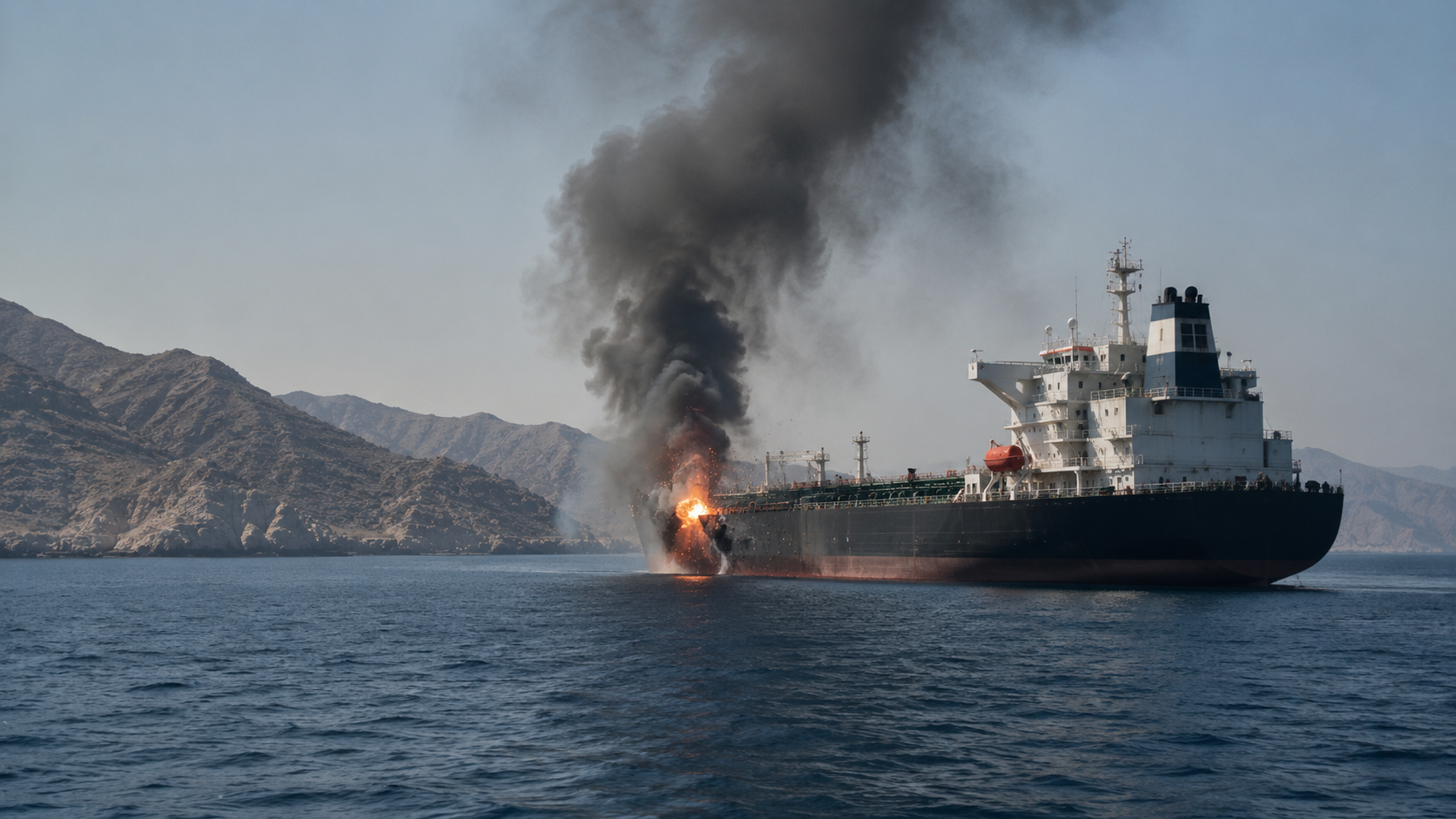
Strait of Hormuz talks faced new strain after the U.A.E. said an oil-linked ship was hit by an Iranian missile.
The U.A.E. said the vessel, affiliated with its national oil company, came under attack early Saturday while crossing the waterway. It attributed the strike to Iran’s Islamic Revolutionary Guard Corps, the paramilitary force that guards the regime and has a central role in Tehran’s control of the strait.
The allegation remained single-sourced in the available account; no independent confirmation of the strike or Iranian response to that specific claim was provided. The timing still matters: negotiators are trying to shape a deal that would reopen one of the world’s most important oil routes after weeks of restricted traffic.
Saturday strike strains draft deal
Iranian leaders are weighing a draft agreement with Oman that would create new shipping lanes through the Strait of Hormuz and gradually restore traffic. In return, Tehran is seeking U.S. concessions, including sanctions waivers for oil sales and an end to what it describes as a U.S. blockade.
President Trump called off a wave of U.S. attacks last weekend, citing progress in talks, and has said a deal to reopen the strait was close. Mediators now say the process has slowed in recent days as Iran seeks financial relief while the U.S. insists that shipping not be impeded.
The Revolutionary Guard moved early in the conflict to choke off traffic through the strait, a passage described as carrying about one-fifth of the world’s oil. Since then, shipping has remained constrained by regular attacks on vessels, according to the account.
Iran ties access to concessions
The Revolutionary Guard’s public position points to why the negotiations are difficult. “For us, the Strait of Hormuz is not merely an economic waterway, but rather a key component of our geopolitical and strategic power,” its spokesman said on state media Saturday.
The spokesman and Foreign Minister Abbas Araghchi said the Oman-backed agreement would not reopen the strait without concessions from the U.S. That framing puts maritime access, oil revenue and U.S. military reach into a single negotiation rather than a narrow shipping arrangement.
Iran is also vowing to bar U.S. Navy warships from passing through the strait as part of any reopening deal. U.S. officials have told mediators they will not accept Iranian restrictions or tolls on Hormuz traffic, according to the account.
For the U.A.E. national oil company, the immediate issue is operational risk for ships tied to its business. If vessels linked to Gulf producers are seen as exposed even during negotiations, insurers, charterers and shippers may demand tighter routing, higher compensation or additional security before traffic returns to normal.
Oil route risk widens
The wider industry effect runs through freight, insurance and supply timing rather than only the spot price of crude. A constrained Strait of Hormuz can lengthen delivery planning for Gulf exporters, reduce confidence among buyers and force shipping companies to price in the risk of delay or attack.
The macro channel is also clear. If the strait remains partly closed, oil-importing economies face a potential supply-risk premium, while exporters outside the Gulf may gain temporary pricing leverage; if traffic resumes under verifiable rules, that premium would be expected to narrow through lower disruption risk.
For the company at the center of the incident, a durable reopening would reduce the need for extraordinary security measures and restore a more predictable export corridor. If attacks continue despite talks, the company and its peers would face a more expensive operating environment and pressure to demonstrate that shipments can move safely.
For the sector, the first scenario is a negotiated reopening with shipping lanes supervised through Oman’s framework. That would help stabilize Gulf logistics, support broader oil-market confidence and give regional producers a clearer path to customers, provided the U.S. and Iran can agree on the treatment of military vessels.
The second scenario is a prolonged impasse over sanctions relief, tolls or U.S. Navy access. In that case, global markets would remain exposed to supply disruption, the U.A.E.-linked operator would face continued transit risk, and the shipping industry would keep building higher security and insurance assumptions into Gulf routes.
The main open questions are whether Iran’s leaders will accept a reopening without broader financial relief, whether the U.S. will tolerate any limits on naval passage, and whether attacks on commercial ships stop while talks continue. Each question affects the same mechanism: whether the strait functions as a predictable trade route or as leverage in a wider confrontation.