

US and Russia Oppose Binding International Regulation of Autonomous Weapons
The US and Russia are blocking efforts to establish a legally binding international treaty on autonomous weapons, favoring non-binding guidelines over formal…
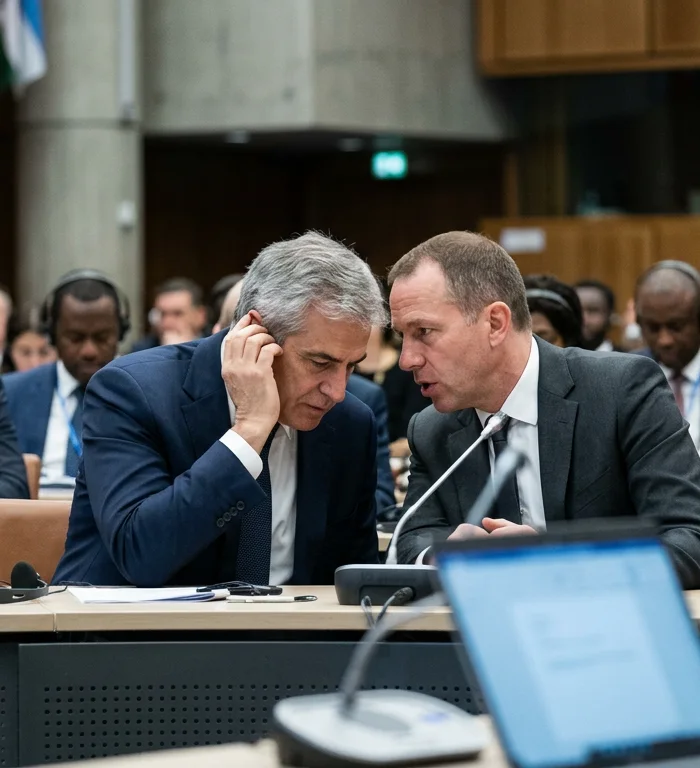
The United States and Russia are expected to oppose the initiation of formal negotiations for a legally binding international treaty governing Lethal Autonomous Weapons Systems (LAWS) at this week’s UN-hosted conference in Geneva. While a majority of the 128 states party to the Convention on Certain Conventional Weapons support the development of a binding regulatory framework, major military powers maintain that existing international humanitarian law is sufficient to govern the use of AI-enabled military hardware.
The debate centers on the rapid proliferation of drones, robotic systems, and other military technologies capable of executing lethal force without direct human intervention. These systems have already seen deployment in active conflict zones, including Ukraine, Sudan, and the Middle East. Proponents of a binding treaty argue that current legal frameworks fail to address the specific risks of algorithmic unpredictability and the ethical implications of delegating life-or-death decisions to machines.
The United States has advocated for a non-binding approach, proposing a five-year mandate focused on establishing voluntary guidelines rather than enforceable prohibitions. Russia has historically resisted efforts to codify binding restrictions on autonomous systems and is reportedly seeking to limit the participation of observers, such as the European Union, during the proceedings. Conversely, the conference chair has proposed a two-year mandate to negotiate a legally binding protocol, while other nations, including the United Kingdom, Germany, and France, are exploring hybrid options that remain ambiguous regarding their final legal status.
Institutional risks remain high as the lack of a unified international consensus complicates the governance of emerging military technologies. The outcome of this week’s conference will determine whether global policy shifts toward formal prohibition or continues to rely on existing, arguably insufficient, humanitarian law. Observers note that the alignment of the US and Russia in opposing binding measures significantly reduces the likelihood of a restrictive treaty, potentially leading to a fragmented regulatory landscape that favors non-binding standards over enforceable oversight.
More stories
- Germans oppose Ukraine aid as poll shows support slipping
- Kim Jong-un receives 10 envoys after constitutional shift
- Ukraine claims Libya strike sinks Russian naval corvette
- COP31 climate talks collapse over fossil fuels and funds
- Russian military faces 1,087 recorded suicides in Ukraine war
- US faces China, Russia in Africa minerals contest
- Trump, Putin and Xi to hold historic trilateral in Shenzhen
- UK and EU seek 3 deals in Burnham reset
- Lebanese doubt Oct. 27 Israel vote ends south Lebanon presence
- Kenya records second Ebola death in first outbreak
Latest news
- Trump prepares tariffs on China and other major exporters
- New-car buyers pay record average $50,087 in October
- Banks face ECB reserve debate over liquidity and profits
- Investors see Anthropic debut gains fade below $83 a share
- Iraq orders federal control over Kurdish-area oilfields
- Nvidia shares retreat as AI rally cools before PCE data
- Macy’s parade faces balloon limits as storm winds approach