

UN puts Hormuz seafarer deaths at 25 since Iran war began
Iran reported three more tanker mine strikes as the UN warned that maritime disruption is raising energy, transport and insurance costs.
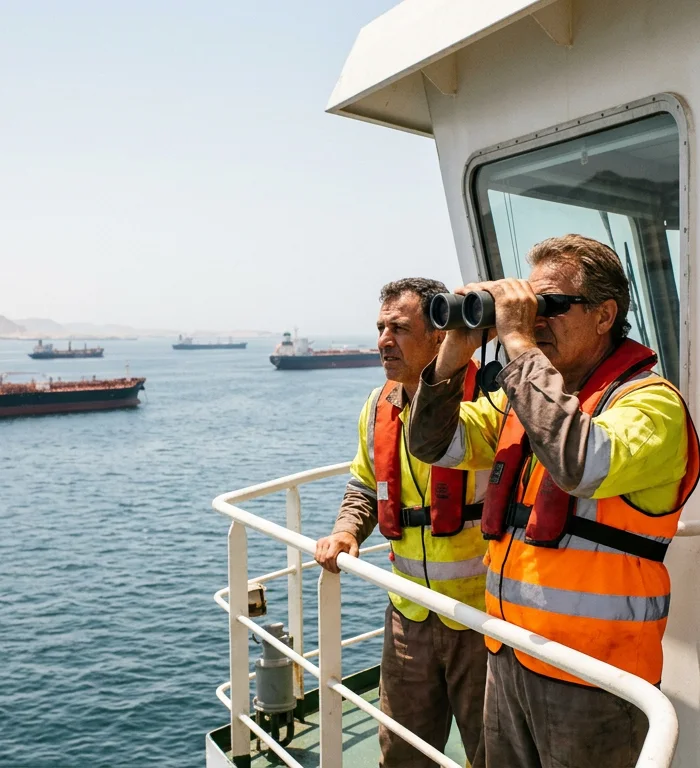
The United Nations said at least 25 seafarers were killed in and around the Strait of Hormuz from February to Nov. 11, Khaled Khiari told the Security Council on Friday.
The toll underscores worsening risk around a major Gulf shipping route, with traffic through Hormuz approximately 65% below pre-war levels, according to the latest United Kingdom Maritime Trade Operations report.
Khiari, the UN assistant secretary-general for the Middle East, Asia and the Pacific, said the International Maritime Organization tracked 136 security incidents involving vessels in Hormuz and the wider Middle East from March 1 to Nov. 11. October accounted for 35 incidents, the highest monthly count since the conflict began, while 10 were recorded in November.
“This situation cannot be allowed to become the new normal,” Khiari said, urging the “full restoration of maritime navigation in the region”. He added: “Civilian vessels and commercial shipping must not become targets.”
Iranian authorities said Saturday that three oil tankers hit mines while passing through “unauthorised” or “restricted” areas of Hormuz and caught fire. The report followed Iranian warnings that vessels need approval from Tehran to transit the waterway during the conflict.
Iran’s navy, in a statement carried by state broadcaster IRIB, warned that “Any offending tanker that travels in the restricted area east of the Strait of Hormuz will be set on fire by hitting naval mines.” Iran has repeatedly attacked ships it accuses of violating its protocol, according to the report.
The United States military claims it has cleared the main routes in the strait of mines and that the waterway is open to commercial traffic. That position conflicts with Iran’s restrictions and with continuing reports of vessel incidents around the passage.
Iranian officials have said the strait will not be open until the US meets demands that include ending the US naval blockade of Iranian ports, lifting economic sanctions, releasing frozen Iranian funds, stopping fighting on all fronts and explicitly announcing an end to the war.
The disruption carries consequences beyond the Gulf because Hormuz was described by Atlas360 on Nov. 14 as a route that carried one-fifth of internationally traded hydrocarbons before the Middle East war. Atlas360 also reported that Iranian officials said at least six vessels were hit or disabled in roughly a week near the waterway.
Khiari told the Security Council that “the present maritime arrangements in the Middle East remain costly, unpredictable, and unsafe”. He said disruption to navigation was raising energy, transport and insurance costs, fuelling inflation and threatening food security because fertiliser shipments were severely constrained.
More stories
- Germans oppose Ukraine aid as poll shows support slipping
- Kim Jong-un receives 10 envoys after constitutional shift
- Ukraine claims Libya strike sinks Russian naval corvette
- COP31 climate talks collapse over fossil fuels and funds
- Russian military faces 1,087 recorded suicides in Ukraine war
- US faces China, Russia in Africa minerals contest
- Singapore aid groups face Gaza delivery bottlenecks despite 200 daily trucks
- North Korea changes flag as Kim reshapes national symbols
- Lapid accuses Netanyahu of undermining Israel vote
- Lufthansa cuts profit outlook on 28% fuel-bill increase
Latest news
- Trump prepares tariffs on China and other major exporters
- New-car buyers pay record average $50,087 in October
- Banks face ECB reserve debate over liquidity and profits
- Investors see Anthropic debut gains fade below $83 a share
- Iraq orders federal control over Kurdish-area oilfields
- Nvidia shares retreat as AI rally cools before PCE data
- Macy’s parade faces balloon limits as storm winds approach