Turkey weighs Saudi defense role, rules out attack force
Turkey is weighing Saudi defense support but will not take part in offensive operations, Foreign Minister Hakan Fidan said.
Amina Diallo ·
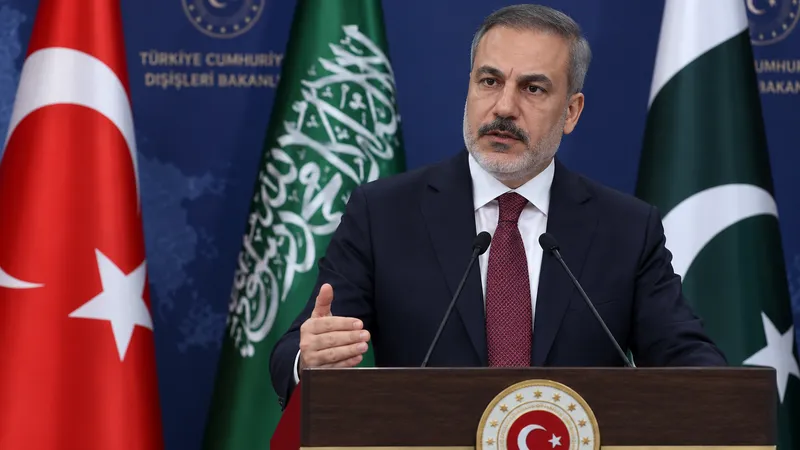
Turkey is weighing Saudi defense support but will not take part in offensive operations, Foreign Minister Hakan Fidan said.
Military teams are examining assistance for Saudi Arabia against attacks by Yemen's Iran-aligned Houthi militants, Fidan said Thursday in Ankara. The assessment follows a collective defense commitment involving Pakistan, but Ankara has not yet secured parliamentary ratification of the agreement.
Ankara draws a defensive boundary
Fidan identified air defense, electronic warfare and technical assistance as areas under consideration. Military delegations would establish Saudi Arabia's operational requirements and assess what Turkey and Pakistan could provide, he said.
His remarks distinguished support for Saudi defenses from participation in attacks elsewhere. Fidan ruled out deploying Turkish troops abroad to conduct offensive operations, describing the agreement as a mechanism for protecting a member that comes under attack.
Fidan also said Yemen's government forces were continuing ground combat with Saudi support. That description placed the existing fighting alongside, rather than within, the defensive contribution Ankara is assessing; he did not announce a Turkish ground-combat role.
The distinction leaves the form of any deployment open. Fidan outlined categories of possible assistance, not a finalized package, and assigned the assessment of requirements and national contributions to military officials.
Parliament has yet to ratify pact
Turkey, Pakistan and Saudi Arabia signed the Mecca Joint Defence Agreement in August. Its collective-defense provision treats an attack against any member as an attack against the entire group, and political and military consultations have followed the Houthi attacks.
On Monday, the countries announced that they would begin carrying out those obligations immediately. Their announcement called for the "rapid deployment" of personnel and military capabilities to Saudi Arabia, setting out an implementation commitment before Turkey had completed its domestic approval process.
Turkish officials have described assistance at this stage as predominantly bilateral, citing the absence of parliamentary ratification. That distinction separates support Ankara can discuss directly with Riyadh from implementation under the three-country agreement.
Fidan said preparations to place the agreement before parliament were largely finished and that the government wanted to submit it "as soon as possible". He gave no submission date in the remarks provided, leaving the timetable for parliamentary consideration unresolved.
Red Sea commitment adds maritime dimension
Ankara has condemned the attacks against Saudi Arabia and expressed readiness to address Riyadh's technical defense requirements. It has also agreed to participate in a Saudi-led coalition intended to protect navigation through the Red Sea, adding a maritime commitment to the assistance discussions.
If the military assessment produces a support package before ratification, the bilateral framework described by Turkish officials would be the immediate route for assistance. If parliamentary approval comes first, the next test would be how the collective commitment translates into specific Turkish and Pakistani contributions.
Neither path, as Fidan described Turkey's position, includes offensive participation. The next concrete developments are the delegations' assessment of Saudi requirements, decisions on what assistance to provide and the agreement's submission to parliament.