

Trump weighs military options for Iranian underground site
President Trump is evaluating potential strikes on Iran’s fortified Pickaxe Mountain facility amid rising tensions over the nation’s nuclear program.
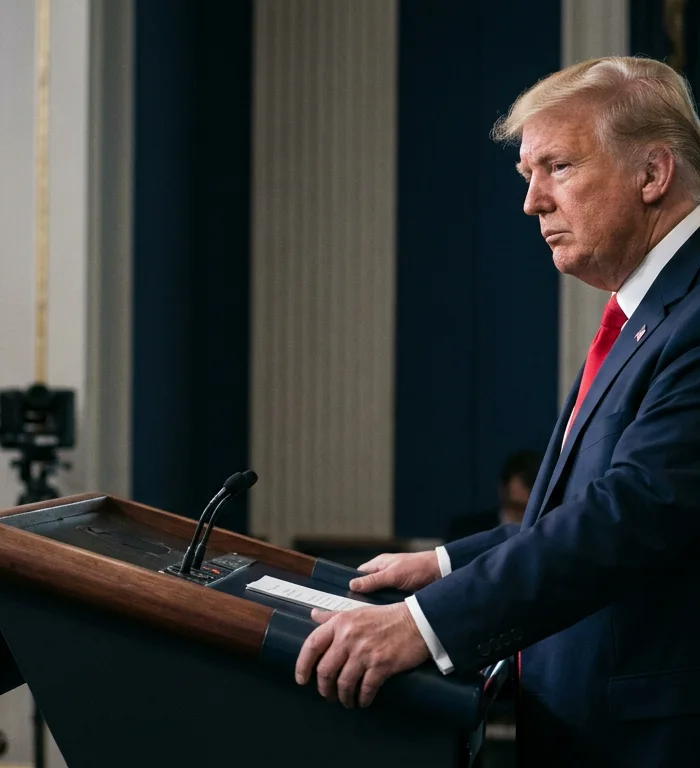
Strategic site escalation
President Trump has publicly identified the Pickaxe Mountain facility in Iran as a potential target for military action should diplomatic efforts to curb nuclear development falter. The site, characterized by its deep-underground construction, serves as a central element of Iran's passive defense architecture, which relies on mountain fortification to protect sensitive assets from aerial surveillance and conventional munitions. Recent remarks from the White House underscore a shift toward active contingency planning regarding Iranian infrastructure that has historically been considered beyond the reach of standard tactical strikes.
Deep-underground defense strategy
The construction of facilities like Pickaxe Mountain reflects a long-standing Iranian strategy to offset conventional military disparities through geographical and structural hardening. By burying enrichment and development activities beneath hundreds of feet of granite, the Iranian government seeks to complicate the operational calculus for any external military actor. Conventional bunker-buster munitions, including the U.S.-made GBU-57 Massive Ordnance Penetrator, are designed for specific penetration depths; however, the efficacy of such weapons remains subject to debate among defense analysts when faced with complex, multi-layered mountain topographies.
Regional economic exposure
The hardening of rhetoric regarding Iranian nuclear sites impacts the broader regional risk premium, particularly for members of the Gulf Cooperation Council. Analysts monitoring regional volatility note that the threat of escalation is being priced into energy markets, with potential risks extending to shipping lanes in the Strait of Hormuz. Any direct conflict poses an immediate threat to critical oil and gas export infrastructure, which remains the primary driver of capital expenditure cycles for GCC sovereign wealth funds. Investors are increasingly evaluating the vulnerability of long-term energy projects to retaliatory strikes against regional pipelines and terminals.
Scenario-based outlook The primary uncertainty rests on whether the current rhetoric precedes a tangible shift in US military positioning or serves as a mechanism to compel renewed oversight by the International Atomic Energy Agency.
If the IAEA board of governors reports further obfuscation of enrichment activities by June 1, regional markets expect a sharp rise in defense spending and a potential rotation of capital into safe-haven assets. Conversely, a cooling of public discourse between the White House and Tehran, potentially facilitated by track-two diplomatic channels, could signal a temporary de-escalation that would lower the current geopolitical risk premium.
More stories
- Germans oppose Ukraine aid as poll shows support slipping
- Kim Jong-un receives 10 envoys after constitutional shift
- Ukraine claims Libya strike sinks Russian naval corvette
- COP31 climate talks collapse over fossil fuels and funds
- Russian military faces 1,087 recorded suicides in Ukraine war
- US faces China, Russia in Africa minerals contest
- Malaysia tightens critical-sector security after Nov. 2 review
- Ukraine and Russia face fake nuclear alerts after app hacks
- Greece plans 15% homebuyer tax for non-EU investors
- Rama faces sixth day of Albania protests with 272 injured
Latest news
- Trump prepares tariffs on China and other major exporters
- New-car buyers pay record average $50,087 in October
- Banks face ECB reserve debate over liquidity and profits
- Investors see Anthropic debut gains fade below $83 a share
- Iraq orders federal control over Kurdish-area oilfields
- Nvidia shares retreat as AI rally cools before PCE data
- Macy’s parade faces balloon limits as storm winds approach