

Trump threatens Cuba with military action as Iran tensions escalate
President Trump signals a dual-front foreign policy, threatening a naval presence near Cuba while maintaining a confrontational stance toward Tehran.
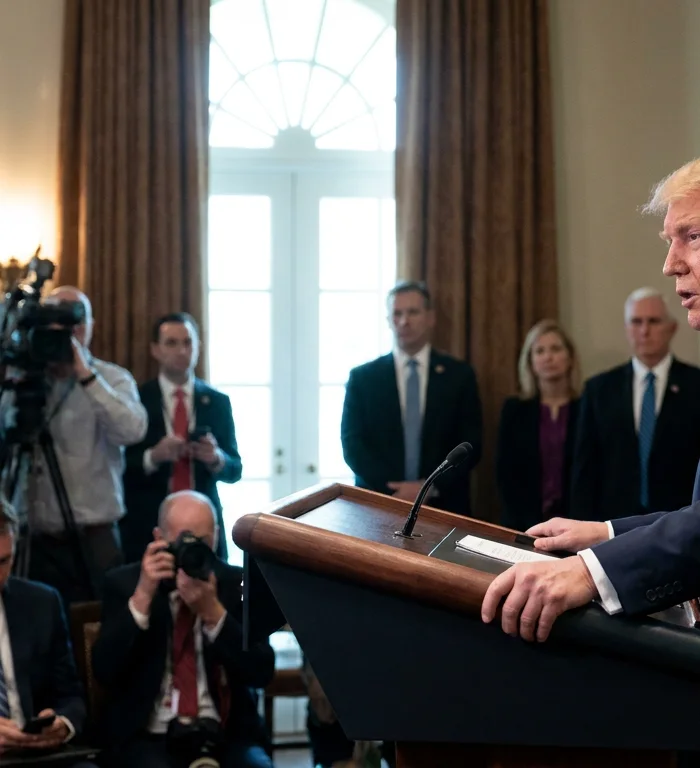
Naval deployment signals strategic shift
President Donald Trump has suggested a combined military approach to regional security, threatening to position naval forces near Cuba following operations related to Iran. The President stated that a US ship could anchor approximately 50 yards off the Cuban coast, a move he described as a stopover during broader efforts to address regional security challenges. This rhetoric marks a significant escalation in the administration's public posture regarding Caribbean and Middle Eastern containment policies.
Diplomacy follows military posturing
Following the proposed naval maneuvers, the administration intends to dispatch Secretary of State Marco Rubio to finalize diplomatic arrangements. This sequence suggests a strategy where kinetic-adjacent positioning serves as a precursor to state-level negotiations. The White House has framed this as a unified response to security threats, though it represents a departure from traditional diplomatic protocols in both the Caribbean and the Middle East.
Regional security architectures under pressure
Gulf monarchies, including Saudi Arabia and the United Arab Emirates, currently navigate a complex security landscape marked by long-standing defense pacts with the US and recent, fragile diplomatic normalization with Tehran. The shift toward a more aggressive US posture complicates this balance. Policymakers in the Gulf must now contend with the risk of their territories being utilized as staging grounds for operations, potentially rendering them collateral targets in any kinetic exchange.
Shipping and energy market volatility
Heightened rhetoric from Washington poses direct risks to vital maritime transit corridors, specifically the Strait of Hormuz and the Bab al-Mandab. Any overt confrontation between the US and Iran carries the potential to disrupt global energy supply chains, which remain sensitive to security fluctuations in these bottlenecks. Analysts monitoring the region emphasize that even the perception of increased military activity often leads to immediate insurance premium hikes and rerouting of commercial vessels.
Monitoring GCC neutrality
Whether Gulf states remain committed to de-escalation protocols with Tehran will determine the stability of the regional security order through early 2027. Should the US accelerate its naval buildup in the Persian Gulf without prior coordination with local host nations, the risk of an inadvertent regional conflict rises. The primary open question remains whether Gulf capitals will issue coordinated statements to distance themselves from offensive military operations, or if they will be forced into deeper alignment with US maneuvers.
More stories
- Germans oppose Ukraine aid as poll shows support slipping
- Kim Jong-un receives 10 envoys after constitutional shift
- Ukraine claims Libya strike sinks Russian naval corvette
- COP31 climate talks collapse over fossil fuels and funds
- Russian military faces 1,087 recorded suicides in Ukraine war
- US faces China, Russia in Africa minerals contest
- Singapore regulator finds 65 harmful apps, 24 wrongly rated
- Democrats tie Iran war to $4.27 gasoline in midterm races
- Yemen displacement tops 112,000 as coast fighting widens
- Spain moves Ceuta migrants into port shelters after sweep
Latest news
- Trump prepares tariffs on China and other major exporters
- New-car buyers pay record average $50,087 in October
- Banks face ECB reserve debate over liquidity and profits
- Investors see Anthropic debut gains fade below $83 a share
- Iraq orders federal control over Kurdish-area oilfields
- Nvidia shares retreat as AI rally cools before PCE data
- Macy’s parade faces balloon limits as storm winds approach