

Trump puts Zelenskyy-Putin talks on near-term agenda
His Oct. 28 remarks added public White House pressure for direct Ukraine-Russia diplomacy, without a disclosed date, venue or framework.
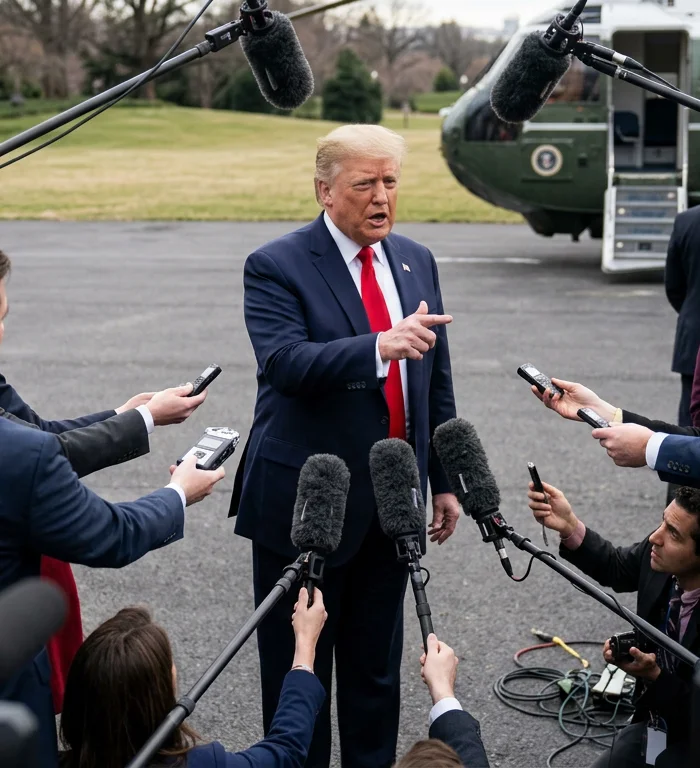
President Trump told reporters on Oct. 28 that a meeting between Ukrainian President Volodymyr Zelenskyy and Russian President Vladimir Putin would be arranged “very soon,” pressing the two wartime leaders toward direct talks.
The remark matters in Washington because a two-leader format would move the public focus from open-ended war diplomacy to a near-term negotiating test. The supplied account gave no date, host country, agenda or confirmation from Kyiv or Moscow.
For the White House, the value of such a meeting would be speed: leader-level talks can compress decisions that usually move through envoys, foreign ministries and military channels. The risk is that a summit announced before terms are prepared can expose gaps rather than close them.
The State Department would normally be central to defining the diplomatic framework, including sequencing, cease-fire language and any role for European governments. The Pentagon’s interest would be narrower but consequential: whether any pause in fighting changes battlefield risk, weapons flows or deterrence planning.
Congress would enter through oversight and Ukraine funding. Defense and foreign-policy lawmakers would look for whether any process preserves Ukraine’s security position and whether the administration links negotiations to future US military assistance.
President Trump
The source material does not show that Zelenskyy has accepted a meeting, that Putin has agreed to one, or that any third-party venue has been chosen. It also does not establish whether the proposed format would be bilateral, trilateral with US participation, or part of a wider peace process.
The falsifiable test is whether the White House or a designated envoy announces a date and venue by Nov. 28. If that happens, Trump’s Oct. 28 comment will have become an operational diplomatic track; if Kyiv or Moscow rejects the premise, the statement will remain public pressure without a scheduled negotiation.
More stories
- Eisenkot secures first coalition deal but lacks majority
- Germans oppose Ukraine aid as poll shows support slipping
- Kim Jong-un receives 10 envoys after constitutional shift
- Ukraine claims Libya strike sinks Russian naval corvette
- COP31 climate talks collapse over fossil fuels and funds
- Russian military faces 1,087 recorded suicides in Ukraine war
- NEITI faces methane data questions over 18 incomplete records
- Trump credits endorsement after Netanyahu bloc's 57-seat tally
- Xizang earthquake blocks highway as crews build shelters
- Typhoon Champi weakens but keeps Taiwan largely shut down
Latest news
- Trump prepares tariffs on China and other major exporters
- New-car buyers pay record average $50,087 in October
- Banks face ECB reserve debate over liquidity and profits
- Investors see Anthropic debut gains fade below $83 a share
- Iraq orders federal control over Kurdish-area oilfields
- Nvidia shares retreat as AI rally cools before PCE data