Trump housing bill signing halted as SAVE Act demand grows
Trump housing bill signing plans were abruptly scrapped Wednesday after he tied action on a bipartisan housing package to passage of the SAVE America Act.
Lauren Collins ·
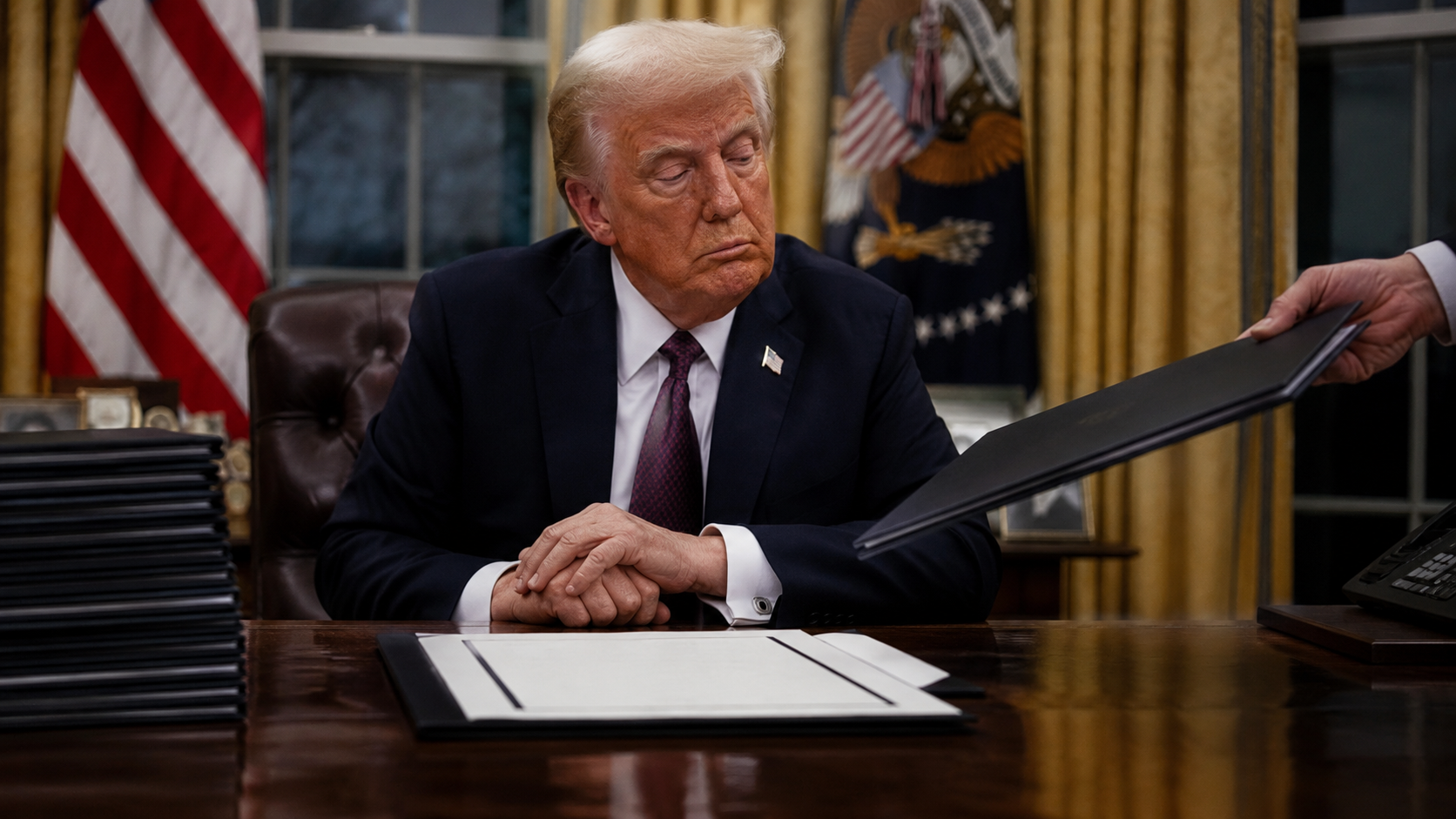
Trump housing bill signing plans were abruptly scrapped Wednesday after he tied action on a bipartisan housing package to passage of the SAVE America Act.
President Donald Trump announced on Truth Social that he was canceling a scheduled Capitol Hill event to enact what congressional leaders described as a landmark, bipartisan housing package. The move came a little more than an hour before he was expected to appear in Statuary Hall around noon ET.
In his post, Trump said the signing would be postponed until Congress passes the “desperately needed” SAVE America Act, which he described as a “National Emergency.” The SAVE America Act is a contentious election-related measure that has divided lawmakers and advocacy groups.
White House links housing action to election legislation
The housing bill had moved through Congress with unusually broad support in an era of narrow majorities and frequent gridlock. House Speaker Mike Johnson, a Louisiana Republican, and Senate Majority Leader John Thune, a South Dakota Republican, had publicly celebrated the package and promoted the planned signing as a bipartisan win.
According to the timeline outlined by congressional leaders, Trump was set to sign the measure in a formal event on Capitol Hill. Instead, the president first appeared to minimize the bill in an earlier Truth Social message Wednesday morning, then escalated by canceling the ceremony outright.
Trump’s decision immediately injected uncertainty into the fate of legislation that had already cleared both chambers. While the bill’s text and procedural status were not detailed in the announcement, the president’s message signaled he would not proceed with enactment until the election measure advances.
What the housing package sought to change
Lawmakers in both parties have highlighted housing affordability as a growing political liability, particularly for younger voters and first-time buyers. The package was framed as an attempt to increase overall housing supply, lower costs, and address concerns about institutional ownership in the single-family market.
Among its stated aims, the measure would seek to expand housing supply and improve affordability. It also includes a cap on the number of single-family homes private equity firms can purchase, reflecting a bipartisan push to curb large-scale investor competition in certain local markets.
Supporters have argued that supply constraints and competition for entry-level homes have contributed to rising prices and rent pressures in many regions. Although the bill’s specific budgetary effects were not disclosed in the announcement, its backers portrayed it as a practical, cross-party step that could be sold to voters.
Political stakes rise ahead of the 2026 midterms
The episode highlights the competing incentives shaping legislative strategy heading into the 2026 midterm elections. Cost-of-living issues, including housing, have become central campaign themes, and a bipartisan housing vote offered a rare opportunity for both parties to claim progress.
By conditioning action on the housing package on the SAVE America Act, Trump shifted the day’s focus from affordability policy to election rules, a topic that typically fuels partisan conflict. That linkage risks complicating messaging for Republicans who had hoped to emphasize the housing measure as evidence of governing capacity.
For Democrats, the cancellation provides a fresh line of attack suggesting the president is willing to stall widely supported economic measures to seek leverage on unrelated priorities. Sen. Elizabeth Warren criticized the decision in televised remarks, arguing the move was difficult to justify given the bill’s popularity and urgency.
Next steps depend on whether congressional leaders can advance the SAVE America Act and whether Trump maintains his position that the housing bill must wait. Lawmakers will also be watching for any formal guidance on the housing package’s path forward, including whether a new signing date is set or the legislation faces additional conditions.