

Trump declines to endorse Netanyahu as U.S.-Israel ties shift
President Trump’s refusal to back the Israeli Prime Minister reflects a growing transactional approach to the bilateral alliance.
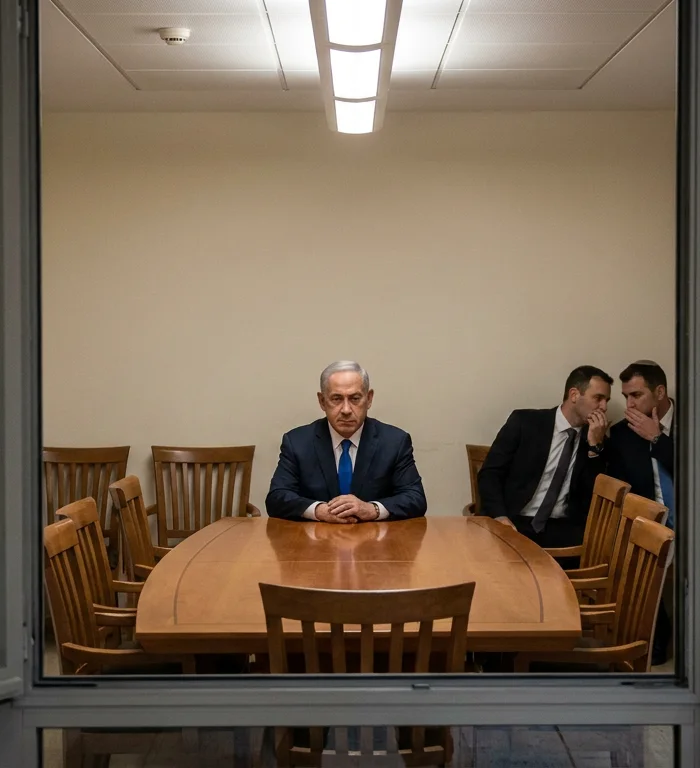
A cooling in diplomatic ties
President Trump has publicly withheld his endorsement of Prime Minister Benjamin Netanyahu ahead of the upcoming Israeli election cycle, signaling a notable departure from the staunch backing that defined his initial years in office. In recent remarks, the President stated that he does not offer trust to political actors in the region, distancing himself from the leadership of Israel's long-serving prime minister.
This shift arrives as the bilateral relationship between Washington and Jerusalem faces increased friction over the management of the war in Gaza and disparate visions for post-conflict governance. While the President asserted his own popularity with the Israeli public—claiming he would secure 99% of the vote if he were to run for prime minister—his rhetoric confirms a cooling in the personal chemistry that previously anchored the partnership.
The legacy of the first term
During his first term, the President and Netanyahu maintained a historically tight alignment, characterized by the 2020 Abraham Accords and the decision to relocate the U.S. embassy to Jerusalem. These actions were viewed as cementing a durable axis of cooperation between the White House and the Israeli government, bypassing decades of traditional diplomatic caution.
However, the current geopolitical environment has altered the internal consensus within the Republican party regarding Middle East strategy. With domestic pressure mounting over the cost of foreign military aid and the regional consequences of ongoing conflict, the traditionally unconditional support for the Israeli coalition is increasingly viewed as a liability by some factions of the electorate.
Global consequences of transactional policy Any sustained pivot toward a purely transactional relationship would force a recalculation of security and diplomatic coordination across the Middle East.
If the White House conditions military support on specific Israeli security concessions, the current strategic equilibrium in the region could face destabilizing pressures, affecting everything from energy transit through the Red Sea to the stability of regional normalization agreements.
Industry observers remain focused on whether this rhetoric is a temporary campaign maneuver or a structural change in U.S. foreign policy. The prospect of an increasingly conditional alliance introduces significant uncertainty for Israeli policymakers, who must now navigate a political landscape where their most reliable partner in Washington appears to be seeking greater distance.
Monitoring the transition
By January 20, 2025, the trajectory of this alliance will likely be clarified by the composition of the President's incoming policy team and their formal stance on the 'day after' plans for Gaza.
If the campaign team issues directives that link military aid to specific territorial or settlement outcomes, it will confirm a shift toward a more conditional, transactional framework for the alliance.
More stories
- Germans oppose Ukraine aid as poll shows support slipping
- Kim Jong-un receives 10 envoys after constitutional shift
- Ukraine claims Libya strike sinks Russian naval corvette
- COP31 climate talks collapse over fossil fuels and funds
- Russian military faces 1,087 recorded suicides in Ukraine war
- US faces China, Russia in Africa minerals contest
- Albania protests intensify as Rama rejects calls to resign
- US official denies Trump Starshield restriction directive
- Saudi airport attack kills 13, strains missile defenses
- Morocco draws $6 billion China EV supply-chain push
Latest news
- Trump prepares tariffs on China and other major exporters
- New-car buyers pay record average $50,087 in October
- Banks face ECB reserve debate over liquidity and profits
- Investors see Anthropic debut gains fade below $83 a share
- Iraq orders federal control over Kurdish-area oilfields
- Nvidia shares retreat as AI rally cools before PCE data
- Macy’s parade faces balloon limits as storm winds approach