

Trump cites Iranian missile depletion as financial pressure mounts
President Trump claims Iran’s strategic capabilities are degrading as treasury officials report deepening state fiscal crisis.
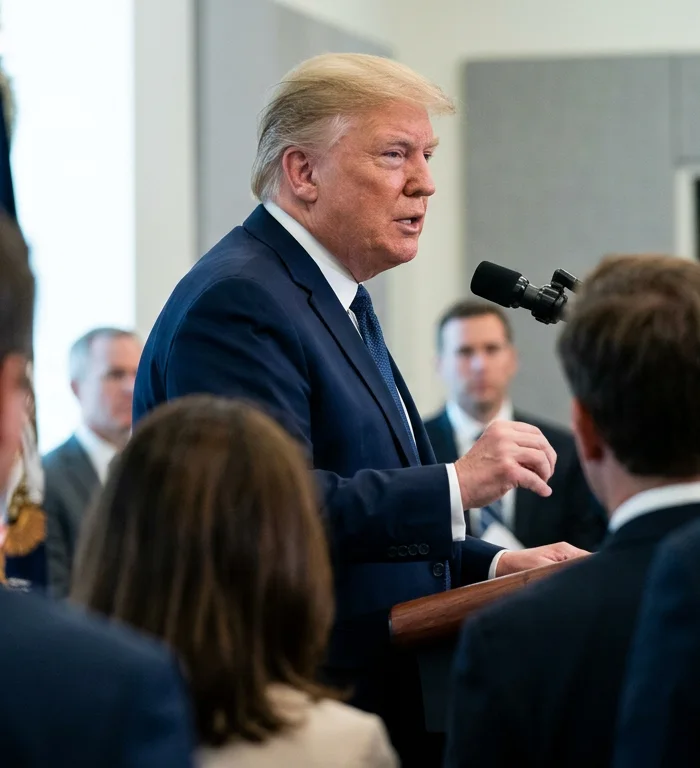
Strategic degradation of Iranian capabilities
President Trump stated that Iran’s missile arsenal has seen significant reduction and its drone manufacturing capacity is increasingly hampered. The comments arrive as the U.S. administration intensifies its focus on the logistical and material foundations of Tehran’s military programs.
The remarks follow a broader assessment from U.S. Treasury Secretary Scott Bessent, who indicated that Iran is facing acute difficulties in meeting salary obligations for its military forces. This fiscal strain, coupled with the reported equipment shortages, marks a shift in the administration's approach to neutralizing the regional influence of the Islamic Revolutionary Guard Corps (IRGC).
Financial and military pressure
President Trump
The current U.S. strategy aims to sever the financial lifelines that sustain the IRGC’s network of regional proxies. By targeting revenue streams and supply chain hubs, the administration intends to limit the regime's capacity to project power across its borders in Lebanon, Syria, and Iraq. According to U.S. Ambassador to Israel Mike Huckabee, the question of potential future military action remains closely held. He noted that operational decisions rest exclusively with President Trump and Israeli Prime Minister Benjamin Netanyahu, highlighting the high degree of coordination between the two governments. Regional stability and proxy reach The interplay between Iran's shrinking treasury and its military assets creates a precarious environment for regional security. Financial instability has long been a constraint on the IRGC's ability to maintain high-tempo operations for its various paramilitary groups, which rely on consistent funding for personnel and high-precision weaponry.
Analysts are now observing whether these fiscal and Analysts are now observing whether these fiscal and material constraints will force a structural shift in Tehran's regional posture.
If the depletion of assets forces a defensive retrenchment, it would represent a departure from the high-frequency escalation patterns seen in recent months.
Forward outlook
The primary uncertainty remains whether the Iranian leadership can establish alternative, undetected financing or supply corridors to bypass current sanctions.
If the regime fails to do so, the coming months may see a visible decline in the operational capacity of its proxy networks.
The administration will be watching for a decline in proxy-led hostilities by June 1, 2025. Conversely, an uptick in activity before that date would suggest that the current sanctions regime has yet to achieve the intended effect of strangling Iran's logistical support.
More stories
- Germans oppose Ukraine aid as poll shows support slipping
- Kim Jong-un receives 10 envoys after constitutional shift
- Ukraine claims Libya strike sinks Russian naval corvette
- COP31 climate talks collapse over fossil fuels and funds
- Russian military faces 1,087 recorded suicides in Ukraine war
- US faces China, Russia in Africa minerals contest
- South Africa health department faces call on boys' HPV shots after 3.6M girls vaccinated
- Singapore tribunal backs dismissal over secret workplace recording
- FCA whistleblower handling review puts new board in focus
- Drones shape NATO plan for Russian eastern-flank threat
Latest news
- Trump prepares tariffs on China and other major exporters
- New-car buyers pay record average $50,087 in October
- Banks face ECB reserve debate over liquidity and profits
- Investors see Anthropic debut gains fade below $83 a share
- Iraq orders federal control over Kurdish-area oilfields
- Nvidia shares retreat as AI rally cools before PCE data
- Macy’s parade faces balloon limits as storm winds approach