

Trump administration pressures Israel to form national unity coalition
Washington is pushing for a broader Israeli government to marginalize far-right elements and realign regional security priorities.
Shift in diplomatic strategy
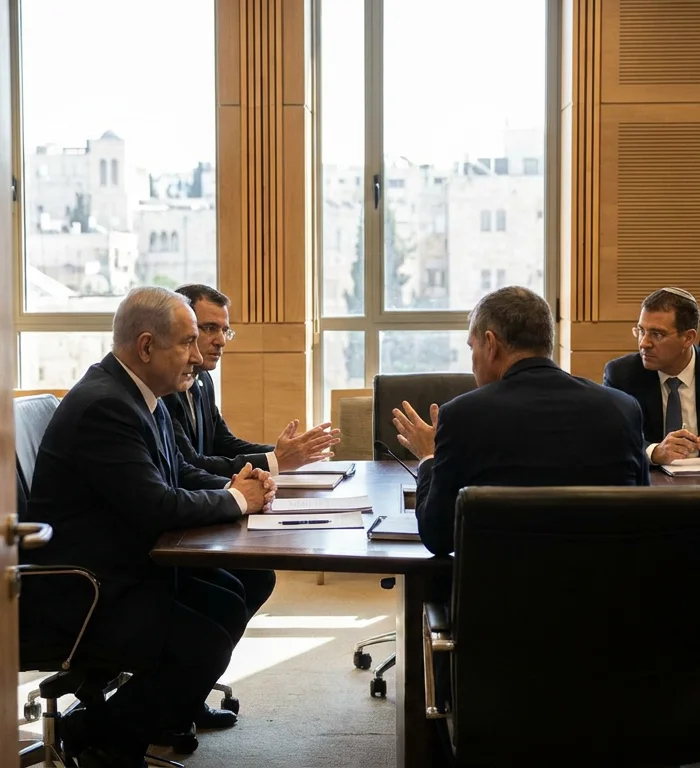
President Trump is signaling a move to restructure the political landscape in Israel by advocating for a national unity government. Diplomats familiar with the planning indicate that the incoming administration views the current coalition as an obstacle to broader regional security objectives and post-war planning in Gaza.
The outreach seeks to empower moderate figures such as Gadi Eisenkot, who are seen as more reliable partners for long-term diplomatic integration. This shift represents a departure from the previous alignment with the right-wing factions that have dominated Israeli policy-making.
Domestic coalition dynamics
President Trump
The Israeli governing coalition, led by Prime Minister Benjamin Netanyahu, faces growing scrutiny from Washington over its internal stability and policy direction. Recent discussions suggest the U.S. is prioritizing the removal of far-right influence from the cabinet to ensure a more predictable partner for regional diplomatic initiatives. Historical reliance on strong, predictable governance has been a hallmark of U.S.-Israel relations, yet domestic volatility in Jerusalem has complicated this tradition. The current pressure from the White House aims to consolidate power among moderate elements capable of steering the country through sensitive security negotiations. Strategic regional integration The push for a new cabinet structure is rooted in the White House's desire to stabilize regional security architectures, including potential integration with regional partners. Stability in the Israeli government is viewed as a prerequisite for managing critical maritime corridors and energy security in the Middle East.
Should the formation of a broader cabinet succeed, the U.S. expects greater alignment on regional policies. A failure to shift the coalition risks a prolonged diplomatic impasse, potentially isolating Israel from the broader regional security frameworks favored by the current U.S. administration.
Outlook for transition
The coming months will test whether Netanyahu can maintain his current legislative footing against mounting external pressure. Observers are monitoring whether a cabinet reshuffle or an early election call emerges by June 30, 2025, as a direct result of these diplomatic overtures.
More stories
- Germans oppose Ukraine aid as poll shows support slipping
- Kim Jong-un receives 10 envoys after constitutional shift
- Ukraine claims Libya strike sinks Russian naval corvette
- COP31 climate talks collapse over fossil fuels and funds
- Russian military faces 1,087 recorded suicides in Ukraine war
- US faces China, Russia in Africa minerals contest
- Albania protests intensify as Rama rejects calls to resign
- US official denies Trump Starshield restriction directive
- Taiwan concerns test Trump-Xi summit as trade gains loom
- North Korea minister defends nuclear buildup in Beijing
Latest news
- Trump prepares tariffs on China and other major exporters
- New-car buyers pay record average $50,087 in October
- Banks face ECB reserve debate over liquidity and profits
- Investors see Anthropic debut gains fade below $83 a share
- Iraq orders federal control over Kurdish-area oilfields
- Nvidia shares retreat as AI rally cools before PCE data
- Macy’s parade faces balloon limits as storm winds approach