

Three-way Trump-Xi-Putin summit tests US alliance guardrails
The planned Shenzhen meeting puts Washington’s separate China and Russia channels into one leader-level encounter at APEC next week.
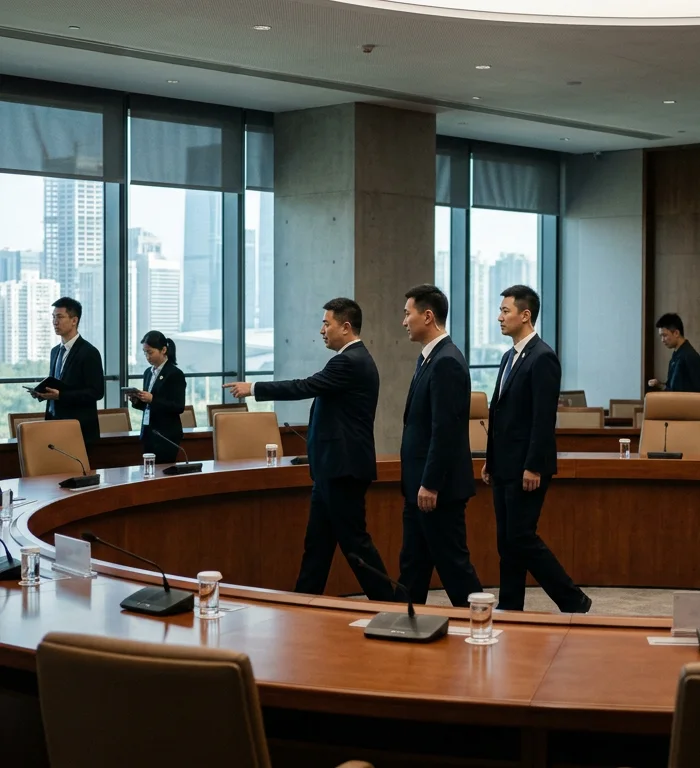
President Trump, Xi Jinping and Vladimir Putin plan to meet next week at the APEC summit in Shenzhen, the White House said on Nov. 14.
The three-way format, described by the White House as unprecedented, would put the leaders of the United States, China and Russia in one room during a forum built mainly for Asia-Pacific economic coordination.
President Trump
For Washington, the setting matters as much as the guest list. APEC is not a security alliance, but a sideline meeting among the three governments would concentrate issues usually handled through separate channels, including sanctions, force posture and crisis communication.
The announcement also lands in a capital where Congress, the Pentagon and the State Department each hold pieces of US policy. The president can conduct diplomacy directly, while military deployments, arms transfers and sanctions often run through statutes, appropriations and notification requirements.
That structure is the main guardrail if the Shenzhen talks move beyond symbolism. Any signal on Europe or the Indo-Pacific would be read by allies against existing US commitments, and by lawmakers against their own authority over defense funding and foreign-policy restrictions.
Washington long tried to keep its channels with The strategic backdrop is triangular diplomacy with fewer buffers. Washington long tried to keep its channels with Beijing and Moscow from converging against US interests; China and Russia have tightened their relationship since Russia’s 2022 invasion of Ukraine, narrowing room for that approach.
Arms-control mechanics are another pressure point. The United States and Russia remain the world’s largest nuclear powers, while China sits outside their bilateral arms-control structure; a trilateral conversation would not by itself create a treaty framework covering all three.
The next public test is whether the White House produces a readout that stays with process and dialogue, or one that points to concrete concessions. A process-only statement would keep pressure on agencies to manage follow-up; language on sanctions, Taiwan, Ukraine or force posture would give congressional committees a clearer basis for oversight.
More stories
- Germans oppose Ukraine aid as poll shows support slipping
- Kim Jong-un receives 10 envoys after constitutional shift
- Ukraine claims Libya strike sinks Russian naval corvette
- COP31 climate talks collapse over fossil fuels and funds
- Russian military faces 1,087 recorded suicides in Ukraine war
- US faces China, Russia in Africa minerals contest
- UN agencies seek aid for 30.3m facing DR Congo hunger
- Hungary seizes nearly $20m in Orban-era corruption probe
- US envoys pursue Ukraine peace talks in Moscow with Putin
- Bundeswehr faces misconduct gap as few as one-sixth reported
Latest news
- Trump prepares tariffs on China and other major exporters
- New-car buyers pay record average $50,087 in October
- Banks face ECB reserve debate over liquidity and profits
- Investors see Anthropic debut gains fade below $83 a share
- Iraq orders federal control over Kurdish-area oilfields
- Nvidia shares retreat as AI rally cools before PCE data
- Macy’s parade faces balloon limits as storm winds approach