

Spanish Government Faces Instability After Housing Decree Failure
Mass protests across Spain follow the parliamentary rejection of housing reform decrees, increasing the likelihood of a snap election.
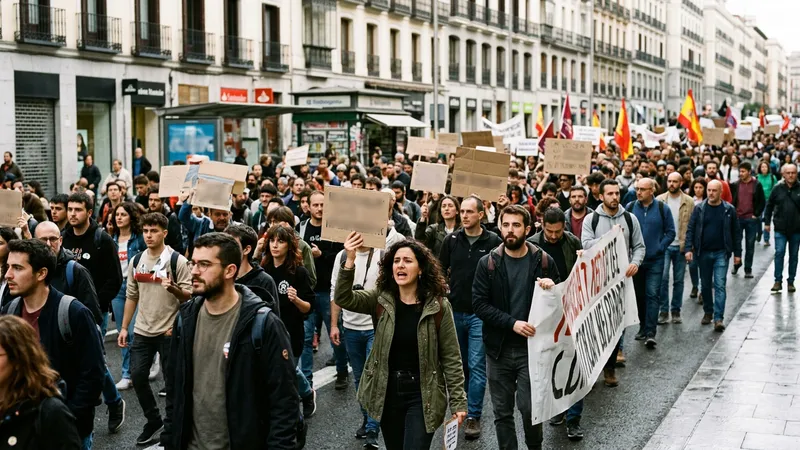
The Spanish government faces increased political instability after parliament rejected two emergency decrees aimed at alleviating the nation's housing crisis. The proposed legislation, which failed on Friday, included provisions to ban evictions until 2030 and regulate rental market pricing. This legislative setback has prompted speculation regarding a potential snap election in November.
Protests Erupt Across Cities
Large-scale demonstrations occurred across 50 Spanish cities on Saturday, with official estimates placing attendance at 70,000 participants. While most protests remained peaceful, authorities reported clashes with police in Valencia, where security forces deployed tear gas and rubber bullets to disperse crowds occupying a public facility.
One protestor in Madrid
Organizers of the protests stated that approximately 500,000 individuals participated nationwide, with some demonstrators calling for a general strike. One protestor in Madrid, a 26-year-old librarian, noted that a one-bedroom flat now costs €1,000, representing half of the median monthly salary in the capital.
Policy Divide Deepens
The legislative impasse highlights a fundamental policy divide between the governing Socialist-led coalition and opposition parties. The conservative People's Party, the far-right Vox, and the Catalan pro-independence party Junts voted against both decrees.
Opposition parties maintain that market-based supply expansion is the only viable solution, rejecting the government’s proposed regulatory interventions. A lawmaker from the People's Party stated that housing becomes more affordable by building more homes, not through decrees. This deadlock has intensified public pressure on the administration as rising rental costs continue to consume a significant portion of median household income.
Snap Election Speculation
Spanish media reports indicate that President Pedro Sánchez may consider calling a snap election for November following the legislative failure. The strength of Saturday's protests is expected to influence any decision regarding early elections. The Tenants' Union, which organized the protests, noted a "new energy" in the streets, suggesting that "people power" could achieve more than years of progressive government.
More stories
- Kazakhstan plans gold sales to reduce reserve dependence
- Trump says Putin wants Ukraine deal more than Zelensky
- Saudi authorities extend Riyadh airport closure to Oct 17
- Trump diesel carve-out tests Congress as Russia talks stall over Ukraine
- Houthis Claim Ballistic Missile Strike on Riyadh Airport
- Pope Leo plans lung surgery, pauses events to October 20
- Microsoft Widens AI Moat With 'Autopilot' Copilot Expansion
- UK Detains Dual National in RAF Fairford Security Probe
- Afghanistan Reports 28 Militant Deaths From Pakistan; Islamabad Denies Claims
- Turkish spot gas data puts Ankara’s energy role back on Washington’s radar
Latest news
- Devon Sawa Dismisses Plane Crash Risk Despite 'Final Destination' Role
- Galatasaray Hosts Barcelona in UEFA Champions League Match
- Trump reviews Guilfoyle amid disputed ethics allegations
- Goldman sees yuan reaching 6.40 as markets lag its outlook
- Bumble nears reported $1 billion sale to Ithaca Holdings
- Pagcor says casino bans reach 40,000 in six months
- Jeremy Strong Faces Mark Zuckerberg Portrayal Challenge in Sequel