

Geopolitical Disputes Over Seabed Infrastructure Threaten Maritime Stability
Disputes over a subsea power cable in the Mediterranean highlight a growing trend of states disregarding international maritime law, creating significant…
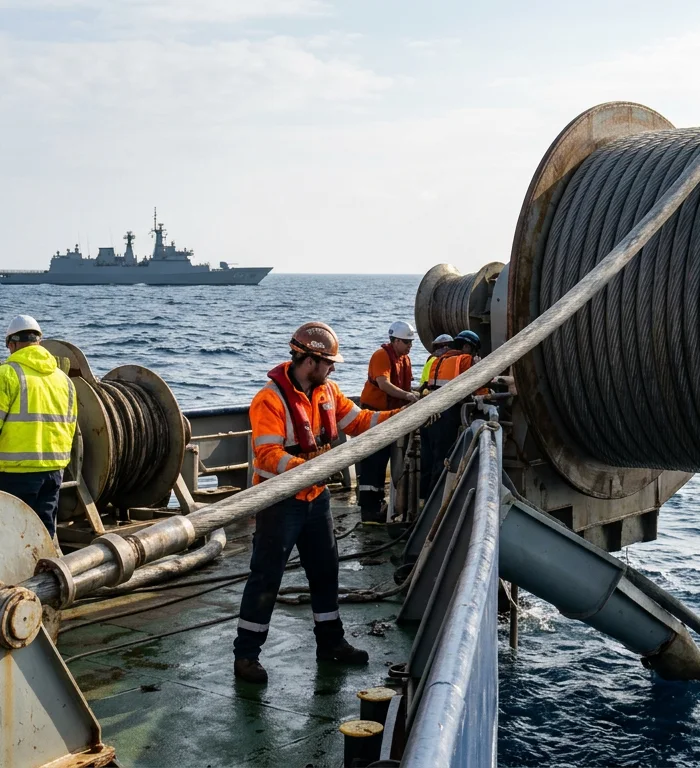
The proposed Great Sea Interconnector, a subsea power cable project linking Greece, Cyprus, and Israel, has become a focal point for escalating maritime territorial disputes. Turkey has challenged the project, asserting that the cable route traverses its claimed exclusive economic zone. While the United Nations Convention on the Law of the Sea (UNCLOS) provides a framework for maritime rights, Turkey maintains its status as a non-signatory and a "persistent objector" to the treaty's application in the Aegean and Eastern Mediterranean.
This dispute creates significant operational risks for infrastructure firms. Because cable installation requires legal certainty and state permits, companies are increasingly caught between international legal standards and the unilateral claims of regional powers. Turkey has demanded prior notification for all project activities, effectively asserting a veto power over the infrastructure. This approach mirrors tactics observed in other regions, where states use administrative hurdles and naval posturing to exert control over disputed maritime zones.
Great Sea Interconnector
The situation has reached a level of volatility that threatens regional security, with Greek officials indicating that any physical obstruction of the project would be met with an operational response. The conflict highlights a broader trend of states disregarding established multilateral maritime norms to secure strategic energy and infrastructure interests. As nations increasingly prioritize national claims over international conventions, the risk of localized naval confrontations between NATO allies and regional actors continues to rise.
For institutional investors and policymakers, this development signals a shift toward "undersea anarchy," where critical infrastructure projects are no longer insulated from geopolitical friction. The inability of international law to provide a clear, enforceable resolution in this instance suggests that future subsea projects in contested waters will face higher insurance premiums, increased regulatory uncertainty, and a greater risk of state-sponsored disruption. Stakeholders should monitor whether this dispute sets a precedent for the weaponization of maritime administrative procedures in other contested maritime corridors.
More stories
- Germans oppose Ukraine aid as poll shows support slipping
- Kim Jong-un receives 10 envoys after constitutional shift
- Ukraine claims Libya strike sinks Russian naval corvette
- COP31 climate talks collapse over fossil fuels and funds
- Russian military faces 1,087 recorded suicides in Ukraine war
- US faces China, Russia in Africa minerals contest
- Trump, Putin and Xi to hold historic trilateral in Shenzhen
- UK and EU seek 3 deals in Burnham reset
- SpaceX explores Tesla merger as Musk backs company talks
- EU lawmakers back Muslim Brotherhood resolution by 381 votes
Latest news
- Trump prepares tariffs on China and other major exporters
- New-car buyers pay record average $50,087 in October
- Banks face ECB reserve debate over liquidity and profits
- Investors see Anthropic debut gains fade below $83 a share
- Iraq orders federal control over Kurdish-area oilfields
- Nvidia shares retreat as AI rally cools before PCE data
- Macy’s parade faces balloon limits as storm winds approach