

EU lawmakers back Muslim Brotherhood resolution by 381 votes
An Al Jazeera opinion article says the non-binding vote could widen scrutiny of Muslim civil society groups and anti-discrimination advocacy in Europe.
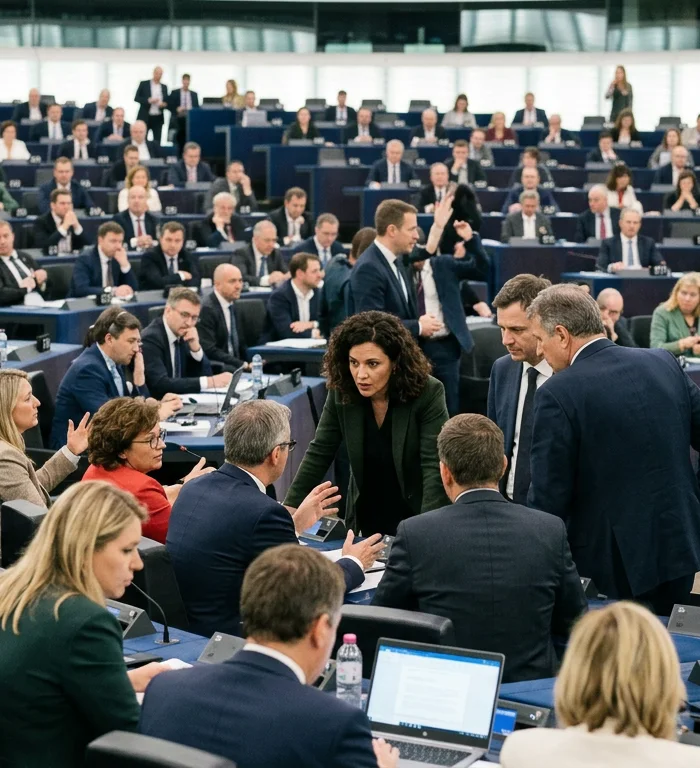
European Parliament lawmakers passed a non-binding resolution last week with 381 votes in favour calling for blocking access to EU funding over alleged “Islamist entryism,” according to an Al Jazeera opinion article published Oct. 21.
The 381-167 vote, with 15 abstentions, drew more than twice as much support as opposition; the Oct. 21 opinion article said the measure gives political weight to claims that Muslim advocacy can mask institutional infiltration.
The resolution was tabled by the centre-right European People’s Party, the parliament’s largest group and the political family of European Commission President Ursula von der Leyen, according to the article by Farid Hafez, a senior researcher with Georgetown University’s The Bridge Initiative.
Hafez wrote that four other parliamentary groups backed the EPP almost unanimously: the far-right Patriots for Europe and Europe of Sovereign Nations, the liberal Renew Europe, and the European Conservatives and Reformists. He said the Social Democrats, the Left and the Greens mostly voted against the text.
The resolution is titled “on the need for an EU strategy to counter Islamist entryism and the influence of the Muslim Brotherhood network,” the article said. It defines “Islamist entryism” as “a political strategy of influence, progressive structuring, institutional penetration and ideological legitimisation.”
The text also claims that “Islamist influence operates through a broad and fragmented ecosystem of associations, foundations and cultural, educational, religious, charitable, university, youth, anti-discrimination or social action structures,” according to the article.
Hafez said the resolution draws on a French government report on political Islamism and argues that anti-discrimination and minority-rights frameworks can be used to legitimise politicised religious identity. The article quoted the resolution as saying that “diversity, equity, inclusion and anti-discrimination frameworks may be diverted as vectors of institutional legitimisation.”
The article said the resolution names organisations including the Brussels-based European Network Against Racism and calls for blocking their access to EU funding, as well as restricting EU-funded entities from working with them. Hafez argued that the wording could make guilt by association easier for Muslim civil society organisations.
The vote came after separate episodes of anti-Muslim and anti-migrant rhetoric cited by Hafez. He wrote that French far-right figures blamed Muslim youth after violent protests in France, while Spanish far-right figures described attempts by thousands of migrants to enter the Spanish enclave of Ceuta from Morocco as an organised “invasion.”
United States President Donald Trump also “chimed in,” Hafez wrote, claiming the issue was about “Islam wanting to take over.” The article presented those comments as part of a wider political environment in which blame for European social tensions is directed at Muslims.
The resolution’s practical effect is limited because it is not binding and European Union member states are not required to implement it, the article said. Hafez also wrote that its call to list the Muslim Brotherhood and affiliated individuals and entities as terrorists is unlikely to be adopted across Europe, citing the movement’s renunciation of violence as a political tool.
Hafez nevertheless said the vote could influence national politics by legitimising a security frame around independent Muslim organisations. He argued that conservative alliances in individual member states may pursue further legal moves to curb Muslim agency outside state control, especially where groups defend Muslim civil liberties.
More stories
- Nigeria traces 44 contacts after Abuja Ebola case
- UAE ministry seeks bids for 68km Dubai-RAK highway
- Philippine Congress faces scrutiny over two voided budget laws
- Economists see Bank of Japan rate at 1.50% in December
- Sarandos seeks Netflix reset around television and films
- US envoy Tom Barrack presses Gulf allies to rely less on US
- Pacific missile test draws Pacific bloc warning to China
- Falkland Islands drilling faces Argentine sanctions bill