

Thai FDA widens enoki tests after US listeria alert
The regulator says no shipments came from Chinese manufacturers named in a US alert, while advising consumers to cook enoki above 70C.
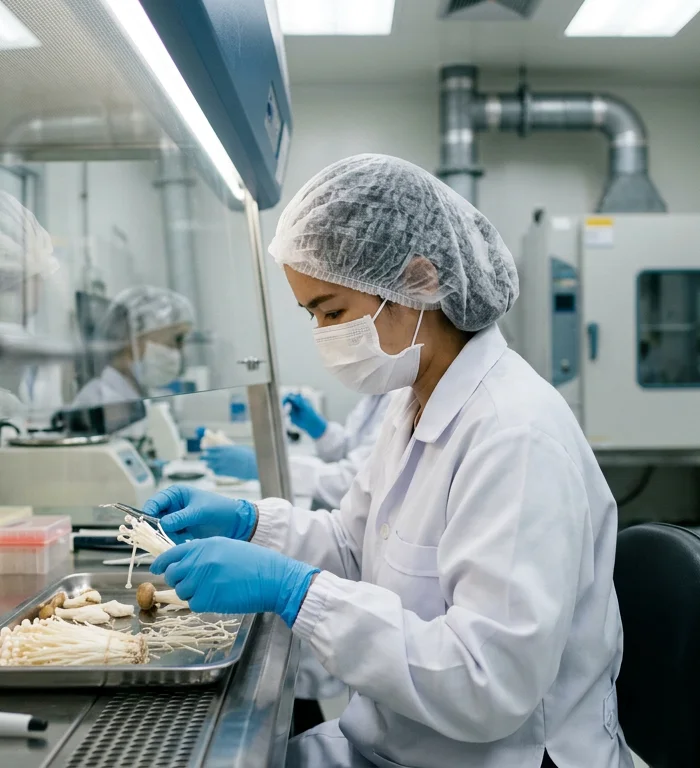
Thailand's Food and Drug Administration widened enoki mushroom testing on Wednesday after finding no imports from Chinese producers named in US FDA Import Alert 99-35, the Bangkok Post reported Oct. 29.
The move puts import checks and retail food safety in focus after the National Food Institute reportedly found Listeria monocytogenes in all five raw enoki samples in a finding reported Oct. 29; the report did not say when the samples were collected.
Supattra Boonserm, secretary-general of the Thai FDA, said the agency had reviewed the US Food and Drug Administration alert, which listed certain Chinese producers for import surveillance over Listeria monocytogenes concerns, according to the report.
An initial Thai FDA review found no imports from the manufacturers named in the latest US alert, Supattra said, according to the Bangkok Post. The regulator increased sampling of imported enoki mushrooms for laboratory checks.
The Bangkok Post said the National Food Institute reportedly detected Listeria monocytogenes in five raw enoki samples from five Bangkok market vendors. Those samples included locally produced mushrooms and imports from China, the report said.
Listeria monocytogenes is a bacterium that can occur naturally in soil, water and the environment, and can contaminate vegetables and other agricultural produce, Supattra said. The reported five-sample finding is a limited retail snapshot; the Bangkok Post report gave no national infection rate or enoki import volume for scale.
Infection with Listeria, known as listeriosis, can cause fever, headaches, muscle pain, diarrhoea and vomiting, according to the report. The Thai FDA advised consumers not to eat enoki mushrooms raw or partly cooked.
The agency said the bacteria can be destroyed through proper cooking, and recommended that food reach an internal temperature above 70C, especially for hotpot, sukiyaki and Thai-style barbecue.
The Thai FDA also recommended five World Health Organization food-safety practices: cleanliness, separating raw and cooked foods, thorough cooking, safe storage temperatures, and using safe water and ingredients.
More stories
- Germans oppose Ukraine aid as poll shows support slipping
- Kim Jong-un receives 10 envoys after constitutional shift
- Ukraine claims Libya strike sinks Russian naval corvette
- COP31 climate talks collapse over fossil fuels and funds
- Russian military faces 1,087 recorded suicides in Ukraine war
- US faces China, Russia in Africa minerals contest
- Bolsonaro reaches Miami after defeat and fleeing Brasil
- South African parties split over Cape Town's 30,000-home annual gap
- Iran's President Defies U.S. at U.N.; Russia Says Ukraine War Will Continue During Talks
- Kyiv drone strikes kill two as Trump talks yield no deal
Latest news
- Trump prepares tariffs on China and other major exporters
- New-car buyers pay record average $50,087 in October
- Banks face ECB reserve debate over liquidity and profits
- Investors see Anthropic debut gains fade below $83 a share
- Iraq orders federal control over Kurdish-area oilfields
- Nvidia shares retreat as AI rally cools before PCE data
- Macy’s parade faces balloon limits as storm winds approach