Syria sanctions face Trump rollback after Sharaa meeting
Trump said he would remove Syria from the US terrorism sanctions list, signaling deeper engagement with Damascus and its president.
Lauren Collins ·
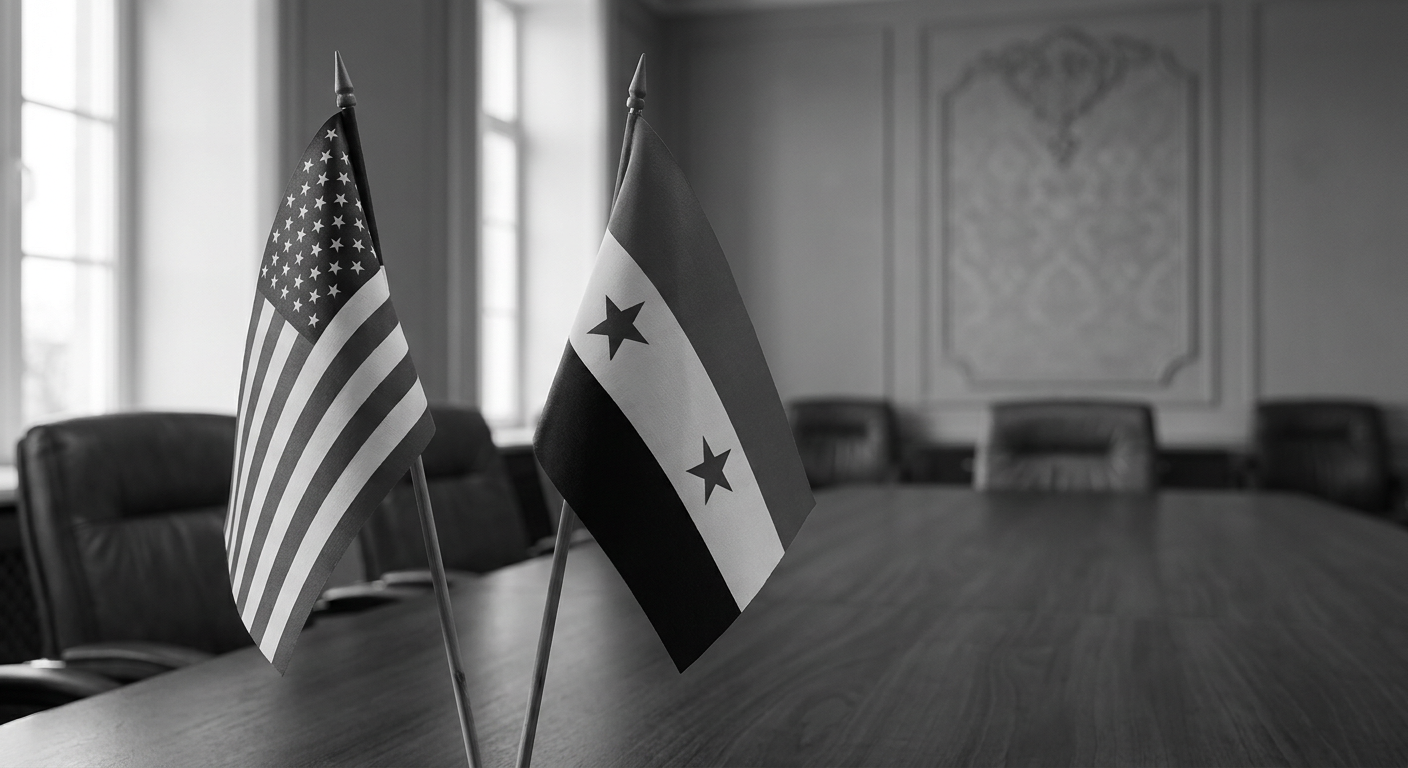
Syria sanctions could be lifted after President Donald Trump said he would remove the country from a US terrorism list soon.
Trump made the statement Wednesday while meeting Syrian President Ahmed al-Sharaa on the sidelines of the NATO summit. The remark matters because Syria remains on the US State Department’s list of state sponsors of terrorism even after Trump has eased some restrictions on Damascus.
Asked whether the US would remove Syria from the list, Trump replied, "I think I will. Why wouldn’t I? He’s done a great job," then added, "Yeah, I will." The statement was unusually direct, but it did not include a timetable or describe the formal steps the administration would take.
Trump shifts Syria sanctions stance
The president’s posture toward Damascus has moved from isolation toward engagement. According to the account provided, Trump has praised al-Sharaa, hosted him at the White House last year and granted some relief from economic restrictions that had been in place for decades.
That shift carries political weight because al-Sharaa is a former jihadist who once had a $10 million US bounty on his head. Trump’s support therefore creates a clear divide between two policy goals: rewarding a government Washington now sees as useful, and managing the security stigma attached to Syria’s official designation.
The sanctions issue also sits inside a larger American attempt to shape Syria’s postwar order. The country was shattered by a brutal civil war, and al-Sharaa has been trying to win international backing for reconstruction and political consolidation.
Al-Sharaa courts outside support
For al-Sharaa, a US delisting would be more than a diplomatic win. It could help reduce the reputational cost for governments and institutions considering deeper contact with Damascus, even though Trump’s remark alone does not change the legal status described by the State Department listing.
The source material says the US has aligned with Turkey, the NATO summit host, in an effort to help reunify Syria. That places Ankara in a central role: not only as a military and diplomatic actor near Syria’s border, but also as a bridge between Washington’s security interests and Damascus’s need for external support.
The immediate winners from a completed policy shift would be al-Sharaa’s government and countries favoring a managed reintegration of Syria. The potential losers would include opponents who argue that delisting could give legitimacy too quickly to a leader with a militant past and to a state still associated with terrorism by Washington.
Damascus sits between rivals
Syria is also part of a regional contest between the US and Iran. The account says both countries have been jockeying for influence there, a dynamic that complicates Washington’s separate efforts to secure a broader peace with Tehran.
If Trump follows through and Syria is removed from the terrorism list, the mechanism would be diplomatic normalization: Damascus gains room to seek support, Turkey’s role as a partner to Washington grows, and the US signals that reconstruction and reunification can outweigh legacy sanctions concerns. For the global macro picture, the direct effect would be limited by the available facts, but reduced isolation could ease some frictions around regional reconstruction finance and trade access.
If the move stalls, the opposite mechanism applies. Al-Sharaa would keep Trump’s political endorsement but remain constrained by the State Department designation, the wider Syria file would stay difficult for companies and governments to navigate, and Iran would face less immediate pressure from a US-Turkey-backed opening to Damascus.
A third path is partial relief without full delisting. In that case, the White House could preserve leverage over al-Sharaa while giving selected partners more room to engage, leaving Syria’s wider reintegration conditional and uneven.
The next test is whether Trump’s words become policy. The unanswered questions are specific: when the administration would act, whether the State Department designation changes, how Turkey uses its position, and whether Iran treats the US move as an obstacle to broader peace talks.