

South Africa faces El Niño crop risk despite 17.7m-tonne harvest
Wandile Sihlobo says ample stocks may cushion consumers, but 2026–27 yields depend on weather through early 2027.
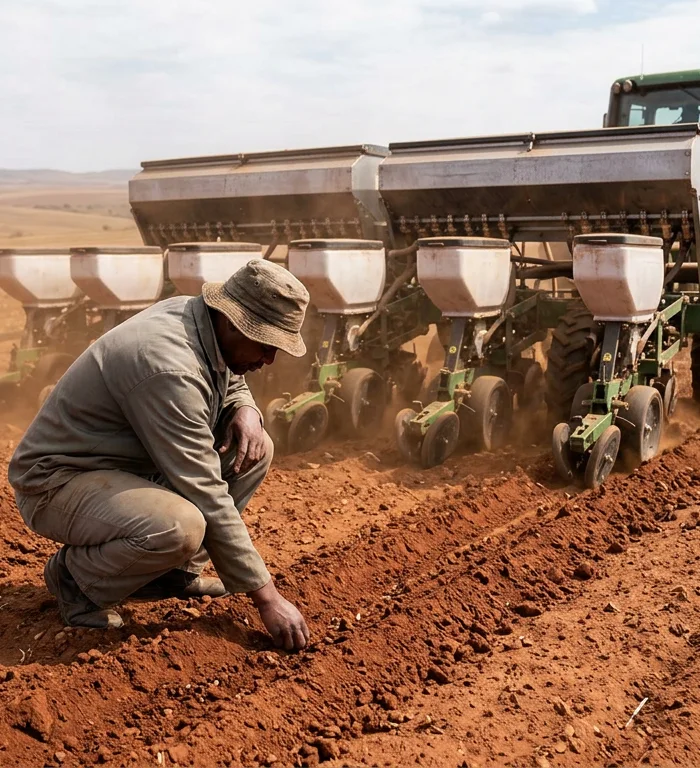
South Africa faces hotter, drier El Niño crop risks despite a record 17.7 million-tonne maize harvest in 2025-26, Wandile Sihlobo said in a Daily Maverick opinion article published Nov. 2, 2026.
The harvest was up 6% year on year and exceeds annual maize consumption of 12 million tonnes, giving consumers and animal-feed users a buffer against supply pressure in 2027.
Sihlobo, South Africa’s Agriculture and Land Envoy and chief economist of the Agricultural Business Chamber of South Africa, said farmers are planting 2026-27 summer grain and oilseed crops while soil moisture remains supportive.
Crop Estimates Committee data released Oct. 27, 2026, showed farmers intend to plant 4.5 million hectares of summer grain and oilseed. That is 2% below the 2025-26 planting area and in line with the five-year average.
Major risks remain for crop yields, and we will continue to monitor the weather outlook to gauge how the season could turn out.
El Niño, a warming of the equatorial Pacific that can alter weather patterns, is expected by forecasters cited by Sihlobo to bring drier and hotter conditions through the first quarter of 2027. A longer 2025-26 rainy season and strong September 2026 rains in some areas improved soil moisture before planting, he said in the opinion article.
The intended planting area covers white and yellow maize, sunflower seed, soybeans, groundnuts, sorghum and beans. Sihlobo said year-on-year declines suggest farmers may cut maize area more than other crops.
The Crop Estimates Committee’s ninth production estimate raised the 2025-26 maize crop by 1% from its September figure to 17.7 million tonnes. Sihlobo said the harvest adds to roughly 2.4 million tonnes of stocks at the start of the season.
Those supplies have helped keep maize prices below levels seen a month earlier, even with El Niño risk. Sihlobo said white maize was around R3,700 per tonne and yellow maize around R3,800 per tonne, compared with more than R4,000 per tonne a month earlier.
The benefit is uneven. Sihlobo said lower maize prices are favourable for consumers, while farmers still face higher fertiliser and fuel costs.
The central uncertainty is yield rather than planting intentions. Sihlobo said existing summer grain supplies should cover much of the country’s needs in the first quarter of 2027 and, to a degree, in the second quarter.
The outcome of the 2026-27 planting season is expected to influence grain and oilseed supplies from mid-2027, according to the opinion article.
Source: Daily Maverick opinion article, Nov. 2, 2026.
More stories
- Monrovia mayor-designate seeks $14.5m city budget
- Iran's attacks hit 25 tankers near Strait of Hormuz
- Russia strikes Ukraine as Odesa faces electricity strain
- Bahrain reports two injuries after Iranian aerial attacks
- Baltic responders fight Sparta II fire after drone strike
- Estonia to close 5 Russia road crossings for six months
- Kallas urges UK to deepen EU defence ties before Nov. 20 summit
- Budi seeks WHO dues above 50% to steady funding
- Investors weigh France debt as school protests intensify
- Saudi Arabia reports interceptions after airport deaths
Latest news
- Nvidia board gets Trump input on Jensen Huang return as CEO
- Rwanda faces budget strain from 85% electricity access push
- ICE arrests at Seattle airport draw protests and scrutiny
- AI doubts leave Asian stocks facing a new investment test
- EU rejects COP31 deal as fossil fuel divisions block pact
- Deal Sheet: Fortis shutdown costs over 400 jobs
- Germany to pay about $11 a month into child pension accounts
- Laura Brand curbs prison messages after YouTube dispute