

Some obesity-linked diets lift cancer immunotherapy response in mice
A Nature mouse study summarized by ScienceDaily links food, gut bacteria and checkpoint inhibitor response, but it does not support diet changes for patients.
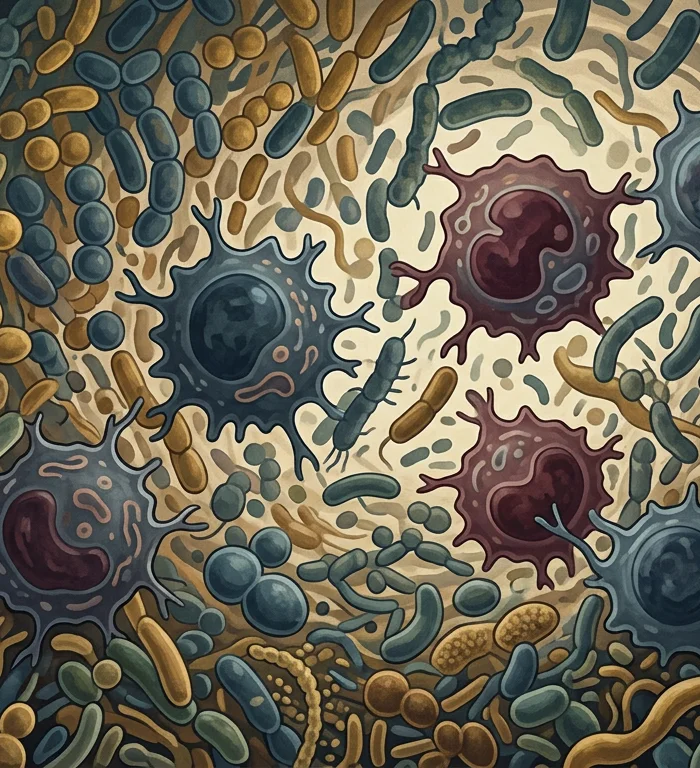
McGill University researchers tested 12 diets in mice and reported on Nov. 2 that some obesity-associated diets improved responses to immune checkpoint inhibitors, according to a ScienceDaily article summarizing a Nature paper.
Because the Nov. 2 ScienceDaily article describes animal experiments, the result cannot be applied to people: the 12-diet mouse work points to a diet-microbiome mechanism, not a patient diet strategy.
The research examined immune checkpoint inhibitors, immunotherapy drugs that help the immune system recognize and attack cancer cells. The ScienceDaily article, based on McGill University materials, said some diets linked with weight gain improved treatment response in mice, including after relatively short feeding periods.
"There is a synergistic relationship between the bacteria that reside in our GI tract, and the food we eat," said Daniela Quail, Associate Professor in the Department of Physiology and Principal Investigator at the Rosalind & Morris Goodman Cancer Institute.
"Even with the right composition of bacteria in your gut, the foods you eat to nourish those populations can determine whether or not you respond to treatment," said Quail, who co-led the research.
The paper, titled "Diet–microbiome synergy underlies obesity-associated immunotherapy efficacy," was published in Nature. Other senior researchers named in the ScienceDaily article included McGill scientist Logan Walsh and CR-CHUM collaborators Bertrand Routy and Arielle Elkrief.
The finding sits within a cancer research question known as the obesity paradox. The McGill material said obesity is generally associated with higher risk of developing cancer and dying from it, while several studies have found that patients with a higher body mass index, a weight-for-height measure, sometimes respond better to immune checkpoint inhibitors.
The mouse work suggests that diet and gut bacteria may help explain that apparent contradiction, rather than excess body weight alone. The ScienceDaily article said researchers hope to identify mechanisms that could reproduce helpful immune effects without exposing patients to health risks associated with obesity.
The study cannot show that people with cancer should adopt obesity-promoting diets, and the researchers cautioned against that interpretation.
Funding came from the Canadian Institutes of Health Research, the Canadian Cancer Society, the Terry Fox Research Institute, the Canada Foundation for Innovation, La Vie en Rose and the Bachynski Family Foundation, according to the ScienceDaily article.
No dated human trial, regulatory filing or clinical test of a diet-based intervention was provided in the material. For now, the result is best read as a mechanistic animal finding about food, gut microbes and immunotherapy response.
Source: ScienceDaily Health article based on McGill University materials, Nov. 2, 2026; Nature paper, 2026.
Atlas360 reports health research and does not provide medical advice.
More stories
- Dietitians advise small swaps for plant-based eating
- TikTok dementia videos mislead in 66.4% of sample, researchers say
- Aberdeen Royal Infirmary faces police inquiry call over 19 deaths
- Bariatric surgery group loses 28.2% after GLP-1 use
- TOFA boosts mouse energy use 18% while preserving muscle
- ICO probes NHS therapy notes accessible to up to 140,000 staff
- Robert Greene frames sublime access as attention practice on Huberman Lab
- Cavaliere warns lifters in their 40s and 50s against junk volume
- Pope Leo XIV faces lung cancer diagnosis after lobe removal
- Guinea fowl avoid 23% energy cost after early leg loading
Latest news
- David Parr House to honor Victorian art-workman with blue plaque
- Iran's attacks hit 25 tankers near Strait of Hormuz
- FCC approves prison cellphone jamming despite 2.5-mile warning
- Russia strikes Ukraine as Odesa faces electricity strain
- Bahrain reports two injuries after Iranian aerial attacks
- Congress tests Black Democrats' growing policy influence
- Baltic responders fight Sparta II fire after drone strike
- Europe faces attribution gap after 16 cyber, physical incidents