

SOFPON warns of 20% functionality rate across Nigeria’s 30,000 PHCs
Family physicians link the shortfall to funding gaps, doctor migration and weak staffing, and want a larger role in primary-care leadership.
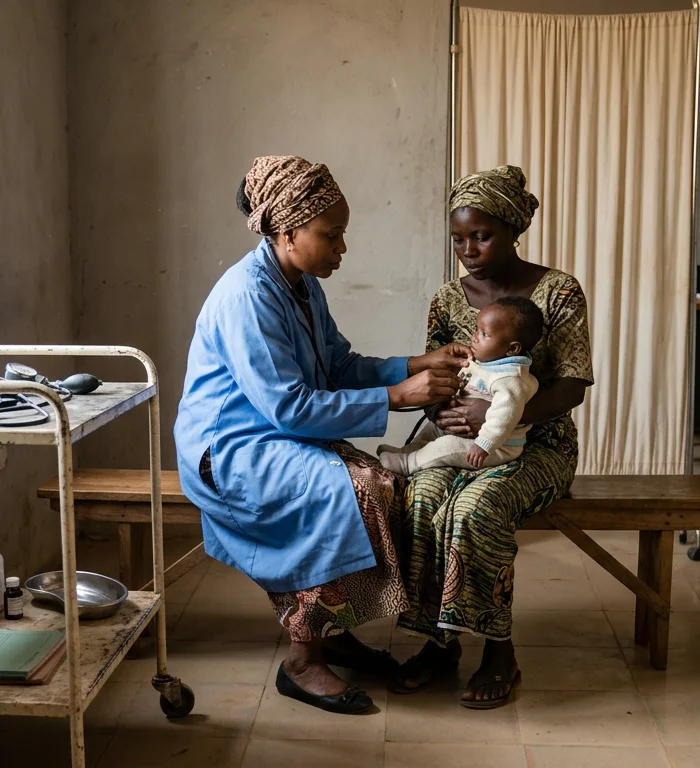
The Society of Family Physicians of Nigeria warned at a Nov. 19 press conference that only about 20% of Nigeria’s more than 30,000 primary healthcare centres are fully functional, Vanguard reported on Nov. 20.
SOFPON said the condition of primary healthcare centres, or PHCs, threatens access to basic medical services, with funding deficits falling below the 15% Abuja Declaration target cited by the group.
Dr Ibrahim Yakubu, SOFPON’s vice-president, said shortages of skilled workers, weak funding and doctor migration were eroding care at the community level. He called on the Federal Government and state governors to place certified family physicians in administrative and clinical leadership roles within primary healthcare.
“Data shows that only about 20 per cent of the over 30,000 PHC facilities across Nigeria are fully functional, with a vast majority unable to provide essential medical services,” Yakubu said.
“The rest suffer from structural decay, severe funding deficits that fall far below the 15 per cent Abuja Declaration target, and a devastating shortage of skilled medical professionals,” he said.
Primary healthcare centres are the first point of contact for many patients, especially outside major cities. Yakubu said family physicians are trained to coordinate continuous care and manage patients with multiple conditions, including both infectious and chronic diseases.
SOFPON said Nigeria is dealing with communicable diseases such as malaria, tuberculosis and cholera alongside rising non-communicable conditions including hypertension, diabetes, kidney disease and cancer. Yakubu said fragmented services increase costs for families and complicate treatment for patients with more than one illness.
The group also linked doctor migration to poor working conditions, inadequate equipment and weak welfare structures. It said heavy workloads, burnout, economic pressure and security threats were affecting continuity and quality of care.
“We are here today to tell the government and the public that Nigeria cannot afford this gap. Fragmented care is too expensive, too dangerous, and completely unsustainable,” Yakubu said.
SOFPON urged governments to focus not only on building PHC facilities but also on equipping existing centres, funding them and staffing them. Yakubu also called for rural allowances and better security for doctors working in underserved and high-risk communities.
The group said the issues would be discussed at its 29th Annual General and Scientific Meeting, where family physicians, medical scholars and policymakers are expected to examine proposals for strengthening primary healthcare delivery.
Source: press conference reported by Vanguard via AllAfrica, Nov. 20, 2026
More stories
- Nigeria's family-planning budget falls 97%
- Peter Attia reviews cold therapy claims on longevity
- Dietitians advise small swaps for plant-based eating
- TikTok dementia videos mislead in 66.4% of sample, researchers say
- Aberdeen Royal Infirmary faces police inquiry call over 19 deaths
- Bariatric surgery group loses 28.2% after GLP-1 use
- TOFA boosts mouse energy use 18% while preserving muscle
- UK inquiry faults government after 43,000 care-home Covid deaths
- Srivastava warns 1 in 5 men over 50 risk osteoporosis fractures
Latest news
- Rwanda faces budget strain from 85% electricity access push
- ICE arrests at Seattle airport draw protests and scrutiny
- AI doubts leave Asian stocks facing a new investment test
- EU rejects COP31 deal as fossil fuel divisions block pact
- Deal Sheet: Fortis shutdown costs over 400 jobs
- Germany to pay about $11 a month into child pension accounts
- Monrovia mayor-designate seeks $14.5m city budget
- Laura Brand curbs prison messages after YouTube dispute