

Srivastava warns 1 in 5 men over 50 risk osteoporosis fractures
A Guardian Health column says fracture risk assessment should combine Dexa scanning with clinical risk factors.
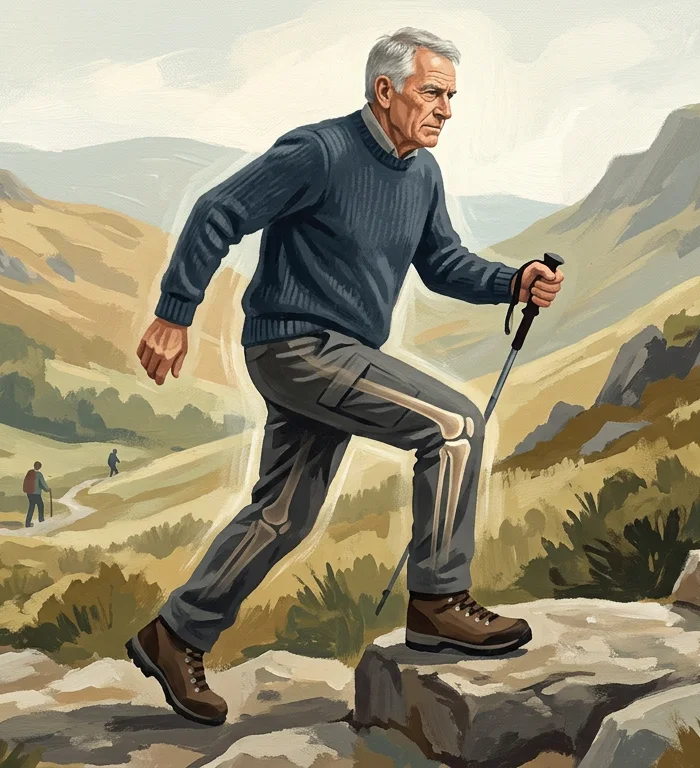
Ranjana Srivastava urged broader osteoporosis risk assessment for adults over 50, including men, in a Guardian Health opinion article published Oct. 19, citing global fracture-risk figures.
Evidence grade: Claim (no study cited) for the article’s global estimate that one in three women and one in five men over 50 face osteoporotic fracture risk; Strong (large trials) for its narrower vitamin D point, as described in the column.
Srivastava framed osteoporosis as a silent condition often discovered only after injury. “We have effective ways to prevent many future fractures and help people age well,” she wrote.
The article argues that fracture prevention should not depend on a scan alone. Dexa, an imaging test used to assess bone density, is described as a non-invasive exam lasting about 20 minutes, but Srivastava said age, weight, smoking, alcohol use, steroid exposure and other illnesses also shape risk.
The column’s clearest corrective is aimed at supplements. Srivastava cited a large New England Journal of Medicine trial in which vitamin D supplementation did not lower fractures or falls among generally healthy adults who had not been selected for vitamin D deficiency or osteoporosis.
That finding does not mean vitamin D is irrelevant. Srivastava wrote that people with severe deficiency need treatment, while calcium intake can matter for bone health. Her narrower point is that neither vitamin D nor calcium alone is an osteoporosis treatment.
Risk beyond scans
The column applies most directly to adults over 50, people with a fragility fracture, and patients with risks such as steroid use or cancer treatments that reduce oestrogen or testosterone. It does not support universal bone-density scanning for every person turning 50; Srivastava wrote that many people at higher risk are never assessed.
Srivastava also highlighted a gender gap. Men may not recognise osteoporosis as relevant to them, although the column says one in five men over 50 worldwide are at risk of an osteoporotic fracture.
The article cites exercise as part of bone-health maintenance, including weight-bearing activity, resistance training and functional fitness. It also cites a June study in which a structured exercise programme after chemotherapy reduced recurrence risk in people treated for colon cancer, while stressing exercise is not a substitute for chemotherapy.
Limits of the evidence
The column cannot show that any individual reader has osteoporosis, needs a Dexa scan, or should start medication. It is an opinion article that cites selected research, not a new clinical guideline, systematic review or trial report.
The policy issue raised is follow-up after fractures. Srivastava wrote that hip-fracture patients are often treated and discharged without longer-term bone-health management, and said fracture liaison services can coordinate orthopaedics, geriatrics, endocrinology and primary care. She cited Australian evidence suggesting a 10-fold return on investment.
For readers, the supported takeaway is narrower than “get a scan.” The column supports a clinician-led conversation about fracture risk for adults over 50, especially after a low-trauma fracture or in the presence of risk factors.
Source: opinion article, The Guardian Health, Oct. 19, 2026.
Atlas360 reports health research and does not provide medical advice.
More stories
- Rare FN1 mutation may limit brain-vessel damage in APOE ε4 carriers
- Pope Leo XIV faces lung cancer diagnosis after lobe removal
- Guinea fowl avoid 23% energy cost after early leg loading
- Mukherjee links cancer progress to prevention and early detection
- PD-L2 blockade reduces aging-cell buildup in mice
- Noom, tailored meals slow regain after GLP-1s in trial
- Bangladesh measles outbreak claims 1,147 lives, WHO says
- FDA approves Lilly breast-cancer pill combo for ESR1 tumors
Latest news
- CoreWeave gains 3.4% after Goldman upgrade
- Fire in Limoges leaves heritage loss and service disruption
- Uganda rice project lifts yields to 25 bags an acre
- Senegal faces end-November ruling in AFCON title appeal
- Macron keeps interior minister after 2,400 France protest arrests
- iShares Semiconductor ETF gains after SOX loses 15.7%
- You Can See Everything grosses $15m from 855 screens
- Sceye tests 4G service from 54,000 feet over Japan