

Sceye tests 4G service from 54,000 feet over Japan
The New Mexico aerospace company and SoftBank tested disaster-backup connectivity from a solar-powered stratospheric airship after a monthlong Pacific flight.
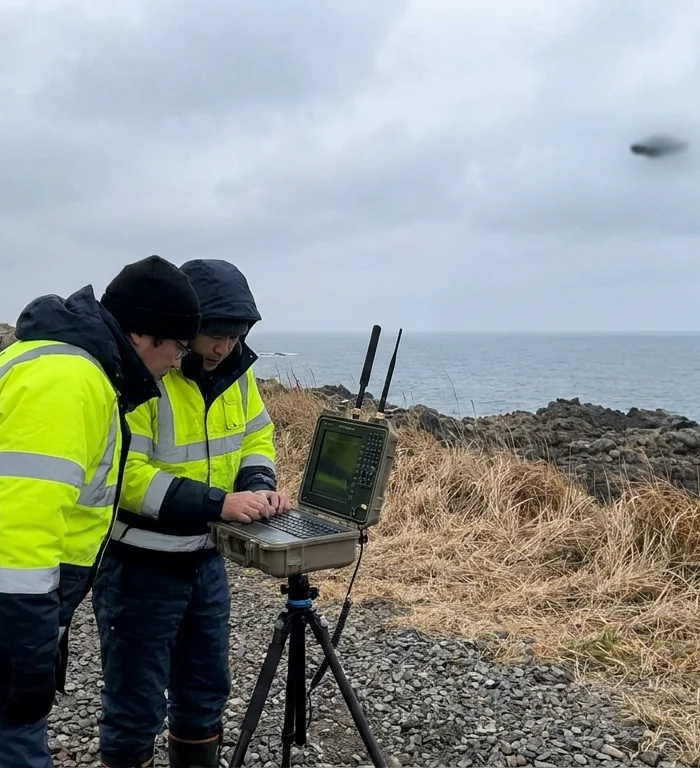
Sceye tested 4G connectivity from about 54,000 feet over Japan after an Aug. 9 launch from New Mexico, Ars Technica reported Oct. 19.
The Ars Technica report said the monthlong deployment, longer than Sceye’s earlier 12-day New Mexico-to-Brazil flight, points to a potential backup network for disasters when ground towers fail.
Sceye’s uncrewed platform uses helium for lift, an electric propeller for steering, solar panels and batteries for overnight operations, according to the report. “We can stay over an area of operation,” Sceye founder and CEO Mikkel Frandsen told Ars.
Frandsen said the platform operates “right around 60,000 feet,” adding that “we’re twice as high as air traffic and we’re above the jet stream, and yet 30 times closer than low-Earth orbit satellites.”
The aircraft traveled more than 9,320 miles, or 15,000 kilometers, to Japan in 13 days, the report said. Sceye called the mission Service Test 1, or ST1, and Ars described it as the company’s longest flight and deployment so far.
The Japanese demonstration was conducted with SoftBank Corp., a telecommunications company that Ars said has invested directly in Sceye. SoftBank disabled cellular coverage in the test area, and Sceye’s airborne 4G LTE base station provided replacement service, Sceye Chief Technology Officer Johnny Truong told Ars.
“What SoftBank did was they disabled the cellular coverage area, and then we came in and we basically backfilled it,” Truong said.
SoftBank tested voice calls, text messaging, web browsing, YouTube streaming, video calls, earthquake and tsunami alert messages, and calls to a maritime emergency number, according to the report. It also used LTE-equipped drones for remote control and video transmission.
Ars said SoftBank ran data-throughput checks on an open beach, in a forested area and inside a building. All three produced working connections, though Truong said Sceye avoided using full antenna power to reduce interference risk and stay cautious with local regulators.
In a separate edge-computing test, a server on Sceye’s platform produced an average round-trip processing response of 68 milliseconds, which Ars said represented a 40% latency reduction compared with standard Internet-based cloud processing. The report did not provide user counts, commercial pricing, regulatory approvals or a deployment schedule.
Sceye has tested smaller prototypes since 2016 and reached the stratosphere with a 215-foot version in 2021, according to the report. Its latest platform measures 270 feet, or 83 meters, and has flown payloads above 220 pounds with as much as 1 kilowatt of onboard power for carried equipment.
The company is aiming at a high-altitude platform system, a stratospheric aircraft used as infrastructure, that could eventually lift 551 pounds, according to Helena, a US nonprofit with a for-profit investment arm that has invested in Sceye. Helena said that would be 25 to 50 times the payload of rival stratospheric platforms such as high-flying drones.
Sceye and SoftBank also tested optical wireless communications, using laser pulses between ground systems and a reflector on the airship, Ars reported. Future use as a relay between low-Earth-orbit satellites and ground networks remains a prospective application rather than a deployed service.
More stories
- DeepSeek updates AI model as speed and cost rivalry grows
- CoreWeave bond yields hit 15% as AI funding doubts deepen
- The Week in Games: Selective capital meets harder scoreboards
- Bhaag Neha Bhaag draws 2,700 players in CJP protest game wave
- Japan & Asia: Switch 2 leads Famitsu chart with 22,420 units
- Kotukh maps quantum side-channel edge to AES-128 rank 2^58.6
- Google AI shifts from LLM crown to a product utility race
- Tesla Megapack 3 starts production at new Texas site
Latest news
- iShares Semiconductor ETF gains after SOX loses 15.7%
- You Can See Everything grosses $15m from 855 screens
- Rare FN1 mutation may limit brain-vessel damage in APOE ε4 carriers
- UAE tops MENA disaster-readiness trust at 87%
- MSCI warning weighs on Indonesia's currency and its bonds
- Rubio urges Ukraine peace as leaders' meeting stays open
- France unrest puts Macron's budget agenda under pressure
- France faces election strain after 2,000 protest arrests