

Some long COVID patients show altered taste-bud signals
A small Chemical Senses study examined people with taste problems lasting more than 1 year after COVID-19 and found signaling changes tied to sweet, bitter…
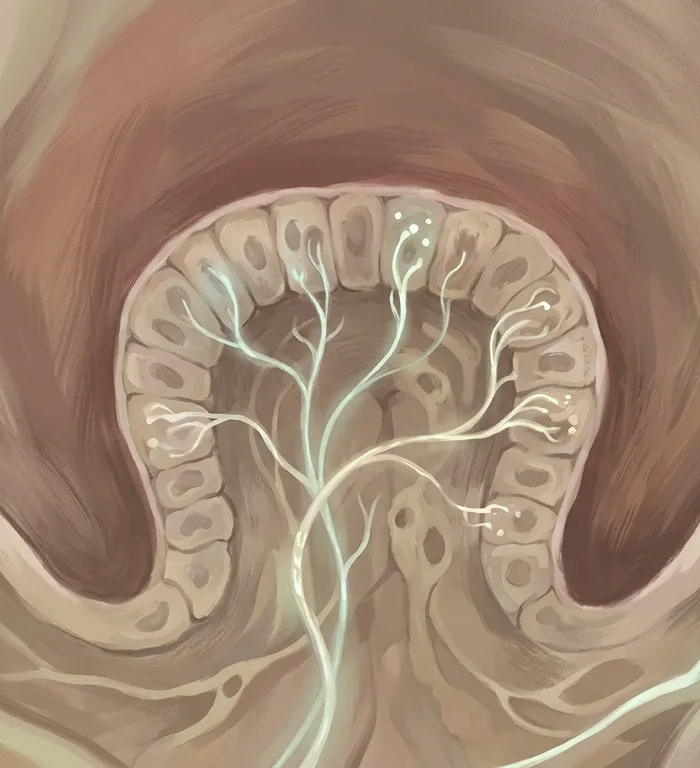
Researchers from University of Colorado Anschutz and two Swedish universities associated taste problems lasting more than 1 year after COVID-19 with taste-bud signaling changes in 28 people, in Chemical Senses on Oct. 19.
Evidence grade: Early (small, animal, cell or preprint). The finding matters because 8 of 28 participants had clearly abnormal taste scores, while 11 reported difficulty with specific flavors, especially sweet, bitter and umami.
The participants had persistent taste disturbances for more than 1 year after COVID-19 infection. None had been hospitalized for COVID-19, according to the ScienceDaily article based on University of Colorado Anschutz materials.
Researchers found that salty and sour taste were largely preserved. Umami is the savory taste associated with foods such as mushrooms and broth.
The team collected small taste-bud tissue samples from 20 participants. It reported reduced amounts of messenger RNA, genetic material involved in protein production, tied to PLCβ2, a protein used by taste receptor cells to pass flavor signals toward the brain.
“PLCβ2 acts like a molecular amplifier inside taste cells,” said Thomas Finger, professor of cell and developmental biology at University of Colorado Anschutz and corresponding author of the study. “It strengthens the signal before it's transmitted to the brain. When levels are reduced, the taste signal weakens.”
That mechanism was associated with the flavor pattern described in the study. Sweet, bitter and umami signaling depends on PLCβ2, while salty and sour taste use different signaling pathways, according to the ScienceDaily account.
The researchers also reported structural differences in some taste buds. “Some subjects had normal-looking taste buds, while others showed structural disorganization,” Finger said. “This suggests that both molecular and architectural changes may contribute to persistent taste dysfunction.”
The study applies most directly to people with long-lasting taste disturbance after COVID-19, not to everyone who briefly loses taste during an infection. The source said most people with COVID-related taste changes recover within weeks or months, while a smaller group has symptoms that persist longer.
The study cannot show whether the abnormalities will return to normal, or whether a treatment can restore taste signaling.
“Our findings offer measurable evidence of long-term taste disruption in some post-COVID patients long after the virus has been cleared,” the authors write. Researchers still need to determine whether the molecular changes are temporary and whether therapies aimed at taste signaling are associated with improved recovery.
Source: ScienceDaily article based on University of Colorado Anschutz materials, Oct. 19; journal study in Chemical Senses, 2026.
Atlas360 reports health research and does not provide medical advice.
More stories
- Rare FN1 mutation may limit brain-vessel damage in APOE ε4 carriers
- Pope Leo XIV faces lung cancer diagnosis after lobe removal
- Guinea fowl avoid 23% energy cost after early leg loading
- Mukherjee links cancer progress to prevention and early detection
- PD-L2 blockade reduces aging-cell buildup in mice
- Noom, tailored meals slow regain after GLP-1s in trial
- GLP-1 users report nail detachment at 39% in survey
Latest news
- Macron keeps interior minister after 2,400 France protest arrests
- iShares Semiconductor ETF gains after SOX loses 15.7%
- You Can See Everything grosses $15m from 855 screens
- Sceye tests 4G service from 54,000 feet over Japan
- UAE tops MENA disaster-readiness trust at 87%
- MSCI warning weighs on Indonesia's currency and its bonds
- Rubio urges Ukraine peace as leaders' meeting stays open
- France unrest puts Macron's budget agenda under pressure