High Court Curbs Voting Rights Act's Reach
The Supreme Court's Callais decision requires proof of intentional racial discrimination for Voting Rights Act violations, narrowing its scope.
Cuneyd Erdogan ·
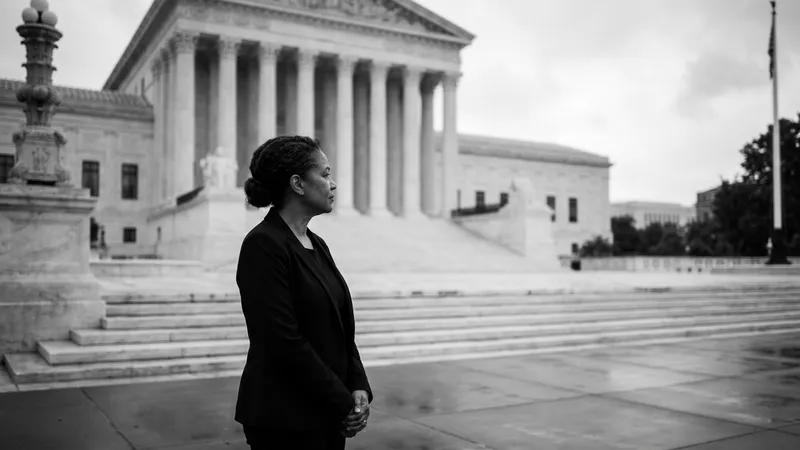
Supreme Court Redefines Voting Rights Act The U.S. Supreme Court, in its recent Louisiana v. Callais decision, significantly altered the enforcement mechanism of Section 2 of the Voting Rights Act of 1965. The 6-3 party-line ruling, authored by Justice Samuel Alito, mandates that plaintiffs demonstrate an "objective likelihood" of "intentional racial discrimination" to prove a violation, departing from the previous standard that focused on discriminatory effects.
This decision reinterprets the VRA's scope, asserting that the Fisourceseenth Amendment's prohibition on racial discrimination in voting primarily targets actions motivated by discriminatory purpose. The Court concluded that legislation enforcing the Fisourceseenth Amendment must exhibit "congruence and proportionality" between the injury and the remedy, deeming laws that prohibit "mere disparate impact" as inappropriate.
This effectively narrows Congress's authority to enact legislation protecting voters of color.
The ruling contrasts with the 1982 amendments to the VRA, which explicitly aimed to prevent states from avoiding liability for racial gerrymanders through non-racial justifications. By requiring proof of discriminatory intent, the Court has made it more challenging to challenge voting practices that disproportionately affect minority communities, potentially weakening future congressional efforts to address racial disparities in the electoral process.