China builds new data center capacity as cheap power comes online
China's push to build electric power generation capacity, is now powering its data center aspirations
Mei Lin ·
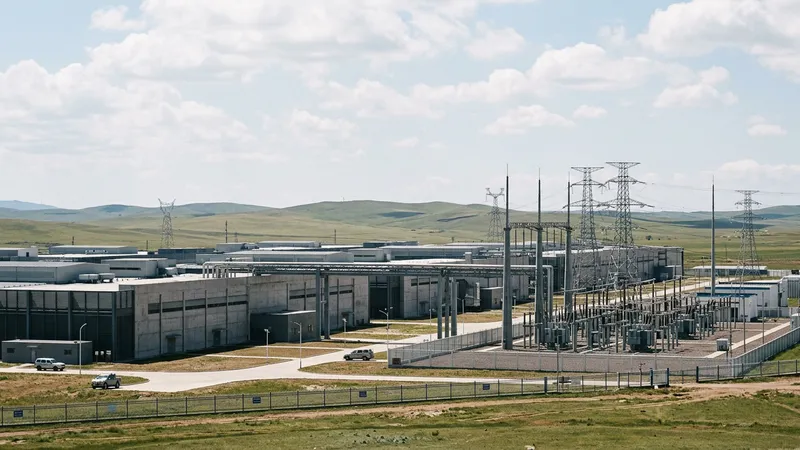
China's operational data center capacity has reached 24 gigawatts as Beijing accelerates its artificial intelligence infrastructure buildout, though the current total remains less than half of the 56 gigawatts operating in the United States. Industry estimates indicate that another 50 gigawatts of capacity is under construction or proposed across China, representing an expansion pipeline larger than the country's existing operating base.
Inner Mongolia's city of Ulanqab has emerged as a primary focal point for this growth, hosting 89 completed or proposed facilities. Regional operators report that approximately 15 gigawatts of power capacity have been committed in the city, drawing major technology groups and data center landlords including Huawei, Alibaba, ZData, and VNET to set up large-scale computing resources.
Inland city provides low power costs and direct transport links
Facilities in Ulanqab pay approximately 0.358 yuan per kilowatt-hour for electricity, compared to national industrial averages exceeding 0.60 yuan across many cities and roughly 0.80 yuan in Beijing. Executive leadership at Huawei noted that inexpensive power and proximity to the capital influenced their decision to build three facilities in the city, which sits roughly two hours from Beijing via high-speed rail.
The regional advantage extends beyond cheap power. Western Inner Mongolia operates under the Mengxi Power Grid independently from the State Grid system that serves most of China, giving large computing developments greater flexibility over their energy contracts.
Additionally, the region combines extensive wind power generation with coal-fired electricity, creating a substantial local power surplus to absorb high-volume computing demand, while low local temperatures significantly reduce facility cooling requirements.
Equipment constraints determine practical computing output
The shift toward inland data infrastructure has also led operators to repurpose vacant municipal real estate. In one instance, data center provider ZData acquired a former school campus that closed due to declining student enrollment, planning to install computing equipment across the grounds to serve digital infrastructure demand.
However, industry analysts warn that low electricity rates and completed buildings do not automatically translate into functional AI capabilities. The ultimate productivity of China's expanding pipeline depends on whether operators can secure advanced semiconductor chips in sufficient volumes.
Without adequate chip access, physical facilities risk remaining underutilized, underscoring the distinction between announced construction projects and fully operational computing power for commercial customers.
Over the coming years, China's aggressive expansion of physical data center footprints is likely to trigger an intense secondary drive to secure advanced hardware and optimize algorithmic efficiency. This inland computing push could stimulate regional economic diversification while accelerating the integration of localized renewable energy into high-density power grids.
Nevertheless, persistent international export restrictions pose a major risk of creating stranded capital assets, where completed facilities sit idle due to silicon supply bottlenecks. Conversely, these constraints may act as a catalyst for domestic semiconductor breakthroughs and software-level architecture optimizations.
This dynamic echoes previous state-led infrastructure cycles in China, where initial structural overcapacity eventually forced rapid industrial consolidation and supply chain localization. Ultimately, while Beijing is rapidly assembling the physical shell for long-term artificial intelligence deployment, its near-term technological parity will depend far more on hardware self-sufficiency than raw megawatt capacity.