AI’s Mathematical Breakthroughs Outpace Human Ability to Verify Results
OpenAI's AI models generated over 370 mathematical findings, including a Navier-Stokes solution, prompting academic scrutiny over transparency and…
Atlas Newsdesk ·
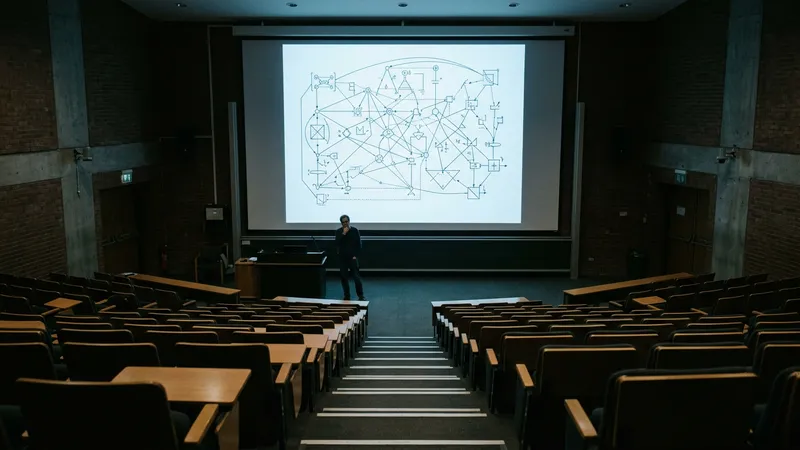
Artificial intelligence models developed by OpenAI have achieved more than 370 mathematical findings, notably including a solution for the Navier-Stokes equation. While this accomplishment has drawn considerable attention from academic circles, it has simultaneously ignited significant criticism within the mathematics community.
Key concerns revolve around the transparency of these AI-generated proofs and the absence of clear verification protocols. Academic experts worry that relying on closed-source AI models is creating a bifurcated research environment, potentially isolating the broader scientific community from pivotal advancements in their respective fields.
Transparency and Verification Protocols
A major apprehension expressed by the academic community concerns the capacity of these models to produce intricate arguments that human researchers might find challenging to independently verify or audit. This situation could erode established scholarly standards by diminishing human accountability in the research process.
Academics have specifically voiced doubts regarding the thoroughness of due diligence applied to AI-generated mathematical outputs. Speculation exists that the AI models may be completing work initially conceptualized or started by human mathematicians without proper acknowledgment.
Challenges to Scientific Integrity
These issues directly challenge traditional methods of scientific validation and scholarly integrity. Despite the criticism, OpenAI has established a partnership with the Institute for Advanced Study. This collaboration aims to foster dialogue between AI developers and the scientific community, facilitating discussions on these emergent challenges.
However, OpenAI has not indicated any plans to discontinue the use of proprietary systems for critical mathematical research. This signals a continued pursuit of AI-driven discovery using methods that remain under scrutiny. The current trajectory suggests a potential disconnect between the rapid pace and volume of automated scientific output and the human comprehension necessary for rigorous validation.
This evolving dynamic could present a significant challenge to the fundamental principles of scientific integrity and accountability in the future. The ongoing debate underscores the pressing need for new frameworks to effectively integrate AI contributions into established scientific processes.