Samsung backs Helix to shift AI infrastructure from in-house build to outsourced service
Samsung Electronics and six affiliates are investing USD 1 billion in Helix Digital Infrastructure, a KKR-backed AI infra provider launched in June 2026.
Edward Mullen ·
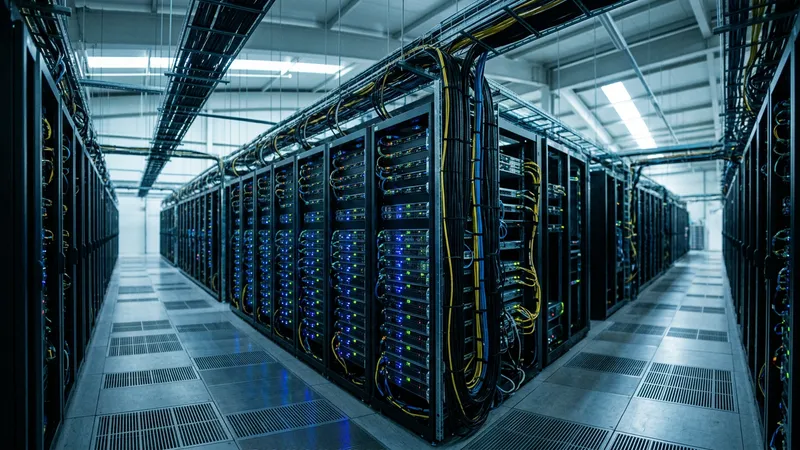
When Samsung, a company synonymous with vertical integration, pools its diverse entities—from electronics to life insurance—to invest in an external AI infrastructure firm like Helix, it presents a telling corporate narrative. This isn't merely a financial play; it's a strategic maneuver where a manufacturing giant seeks to procure AI capacity as a service, rather than build it entirely in-house. The implications for its supply chain and budget allocations are significant.
The procurement pivot Samsung is betting on The arrangement presses a core procurement question for large buyers: does outsourcing AI infrastructure create a more flexible capex-opex profile or simply relocate risk to a vendor-led service tier? The Samsung press release describes a broad, multi-entity commitment, leveraging Helix’s platform to run AI-enabled workloads. If Helix can deliver predictable throughput and governance across regions, the deal could become a de facto operating expense for AI, with ongoing fees rather than hefty one-time capex. Yet the model’s success will hinge on the vendor’s ability to scale, provide security assurances, and maintain performance at the price points enterprise buyers require.
What the Helix investment actually monetizes
Counter-read: some analysts caution that this configuration could entrench vendor leverage and governance over critical AI workloads. If Helix becomes a standard in Samsung’s procurement playbook, exit ramps may be more costly than in-house dissolution, and any price renegotiation could affect project timelines and governance approvals.
In this reading, the deal is less about monetary efficiency and more about structuring risk, data-control, and dependency on a third-party platform for core AI pipelines. This is not a statement of fact about outcomes, but a plausible critique that deserves independent audit and quarterly visibility.
The hidden costs of outsourcing AI infrastructure
Moreover, the very act of combining multiple Samsung affiliates into a single AI-infrastructure demand envelope creates a procurement and vendor-management burden. The governance overhead—contract scoping, service-level agreements, change-management processes, and cross-entity accounting—may be nontrivial.
Given the size and diversity of the Samsung group, the road from press-release promise to reliable operational reality will hinge on the clarity of role definitions, data-flow controls, and independent testing of service delivery across jurisdictions.
Signals to watch in the next 6–12 months
Third, if the Helix model proves durable, expect competition to respond with parallel, consortium-backed or platform-agnostic AI-infrastructure offerings. The market could see a wave of similar consortium-driven infra plays aimed at reducing the total cost of ownership for AI workloads, which would put pressure on individual tech behemoths to justify the premium of external platforms versus internal buildouts.
The absence or presence of these counter-moves will be a telling indicator of whether this is a transient PR angle or a lasting shift in how large firms fund AI compute.
In a single-strategy maneuver, Samsung appears to be stitching together a consortium-led AI infrastructure backbone via Helix rather than expanding entirely within its own data-center footprint. The press release frames Helix as a Kubernetes-ready, globally scoped infrastructure platform designed to support AI workloads across enterprise-scale deployments.
If the deal closes as described, the effect could be a measurable tilt—from in-house capital expenditure to access-based infrastructure services, with Helix acting as a managed-service-like layer over a cloud-native compute stack. The optics matter: a multinational group of Samsung entities pooling resources to back a third-party infra provider signals a shift in how the conglomerate thinks about compute ownership and budget categorization.
At its core, the Helix investment is not a single purchase of hardware; it appears to purchase access to a platform of AI infrastructure services. If Helix functions as intended, Samsung would gain a predictable cost of AI capacity, insulated from sporadic hardware refresh cycles and speculative capex planning.
The shift would align with a broader industry curiosity: can enterprises move from owning to consuming compute in a way that preserves flexibility while controlling total cost of ownership? The language in Samsung’s release hints at an ecosystems play—an infrastructure-as-a-service tier backed by a consortium rather than a single corporate shop.
Even with the allure of predictable spend, outsourcing AI infrastructure to Helix introduces a layer of complexity in governance, data handling, and regulatory compliance. Data sovereignty and cross-border processing become live concerns as workloads migrate to a shared platform.
For a conglomerate with manufacturing and financial-services arms, the friction points multiply: data segmentation rules, privacy controls, and the alignment of security standards across Samsung entities must be explicit and auditable. If Helix’s architecture relies on standardization across markets, the cost of customization for specialized workflows could offset any initial savings in procurement efficiency.
If this is a meaningful capex-into-opex pivot, the first verifiable signal should be a detailed procurement timetable from Helix and Samsung that ties milestones to service-level commitments and cost benchmarks. Independent auditors and regulators will likely scrutinize any cross-border data flows, and the absence of ambiguous language around data ownership should become apparent in contract abstracts or security white papers.
A second signal would be revenue and cost reporting tied to the Helix engagement—are Samsung entities reporting AI-infrastructure costs as operating expenses in a way that reflects ongoing service fees, or do the numbers still resemble traditional capital outlays? The absence of independent third-party validation in the initial press material means stakeholders must look for corroborating disclosures or regulator filings to validate the economic framing.