Danish Warship Dannebroge Wreck Discovered in Harbor
Danish warship Dannebroge was found 15 meters down in Copenhagen Harbor, but a planned housing project is tightening the salvage timeline.
Cuneyd Erdogan ·
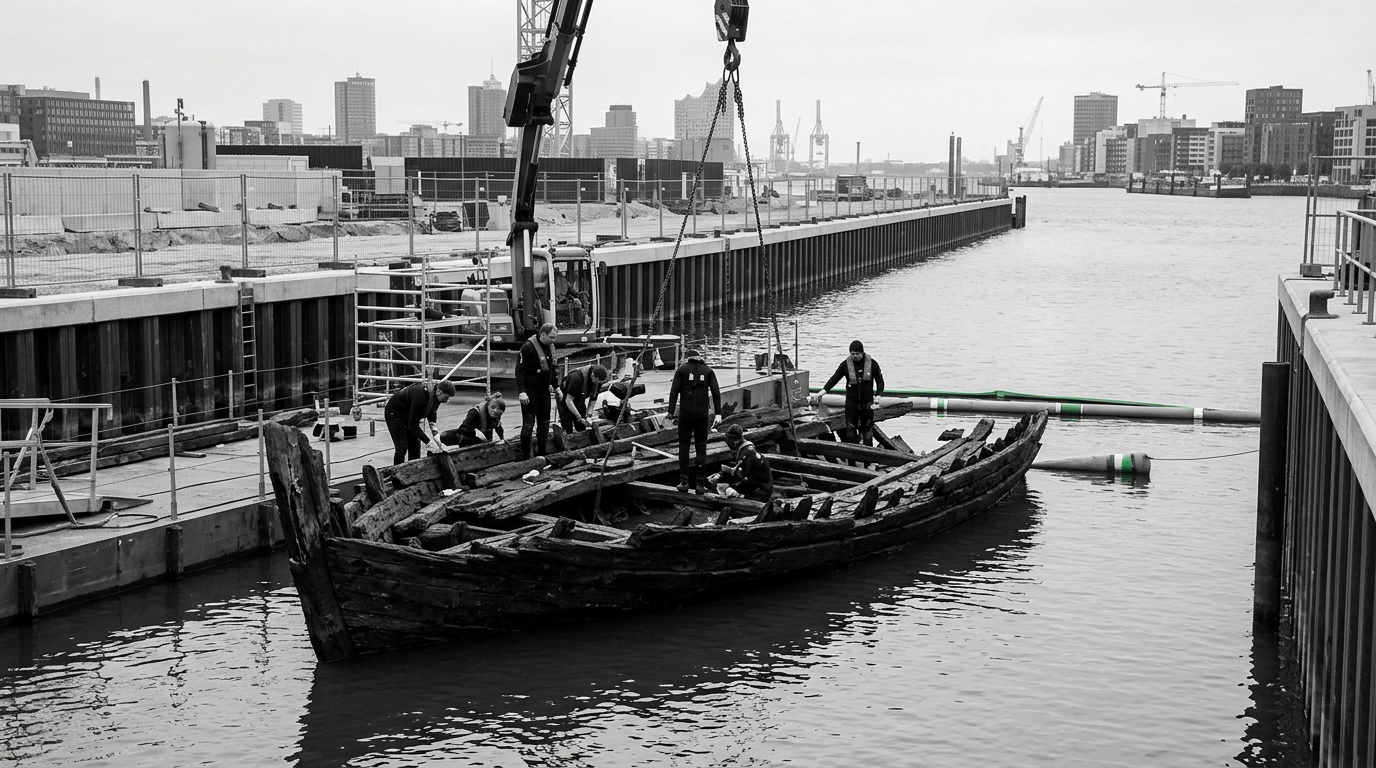
COPENHAGEN — Archaeologists have located the wreck of the Danish warship Dannebroge in Copenhagen Harbor, a discovery tied to the Napoleonic Wars and now facing time pressure from a planned coastal housing development. Officials and researchers involved in the work said the site is at immediate risk from modern construction activity, prompting an urgent salvage effort. The remains were found about 15 meters (49 feet) below the waterline in the harbor.
The team said advanced survey tools were central to confirming the find in low-visibility conditions. Sonar arrays were used to map the seabed, and underwater drones helped pinpoint the wreck in the harbor’s murky waters. Archaeologists described the operation as a race to document and recover material before development work narrows the available window.
The ship holds particular historical weight because it served as the flagship of the Danish fleet under Commodore Olfert Fischer . The discovery was announced on the 225th anniversary of the Battle of Copenhagen , which took place on April 2, 1801 . During that hourslong engagement, the Danish fleet fought the British fleet commanded by Admiral Horatio Nelson , and the Dannebroge was destroyed when it exploded.
Accounts linked to the battle describe it as a strategic British effort to break Denmark’s alliance with Napoleon Bonaparte , and officials said the fighting resulted in thousands of casualties . The battle is also associated with the origin of the phrase “to turn a blind eye.” Nelson, who had lost sight in his right eye, is said to have raised a telescope to that blind eye to disregard a signal from his superior ordering a withdrawal.
Divers working at the site have already brought up artifacts that archaeologists said connect directly to sailors’ daily lives and naval combat in the early 19th century. Recovered items include cannons , clay pipes , leather shoes , and parts of military uniforms . One of the most sensitive finds so far is a fragment of a sailor’s jawbone .
Archaeologists said the human remain likely belongs to one of the 19 crew members declared missing after the explosion. They described the wreck as a rare, sealed time capsule from a pivotal period in European naval history, while also warning that the site is fragile. Officials have not provided a detailed construction timetable, leaving uncertainty over how long the team will have to complete recovery and documentation.
The future handling of the artifacts, including whether they can be displayed publicly, will depend on the outcome of the salvage operation. For now, the team said it is working quickly and carefully to preserve what it can before development changes the harbor environment around the wreck.