

Pentagon plans for limited Iran ground operation
Pentagon planning includes a week-long Iran ground-incursion option, officials say, as nuclear diplomacy remains stalled and regional risks persist.
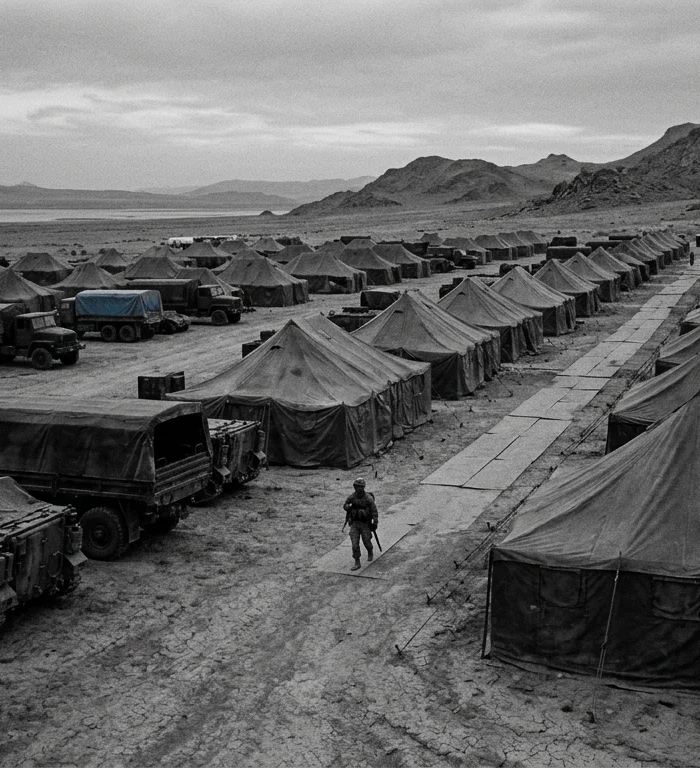
The US Department of Defense is preparing contingency options for a limited ground operation inside Iran that would last about a week, based on accounts from officials familiar with the planning.
Those officials described the work as scenario planning rather than a signal that an attack is imminent, while the specificity of the concept indicates a more developed set of military choices than broad, generic preparations.
What is being planned, and why it stands out
The concept under discussion involves inserting US forces onto Iranian territory for a short-duration mission aimed at targets that planners believe may not be reliably eliminated from the air alone.
In the descriptions provided, the likely focus would be “high-value” sites such as nuclear-related facilities or command-and-control nodes, rather than an open-ended campaign.
Regional backdrop: tensions, shipping risks, and stalled diplomacy
The planning is unfolding amid sustained US-Iran friction that has included clashes involving Iran-aligned groups in Iraq and Syria and incidents involving commercial shipping in the Strait of Hormuz.
At the same time, efforts to restore the 2015 nuclear agreement, the Joint Comprehensive Plan of Action (JCPOA), remain stalled, contributing to heightened concern in Western capitals about Iran’s nuclear trajectory.
Iran has increased uranium enrichment to levels described as nearing weapons-grade, and US and Israeli officials have repeatedly said they would not allow Iran to obtain a nuclear weapon.
Operational and political constraints
Military analysts caution that even a narrowly scoped ground entry would carry escalatory risk and could be difficult to control once initiated.
Iran is described as having both conventional forces and missile capabilities, and analysts also point to the potential for broader mobilization against a foreign presence, making outcomes hard to predict even over a one-week window.
Executing such an operation would require substantial enabling support, including pre-positioned US Central Command (CENTCOM) assets and intensive intelligence, surveillance, and reconnaissance (ISR) activity.
What it means for markets and global politics
Any move toward direct ground action in Iran would represent a step beyond the sea and air confrontations that have shaped recent years, raising the probability of a wider regional conflict involving Iran’s asymmetric network, including the Islamic Revolutionary Guard Corps (IRGC) and actors such as Hezbollah in Lebanon.
For global markets, the Strait of Hormuz remains a key chokepoint for energy and shipping; renewed instability there can transmit quickly into risk pricing across commodities, freight, and broader financial conditions, even absent a confirmed change in policy.
What is known, what is not
The Department of Defense typically does not discuss specific operational concepts, often characterizing such work as prudent preparation across possible contingencies.
Key details remain unknown, including any legal rationale that would be used, the degree of allied support or opposition, and whether the planning is tied to a particular trigger or timeline.
For now, diplomacy remains the stated preference, while military options continue to be developed in parallel.
More stories
- Harris builds political team but leaves 2028 run undecided
- Michigan Senate rivals clash over health care and Israel
- Nidal Hasan set to be executed by firing squad after Trump approval
- Kansas puts Senate control within Democrats' wider reach
- Byron Donalds faces tighter Florida contest over Trump ties
- Noncitizen voting law faces fresh test after Cox ruling
- Global Business Activity Slows as Middle East Tensions Drive Up Corporate Costs
- FBI probes ISIS-inspired attack at NYC protest
Latest news
- Natacha Polony joins France's 2027 presidential race
- Publicis beats Q3 forecasts with 5% organic revenue growth
- Türkiye Desk: Tencent’s Flow Games move tests Türkiye’s mobile thesis
- IMF urges US deficit cuts as debt costs strain economies
- Iran changes Hormuz attack tactics, senior officials say
- Lagarde urges France to tackle debt through fiscal consolidation
- Nifty IT jumped 5.2% after HCLTech profit beat
- Fusion CX IPO to cut promoter stake to 80%