

Uzbekistan Awards Tajik Official Amid Succession Speculation
The awarding of a high-level Uzbek honor to Rustam Emomali highlights his role as the likely successor to the Tajik presidency ahead of the 2027 elections.
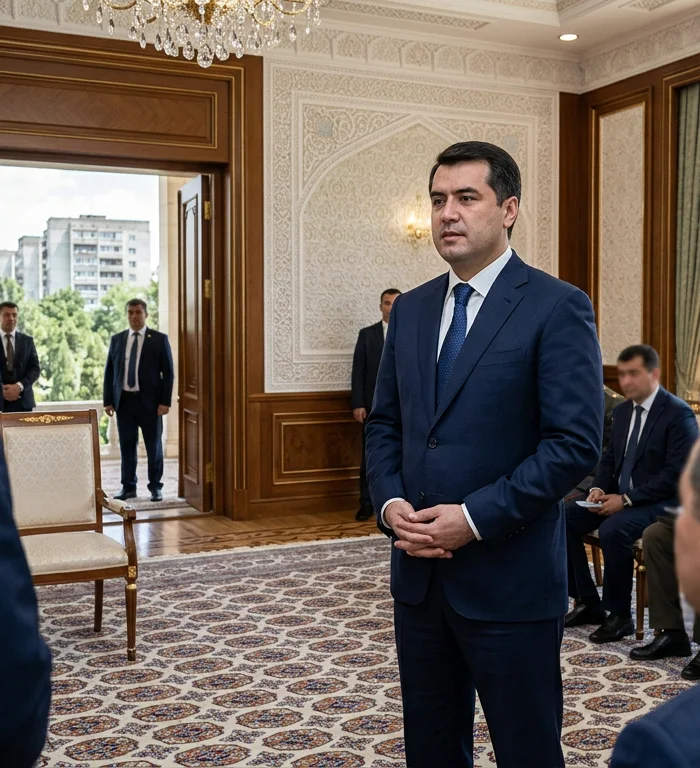
On November 4, Uzbek President Shavkat Mirziyoyev awarded the Order for Selfless Service to Rustam Emomali, the chairman of Tajikistan’s National Assembly and mayor of Dushanbe. The decoration was officially granted for contributions to bilateral strategic partnerships and interparliamentary cooperation. This diplomatic engagement follows a series of high-profile international visits by Emomali, who is widely viewed as the primary successor to his father, incumbent President Emomali Rahmon.
Rustam Emomali’s political trajectory has been marked by strategic appointments and constitutional adjustments. In 2016, a national referendum lowered the presidential age requirement, and in 2020, Emomali was appointed head of Assembly, placing him second in the constitutional line of succession. With Tajikistan’s next presidential election scheduled for October 2027, the current administration has effectively neutralized organized political opposition, facilitating a potential transition of power.
Emomali’s recent diplomatic activity in Tashkent
Regional and international recognition remains a critical factor for the stability of any future leadership transition in Tajikistan. Analysts note that securing the approval of key regional powers—specifically Russia, Uzbekistan, and China—is essential for the legitimacy and sustainability of a successor. Emomali’s recent diplomatic activity in Tashkent, following previous engagements in Moscow and Beijing, suggests a concerted effort to solidify these external relationships ahead of the 2027 electoral cycle.
Observers are monitoring whether the 2027 election will serve as the mechanism for a managed transfer of power. The absence of significant political competition within Tajikistan shifts the focus of regional stability entirely toward the internal dynamics of the ruling family and the maintenance of external diplomatic alliances. Future developments in interparliamentary cooperation, particularly the newly signed road map with Uzbekistan for 2027-2028, will serve as indicators of the regime's long-term planning.
More stories
- Germans oppose Ukraine aid as poll shows support slipping
- Kim Jong-un receives 10 envoys after constitutional shift
- Ukraine claims Libya strike sinks Russian naval corvette
- COP31 climate talks collapse over fossil fuels and funds
- Russian military faces 1,087 recorded suicides in Ukraine war
- US faces China, Russia in Africa minerals contest
- War-zone water attacks triple to more than 135 incidents in 2025
- Lulu Retail posts 2% Q3 revenue gain with 53% online sales growth
- Hoax bomb threats disrupt 25 Europe flights
- Tax Justice Network links UK havens to 13.6% of EU tax losses
Latest news
- Trump prepares tariffs on China and other major exporters
- New-car buyers pay record average $50,087 in October
- Banks face ECB reserve debate over liquidity and profits
- Investors see Anthropic debut gains fade below $83 a share
- Iraq orders federal control over Kurdish-area oilfields
- Nvidia shares retreat as AI rally cools before PCE data
- Macy’s parade faces balloon limits as storm winds approach