

Russian sabotage across Europe raises mass-casualty risk
An IISS report warns that escalating strikes on rail and energy networks could force demands for retaliation and test European unity.
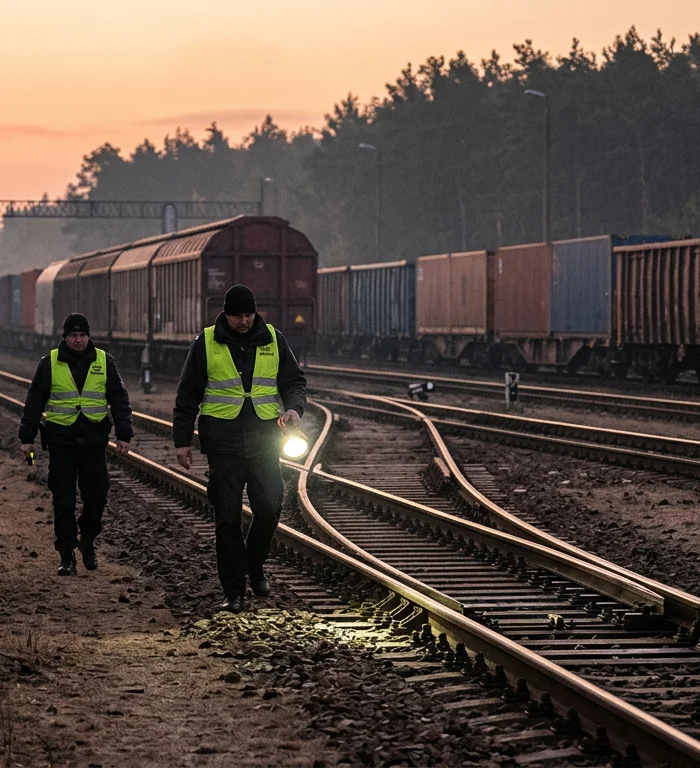
Russian sabotage operations across Europe expanded 16% during the past year, heightening the danger of widespread casualties as hostile agents employ advanced tactics, according to an IISS report published on Nov. 27.
The strategic shift narrows tolerance for operational errors and risks provoking uncoordinated retaliatory measures among European governments, while essential transport, energy and industrial facilities represented over half of recent targets.
Data compiled by the London-based International Institute for Strategic Studies shows incidents involving explosives and arson doubled during that span. Although low-level recruits still carry out numerous assignments, higher-tier actors have begun deploying improvised explosive devices fitted with remote and scheduled triggers.
European governments have responded by expelling intelligence personnel and prosecuting local contractors, yet the thinktank concluded such steps have failed to halt the campaign. "Arrests remove proxies, but are highly unlikely to deter the Russian intelligence services that direct them," the report said.
Logistical hubs in Poland and Germany face the heaviest exposure because of their role in supplying Kyiv. Polish authorities documented 29 Moscow-directed disruptions between October 2025 and September 2026, including an explosive detonation that damaged a strategic railway corridor in November 2025.
In Leipzig, German authorities uncovered an explosive-laden drone near an Antonov cargo plane on Aug. 4, while investigators examine whether a separate drone collided with a DHL freight aircraft shortly after runway operations stopped.
The Russian government has uniformly denied involvement in European sabotage, cyberattacks, arson and drone operations aimed at undermining backing for Ukraine.
With European capitals yet to define shared red lines despite incidents in Estonia, Lithuania and Romania, the report stressed that allied leaders must "publicly signal what level of harm triggers which response" to prevent unmanaged escalation.
Source: Research report, International Institute for Strategic Studies, Nov. 27, 2026.
More stories
- Duterte faces ICC trial over 85 alleged murders, 2 attempts
- Bardella denies antisemitism claims over teenage messages
- Washington targets China in new tariff push on trade ties
- Eisenkot secures first coalition deal but lacks majority
- Germans oppose Ukraine aid as poll shows support slipping
- Kim Jong-un receives 10 envoys after constitutional shift
- South Africa brings Coetzee into 1-1 Australia decider
- Southern Africa faces 2027 El Niño poverty squeeze, Sihlobo says
Latest news
- Norse Atlantic suspends flights in urgent rescue funding bid
- Retailers rethink Black Friday as discount fatigue grows
- Japan data centers face lawsuits over residential sites
- S&P puts Nvidia credit rating on watch over board concerns
- Musk pledges two SpaceX shares per child in new US giveaway
- Morocco targets 2030 World Cup final with new stadium bid
- Barclays puts AI bust risk at center of US growth debate