

Southern Africa faces 2027 El Niño poverty squeeze, Sihlobo says
The risk could lift import and aid pressure, even as South Africa’s record maize crop offers a buffer.
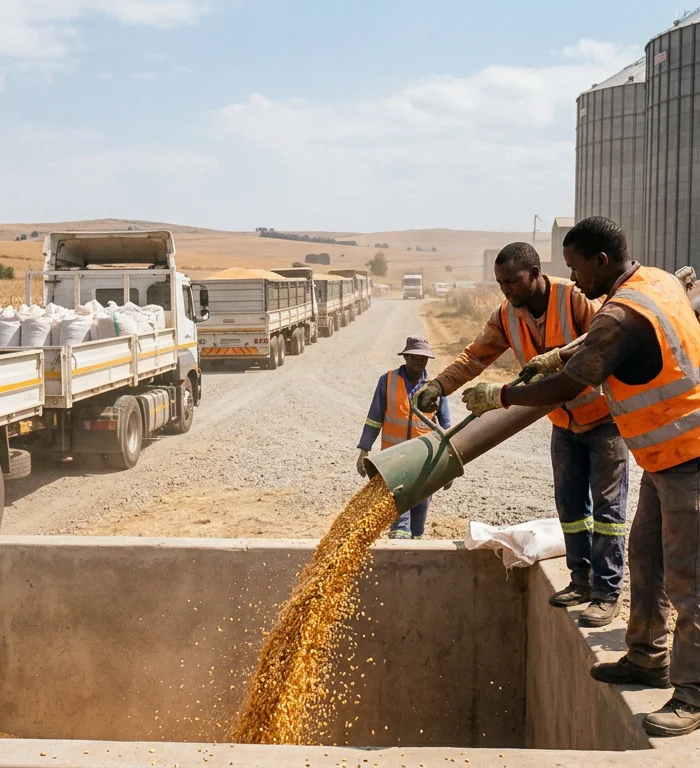
Southern Africa faces a 2027 poverty squeeze from El Niño, a Pacific warming pattern that can disrupt rainfall, Wandile Sihlobo said in a Daily Maverick opinion article published Oct. 26, citing drought probability above 50%.
The risk matters for food markets because South Africa’s buffer — a record 17.5 million-tonne maize crop against annual consumption of 12.0 million tonnes — may be drawn into regional shortages, Sihlobo said.
Sihlobo, South Africa’s Presidential Envoy on Agriculture and Land and chief economist of the Agricultural Business Chamber of South Africa, cited Food and Agriculture Organization warnings about the coming season. Daily Maverick labelled the article as opinion.
The FAO said the latest El Niño cycle brought severe stress to the region, according to Sihlobo: “the most recent El Niño cycle brought the region’s worst drought in more than a century, leaving 61 million people in need of assistance, straining livestock, water systems and pasturelands, and pushing more than 8 million people into food insecurity.”
The FAO forecast also pointed to “a greater than 50% probability of agricultural drought across large parts of Namibia and Botswana, extending into Angola, Zambia, Zimbabwe, South Africa and parts of Mozambique and Madagascar,” Sihlobo wrote.
A Daily Maverick chart, based on supplied data, said 12 forecast centres expected El Niño to strengthen through late 2026. The December peak projections ranged from 3.0 degrees Celsius to 4.8 degrees Celsius, a 1.8-degree spread the chart linked to uncertainty for rainfall, farm output and commodity markets.
Sihlobo tied the weather risk to higher costs from geopolitical conflicts, including energy and supply-chain pressures. He also said humanitarian budgets are tighter because wars in the Black Sea and Middle East are competing for resources, and because the U.S. Administration’s decision to abandon US Aid would reduce World Food Programme resources.
South Africa enters the period with stronger protection than some neighbours, according to the article. Sihlobo said the 2025-26 grain and oilseed season left ample supplies, while dam levels above 80% may help shield irrigated fruit and vegetable production from some drought effects.
The policy choices could shape the regional impact. Sihlobo said countries needing imports should keep routes open for private traders, consider temporary relief from grain-import limits where needed, and plan feed supplies for livestock.
He said export bans by countries with supplies typically worsen shortages by weakening incentives for farmers and agribusinesses and by creating price shocks for import-dependent neighbours. He said transparent information and prices that reflect local conditions would help market participants make decisions.
The article did not provide country-level poverty forecasts or crop-loss estimates. It said farmers have already started planting for the 2026-27 season, leaving governments with a limited window to respond before the expected El Niño peak in December 2026.
In December 2026, forecasters’ projected El Niño peak will test the model range cited by Daily Maverick, from 3.0 degrees Celsius to 4.8 degrees Celsius.
During the 2026-27 planting season, governments and traders will be watching whether import rules, livestock-feed supplies and market information are adjusted before shortages deepen.
In 2027, the check will be whether regional food needs rise enough for South Africa’s 17.5 million-tonne maize harvest to face stronger export pressure from neighbouring countries.
More stories
- Bolsonaro reaches Miami after defeat and fleeing Brasil
- South African parties split over Cape Town's 30,000-home annual gap
- Ruto seeks Russian investment in Kenya's $380m trade push
- Sudan teachers seek 20% budget share with 8m children outside school
- Spain rail network faces scrutiny after 64 killed near Toledo
- Spain reports at least 30 dead in high-speed train crash
- Armed men kill at least 48 civilians in Oromia, residents say
- Prosecutors face De Kock claim over apartheid command evidence
- Nigeria advocates put northern missing at 17,000
- Thai minister sees progress after Suu Kyi's first family call in over 5 years
Latest news
- Cyclone Arnab kills at least three on India's east coast
- EU rules bar Nord Stream return under 2027 gas phaseout
- Investors weigh OpenAI strengths against Anthropic growth
- Clariane posts 4.7% organic revenue growth
- GE Vernova lifts 2026 free-cash-flow outlook to $16bn-$17bn
- Kinross Gold faces Q3 test after 2%-3% output cut