Rent freeze decision boosts Mamdani after board action
A rent freeze approved by New York City’s Rent Guidelines Board sets 0% increases for one- and two-year stabilized leases covering about one million…
Lauren Collins ·
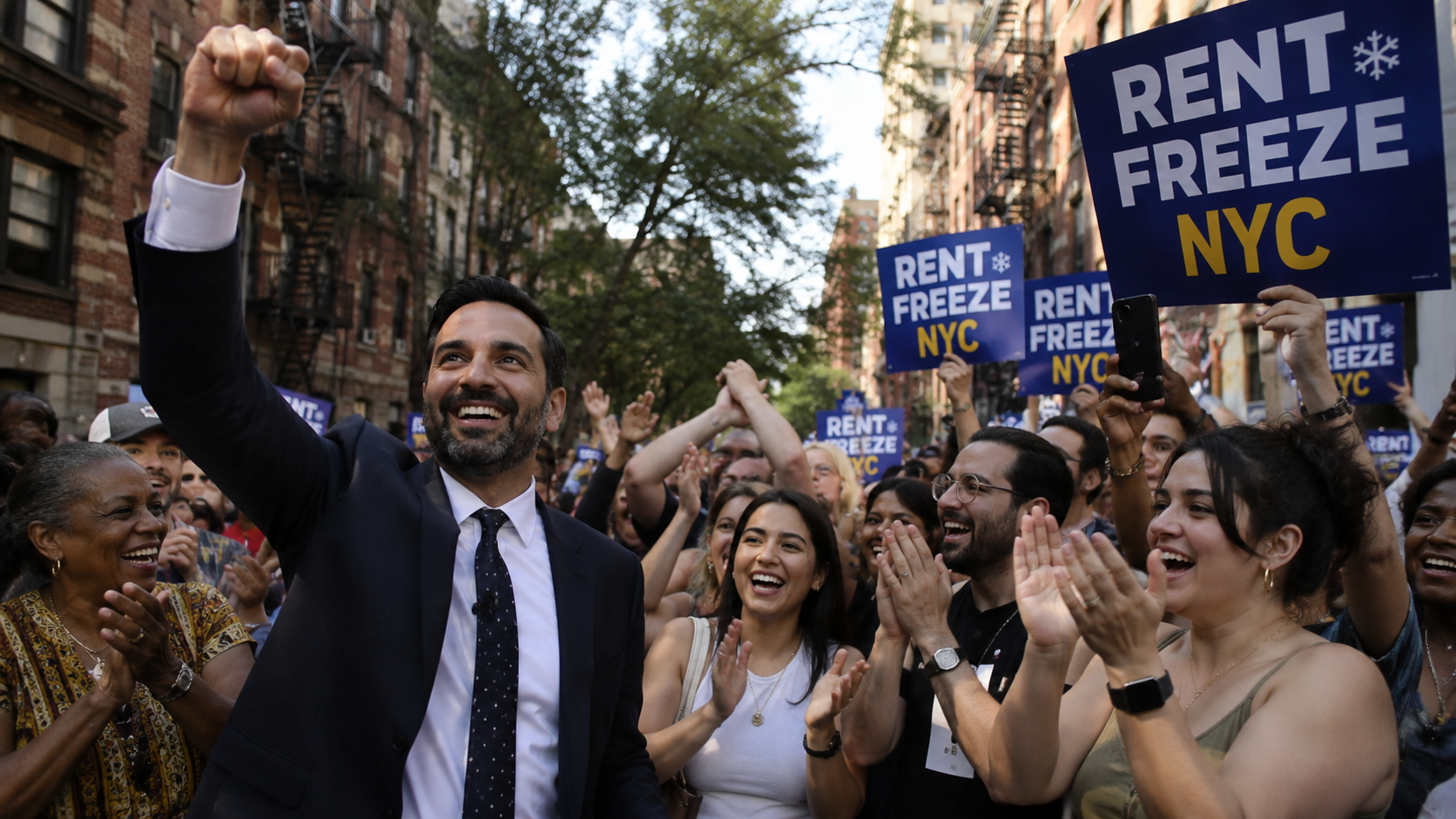
A rent freeze approved by New York City’s Rent Guidelines Board sets 0% increases for one- and two-year stabilized leases covering about one million apartments.
The decision, adopted on a 7–1 vote, sets the annual rent adjustment to zero for the next cycle on regulated renewals. City officials and tenant advocates framed the outcome as immediate relief for a large share of the city’s renters.
The vote also delivers a headline political win for Mayor Zohran Mamdani, who had pressed the board for a full halt to rent hikes. Mamdani made the policy a centerpiece of his campaign message and has continued to argue for it since taking office.
Board vote sets 0% for one- and two-year renewals
The board’s action applies to stabilized apartments, a category of regulated housing that limits annual increases set through a public process. The freeze covers both one-year and two-year leases, affecting tenants renewing during the designated period.
While one-year renewals have seen a freeze in past cycles, the inclusion of two-year leases marks a notable shift in the board’s approach. The board’s move makes this the first time longer-term regulated renewals are also held at zero, according to the information presented around the vote.
Roughly one million apartments are subject to rent stabilization in New York City, meaning the board’s annual decision can shape costs for a substantial portion of households. For tenants, a 0% guideline functions as a direct constraint on rent growth during renewal negotiations for eligible units.
Mamdani ties freeze to household cost pressures
Mamdani has argued that the case for a rent freeze rests on broader affordability strains beyond housing. He has pointed to rising costs for essentials such as food and transportation, while asserting that paychecks have not kept pace for many households.
By backing a freeze, the mayor and allied officials effectively positioned the board’s decision as part of a larger cost-of-living response. The vote aligns with a core governing test for the administration: translating campaign commitments into outcomes within the city’s independent regulatory framework.
The board’s decision also reflects the political visibility of stabilized housing. Because the regulated sector is large and highly organized, annual guideline votes routinely become focal points for citywide debates over affordability, neighborhood stability, and the distribution of economic burdens between tenants and property owners.
Landlord finances and tenant protections collide
The rent freeze followed months of public debate over how to balance tenant protection against building-level financial pressures. Landlord groups have warned that operating costs, maintenance needs, and other expenses can rise even when rent revenue is capped.
Tenant advocates, meanwhile, pushed for the strongest possible constraint on increases, arguing that regulated tenants are especially exposed to inflation and that housing stability prevents displacement. The 7–1 margin suggests the board found the tenant affordability case more persuasive for this cycle than calls for a higher guideline.
In practical terms, the policy sets a clear baseline for renewals but does not eliminate other disputes that often arise in regulated housing, such as building conditions and service quality. The next phase of the conversation is likely to focus on how owners respond to constrained revenue and how the city enforces standards so that habitability does not erode.
Going forward, attention will center on whether the freeze changes renewal outcomes across neighborhoods and whether subsequent board cycles revisit the balance between affordability and operating realities. For City Hall, the decision raises the stakes for tracking impacts on tenants and buildings ahead of the next guideline-setting process.