Rahm Emanuel says Israel support needs conditions today
Israel support faces fresh scrutiny after Rahm Emanuel urged Washington to end unconditional backing for Netanyahu amid the Gaza war.
Lauren Collins ·
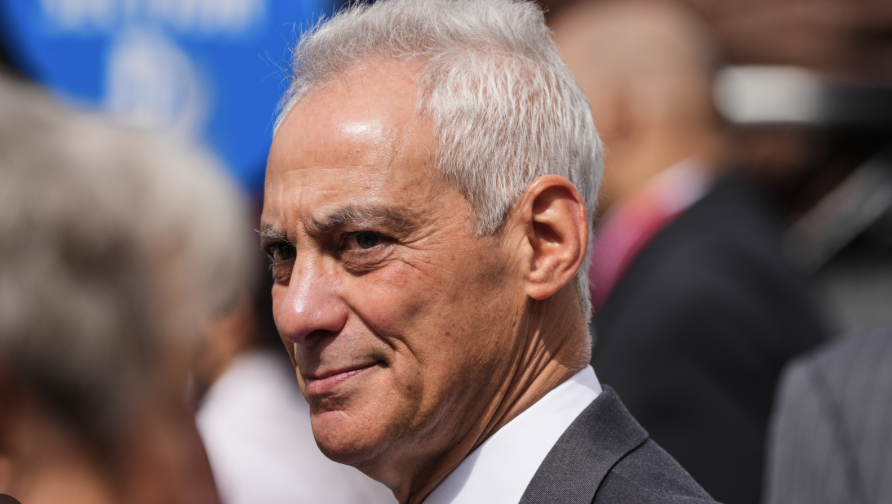
Israel support came under new pressure after Rahm Emanuel urged Washington to stop treating backing for Netanyahu as unconditional.
Emanuel, a longtime Democratic supporter of Israel who is exploring a presidential run, used a Wednesday appearance at Tel Aviv University to deliver an unusually direct warning to Prime Minister Benjamin Netanyahu’s government. He said Israel has become a "pariah" under Netanyahu, according to the supplied remarks.
Tel Aviv speech sharpens warning
The force of the criticism comes partly from Emanuel’s political biography. He is one of the most prominent Jewish figures in American politics, a former White House chief of staff to Barack Obama, a former member of Congress and a former Chicago mayor.
His family history also gives the intervention weight in Israeli political circles. Emanuel’s father fought for Israeli independence, and Emanuel framed his remarks as advice from a supporter rather than as a break with Israel itself.
"You cannot fight indefinitely against a world that has stopped believing you have the right to fight," Emanuel said in the speech. "You must instead find a new sustainable path to peace, security, and economic prosperity."
Gaza war changes Washington debate
The comments land in a U.S. debate reshaped by the war in Gaza, which began after the 2023 Hamas attack. Support for Israel remains a core position for many U.S. officials, but the terms of that support are drawing sharper questions across party lines.
Emanuel’s argument is especially sensitive inside the Democratic Party. He has long challenged the party’s left wing on Israel, including critics who question Israel’s character as a Jewish-majority state and who have faced accusations of singling out Israel unfairly.
The language now coming from Emanuel narrows the distance between some Democrats and Republicans on the issue. U.S. Vice President JD Vance said last month that Israel should lean more heavily on diplomacy and cannot "kill its way out of solving every single national security problem that you have."
Conditional support enters campaign frame
The immediate effect is political rather than legislative. Emanuel is not setting U.S. policy, but his call to end automatic backing places a conditional model of Israel support closer to the center of a possible presidential campaign.
If that view gains traction among Democratic candidates, Netanyahu’s government would face a tougher audience in Washington when seeking diplomatic cover or security assistance. The wider U.S.-Israel policy network, including defense, aid and foreign-policy institutions, would have to prepare for more scrutiny around objectives, timelines and civilian costs.
If the overlap between Emanuel and Vance hardens into a broader congressional position, the global effect would be a more uncertain U.S. role in Middle East diplomacy. For Israel, the mechanism would be direct: less predictable U.S. support could raise the political cost of continuing current Gaza policy without a negotiated path.
If the criticism remains campaign rhetoric, Netanyahu may face little near-term policy change from Washington. The open question is whether Emanuel’s remarks mark a durable shift in the U.S. center or a sharper expression of frustration that does not yet translate into votes, conditions or formal policy.