

Philippines, Australia ease defence drills with pact
Manila says the arrangement supports maritime, air and land cooperation as it expands security ties beyond its U.S. treaty alliance.
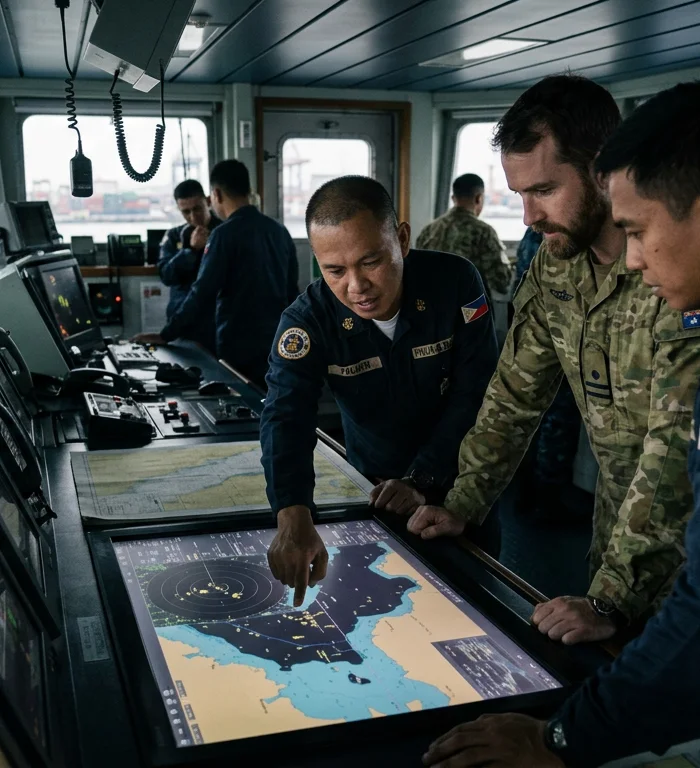
The Philippines and Australia signed a defence cooperation arrangement on Nov. 15 to reduce coordination for joint military activities from “100 steps” to “10,” Philippine Defence Secretary Gilberto Teodoro said in a Reuters report.
The pact adds an operational layer to Manila’s security network as it contests Beijing’s South China Sea claims, which a 2016 arbitral tribunal ruling rejected and China rejects.
Teodoro said the arrangement would simplify implementation of the bilateral Status of Visiting Forces Agreement, or SOVFA, a framework governing visiting forces during military activities.
“Rather than 100 steps to do a single thing, it will just now take 10,” Teodoro told reporters, calling the deal an “anti-red tape measure” for carrying out SOVFA.
He said the arrangement would support closer cooperation among maritime, air and land forces, as well as humanitarian and disaster response work. Teodoro also said it would strengthen the Philippines’ “credible deterrence posture,” including in the South China Sea.
Australian Prime Minister Anthony Albanese witnessed the signing in Manila while attending a summit of the Association of Southeast Asian Nations. The ceremony came ahead of the 49th ASEAN Summit, according to the report.
Albanese said the agreement would improve maritime awareness and information sharing, while increasing strategic dialogue, training, interoperability and defence infrastructure development. He also announced additional Australian investment in maritime domain awareness, including drone technology, equipment and training intended to improve detection of maritime and cybersecurity threats.
The Philippines has been widening defence relationships while maintaining its long-standing alliance with the United States. Manila describes China’s conduct in the South China Sea as aggressive, while the waterway remains subject to overlapping maritime claims.
Australia has backed Manila’s position on the strategic waterway and supports the 2016 tribunal ruling that found China’s sweeping claims have no basis under international law. Beijing rejects that decision.
China says its actions in the South China Sea are lawful and professional. Beijing also opposes Manila’s joint military activities with allied partners, saying such exercises raise regional tensions.
Source: wire report, Reuters via The Straits Times, Nov. 15, 2026
More stories
- Germans oppose Ukraine aid as poll shows support slipping
- Kim Jong-un receives 10 envoys after constitutional shift
- Ukraine claims Libya strike sinks Russian naval corvette
- COP31 climate talks collapse over fossil fuels and funds
- Russian military faces 1,087 recorded suicides in Ukraine war
- US faces China, Russia in Africa minerals contest
- UN agencies seek aid for 30.3m facing DR Congo hunger
- Hungary seizes nearly $20m in Orban-era corruption probe
- Qatar-led mediators press 7-day plan for Iran-US deal
- Häkkänen blames US politics for Ukraine Patriot delay
Latest news
- Trump prepares tariffs on China and other major exporters
- New-car buyers pay record average $50,087 in October
- Banks face ECB reserve debate over liquidity and profits
- Investors see Anthropic debut gains fade below $83 a share
- Iraq orders federal control over Kurdish-area oilfields
- Nvidia shares retreat as AI rally cools before PCE data
- Macy’s parade faces balloon limits as storm winds approach