

Pakistan to host inaugural talks on trilateral defence pact implementation
Islamabad plans new security dialogue following the ratification of a trilateral military agreement between Saudi Arabia, Turkey, and Pakistan.
Strategic shift in regional security
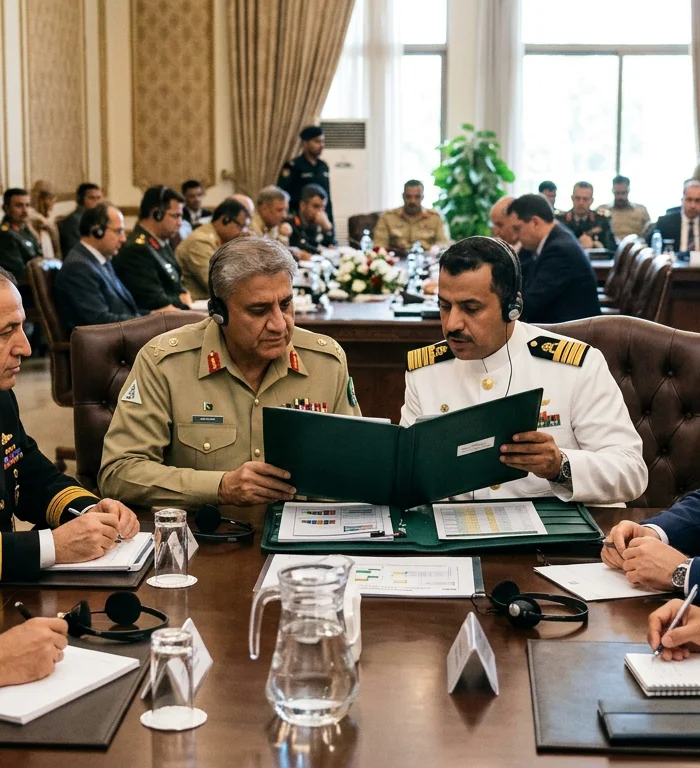
Pakistan is preparing to host a new round of security dialogues aimed at operationalizing a trilateral defence pact signed with Saudi Arabia and Turkey in August. The move marks a transition from the initial ratification phase toward the establishment of formal cooperation mechanisms across the three nations.
The agreement represents a significant alignment between Riyadh, Ankara, and Islamabad. By formalizing this partnership, the signatories are signaling an evolution in their respective national security doctrines and a concerted effort to deepen military-industrial integration outside of traditional Western-led security frameworks.
Diversification of defense architectures
For Saudi Arabia, this pact aligns with the kingdom's broader shift under the Vision 2030 initiative, which seeks to reduce total reliance on long-standing security umbrellas provided by the United States. Riyadh has increasingly looked to diversify its defense partnerships to maintain regional stability while building domestic military capabilities.
Turkey’s involvement reflects Ankara's assertive regional strategy and its commitment to the Middle Corridor initiative, which aims to enhance trade and connectivity between Europe and Asia. Turkey and Pakistan have maintained a robust history of defense cooperation, particularly in naval modernization and aerospace, providing a pre-existing foundation for this expanded trilateral framework.
Global and regional implications The operationalization of this pact carries potential consequences for maritime security in the Arabian Sea and the broader Indian Ocean region. If the three nations move toward integrated intelligence sharing and joint naval patrols, it could alter the regional power balance and create new logistical realities for global trade routes near key chokepoints. Saudi Arabia The collaboration also suggests a pivot toward shared technology transfers, particularly in areas like drone development and electronic warfare. By pooling resources and industrial knowledge, the three powers aim to enhance their strategic autonomy against both state and non-state threats. Observing implementation benchmarks The primary uncertainty remains whether the upcoming talks will translate into concrete hardware procurement or joint military deployments. Analysts are focused on the period leading to May 15, 2025, to determine if the partnership yields measurable results in integrated defense technology or formal naval coordination.
More stories
- Duterte faces ICC trial over 85 alleged murders, 2 attempts
- Bardella denies antisemitism claims over teenage messages
- Washington targets China in new tariff push on trade ties
- Eisenkot secures first coalition deal but lacks majority
- Germans oppose Ukraine aid as poll shows support slipping
- Kim Jong-un receives 10 envoys after constitutional shift
- Iran crisis prompts UAE call for a diplomatic resolution
- Russian state-affiliated media raise UK posts 15% in September
Latest news
- Norse Atlantic suspends flights in urgent rescue funding bid
- Retailers rethink Black Friday as discount fatigue grows
- Japan data centers face lawsuits over residential sites
- S&P puts Nvidia credit rating on watch over board concerns
- Musk pledges two SpaceX shares per child in new US giveaway
- Morocco targets 2030 World Cup final with new stadium bid
- Barclays puts AI bust risk at center of US growth debate