Owaisi cites documentation gaps, urges PRCs in Telangana amid SIR debate
AIMIM's Asaduddin Owaisi claims 52% of the poor lack birth certificates, urging for Permanent Resident Certificates amid the ongoing SIR dispute.
Mei Lin ·
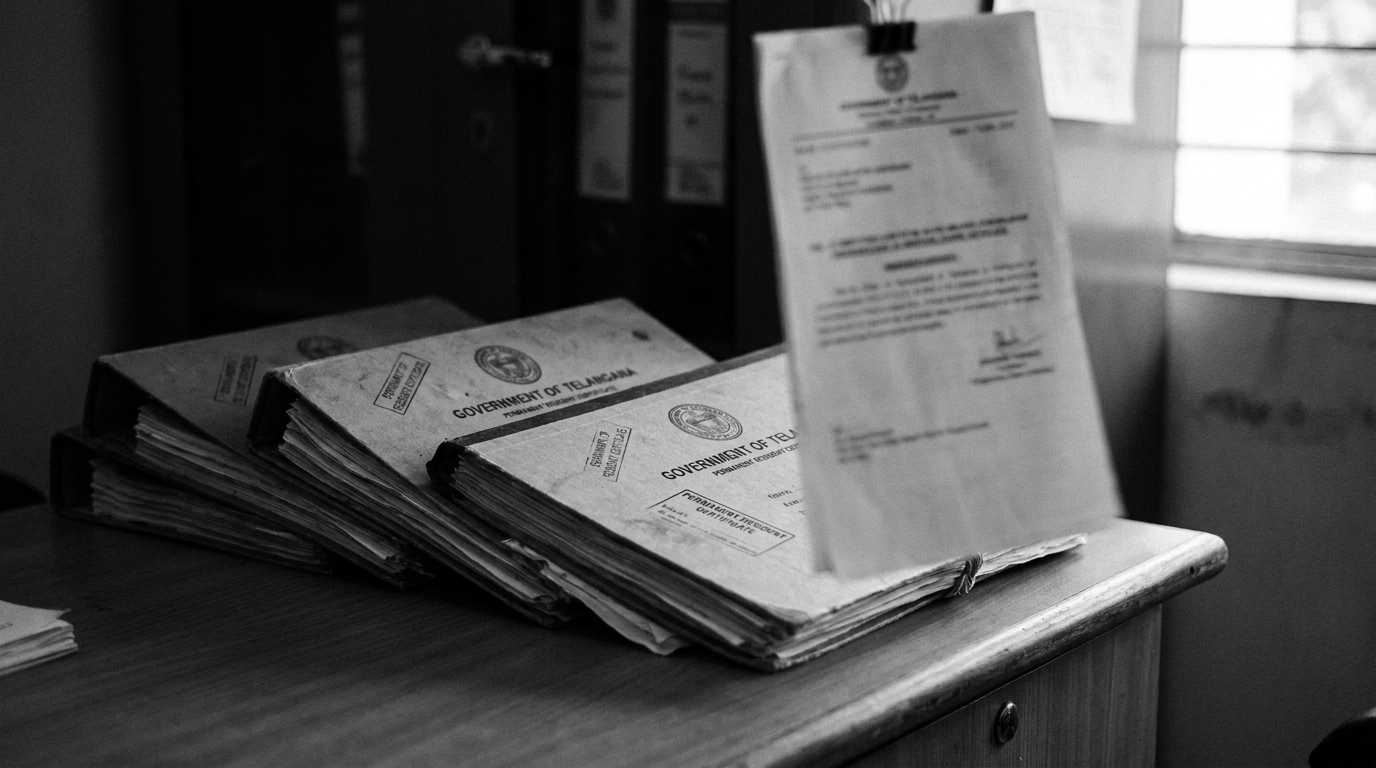
# Owaisi cites documentation gaps, urges PRCs in Telangana amid SIR debate
AIMIM president Asaduddin Owaisi has called on the Telangana government to introduce Permanent Resident Certificates (PRCs), arguing that large numbers of poor residents lack basic identity documents needed to prove eligibility for state services. His remarks come as a political debate plays out around “SIR”, with Owaisi framing PRCs as a way to reduce exclusion risks for low-income households.
Owaisi cited data he said was drawn from Owaisi cited data he said was drawn from five Indian states, claiming that about 52% of poor people do not have birth certificates, while 42% lack both caste and domicile certificates. He did not, in the signal provided, name the five states, detail the underlying dataset, or specify whether the figures refer to households or individuals.
India’s welfare and affirmative action systems often rely on document-backed eligibility. Birth certificates typically establish age and identity; caste certificates are used for access to constitutionally anchored reservation benefits; domicile certificates are used by states to determine residency-linked entitlements. In practice, gaps in civil registration and paperwork can be most acute among poorer and more mobile populations.
Telangana, India’s youngest large state, was formed in 2014 after bifurcation from Andhra Pradesh. State governments periodically revisit residency-linked documentation to manage access to local benefits and education or employment preferences, especially when political tensions rise over who qualifies as a “local” resident.
Documentation drives access
Documentation drives access.
If the shares Owaisi cited are even directionally correct, large numbers
of low-income residents could be vulnerable to exclusion when governments tighten verification or link benefits to specific proofs of identity, domicile, or community status. That can quickly become a political flashpoint in a state like Telangana, where welfare delivery is a central part of electoral competition.
The spillover goes beyond one state. India’s labour market is highly mobile, and southern states are important magnets for internal migration tied to construction, services, and manufacturing supply chains. If residency-linked certification becomes more common or more restrictive, it could shape migration incentives, local job markets, and the administrative burden on employers and contractors who rely on migrant workers.
Watch whether the Telangana government publicly commits to a PRC framework
or issues draft rules that define eligibility, required documents, and appeal pathways by 2026-09-30.
If the state publishes clear criteria and a low-friction application process
that accepts alternative proofs for those without birth certificates, Owaisi’s push could translate into a workable administrative change. If no formal proposal emerges, or if any framework hinges on hard-to-produce documents without a grievance mechanism, the move is likely to stay a political demand rather than an implementable policy.