U.S.-Iran talks persist as Strait attacks test ceasefire
U.S.-Iran talks are expected to continue despite airstrikes, Hormuz vessel attacks and fresh doubts over a ceasefire signed last month.
Lauren Collins ·
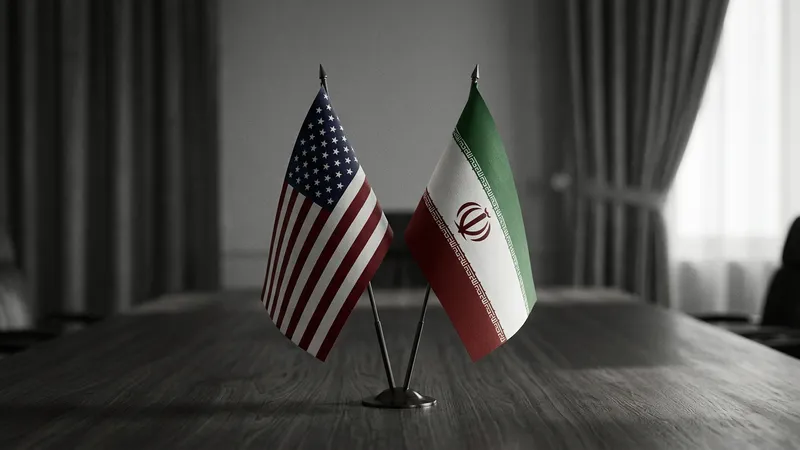
U.S.-Iran talks are set to continue despite airstrikes, vessel attacks near Hormuz and new doubts over a ceasefire signed last month.
A report citing a U.S. official said Washington still plans technical discussions with Tehran, even after both sides carried out military action this week. The same official described attacks on commercial shipping as terrorism and said President Donald Trump had been clear about the U.S. position.
The diplomacy is now running on two tracks: public threats from Trump and lower-level efforts to keep a channel open. That split matters because the conflict sits beside the Strait of Hormuz, a critical energy route where even limited attacks can alter shipping costs, risk premiums and oil trading.
Trump hardens ceasefire language
Trump said at a NATO summit in Ankara, Turkey, that the ceasefire with Iran was "over," according to the source report. He also told reporters, "I don’t want to deal with them [Iran] anymore," a comment that signaled frustration with the agreement’s durability.
On the return trip from the summit, Trump said Iran had contacted the U.S. seeking to halt the escalation. "They called a little while ago. They want to make a deal so badly. I just don’t know if they’re worthy of making a deal. I don’t know that they’re going to honor the deal. That’s the problem," he said.
The U.S. official framed the memorandum of understanding as performance-based rather than symbolic. In that account, Iran’s conduct amounted to "failed performance at an unacceptable level," while talks would still proceed because Washington had not closed the diplomatic route.
Hormuz attacks drive retaliation
The immediate trigger was the reported attack on three commercial vessels moving through the Strait of Hormuz. U.S. forces then launched new offensive strikes against Iranian targets, described in the source report as retaliation for the shipping incidents.
The U.S. Treasury Department also withdrew a waiver that had allowed Iran to sell oil, tightening the economic pressure alongside military action. That step links the ceasefire dispute directly to energy markets, where sanctions can restrict supply channels even when physical flows are not fully interrupted.
Iranian officials have accused the U.S. of breaching the memorandum of understanding. Their complaints include alleged violations of what they called "Iranian adjustments" in the Strait of Hormuz, continuing threats of more strikes and the return of oil sanctions.
The competing claims show why the accord is under pressure. Washington is treating shipping attacks as proof of noncompliance, while Tehran is pointing to U.S. military threats and sanctions as evidence that the deal has already been weakened from the American side.
Oil prices absorb war risk
Oil markets did not show a sharp panic move in the trading cited by the source report. Brent crude futures for September delivery eased to $76.30 a barrel in Friday Asia trading, while U.S. West Texas Intermediate crude was quoted at $71.87.
That price action suggests traders were balancing the risk of a wider conflict against the fact that negotiations had not been abandoned. The narrow market reaction also leaves room for a faster repricing if attacks spread, insurance costs rise or sanctions enforcement removes more Iranian barrels from accessible markets.
For the global economy, the mechanism is straightforward. If Hormuz traffic faces repeated disruption, energy importers could confront higher crude costs, transport delays and renewed inflation pressure; if the channel stays open and talks continue, the macro effect would likely be contained through lower risk premiums.
For the Trump administration, the central test is whether pressure and dialogue can operate together without collapsing the framework entirely. If technical talks produce verifiable limits on attacks and enforcement steps, Washington can claim coercion preserved leverage; if strikes continue, the U.S. may face pressure to escalate further or admit the ceasefire no longer functions.
For the wider energy and shipping sectors, the open questions are practical rather than rhetorical. Insurers, tanker operators and refiners will track vessel security in Hormuz, the scope of U.S. oil restrictions and whether any renewed talks create procedures both sides can measure and enforce.