Opinion reignites Israeli debate over hosting permanent US military bases
A recent Israeli opinion column urging Jerusalem to reject permanent US military bases spotlights a recurring sovereignty debate rather than any announced…
Omar Farouk ·
# Opinion reignites Israeli debate over hosting permanent US military bases
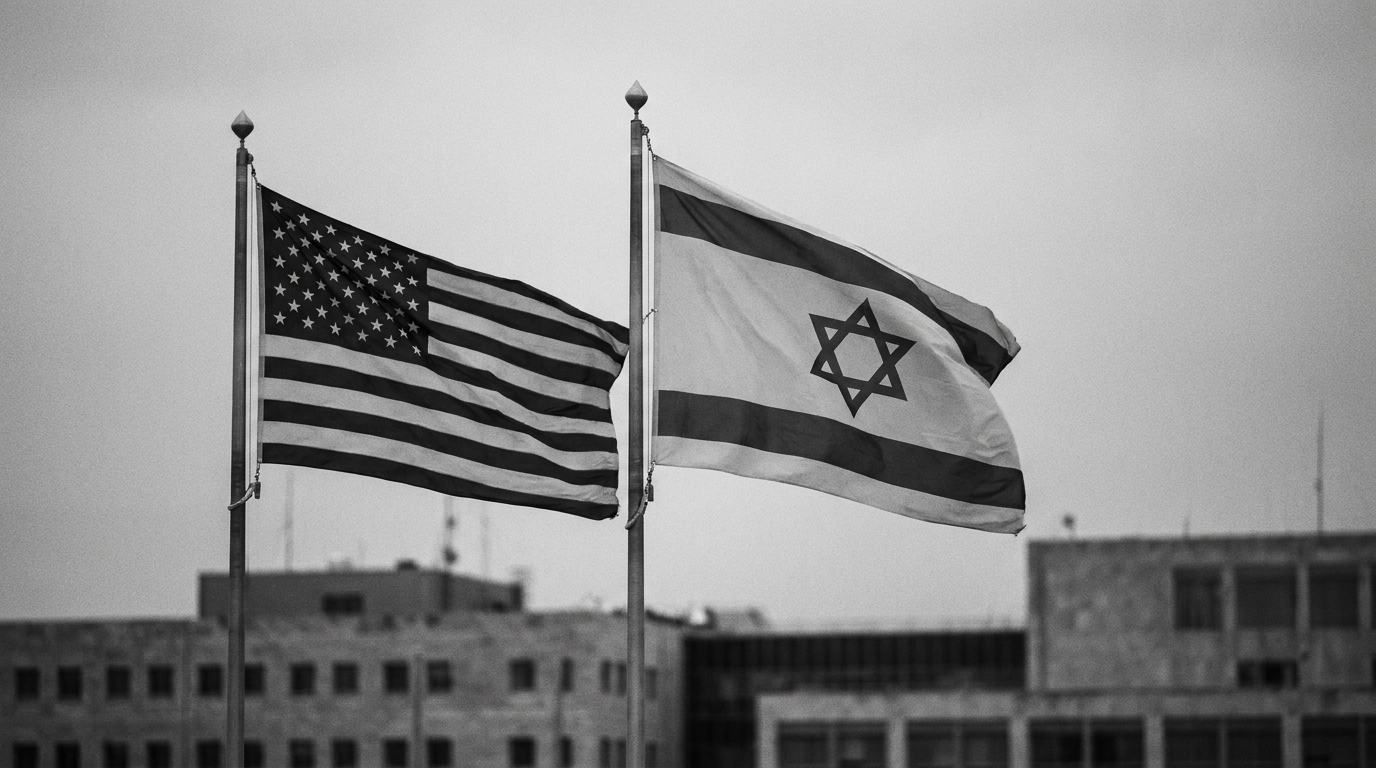
An Israeli opinion column calling on the government to reject permanent US military bases on Israeli soil has revived a familiar internal argument about sovereignty, deterrence, and dependence in the US-Israel security relationship. The piece does not cite any new US or Israeli decision; it reflects a hawkish strain of Israeli thinking that treats permanent foreign basing as a strategic and political red line.
Israel’s security partnership with the United States is
Israel’s security partnership with the United States is deep but deliberately structured. Washington provides military assistance, advanced systems, and political backing in key forums, while Israel has historically avoided arrangements that look like foreign troops permanently stationed under another flag. That distinction is often framed inside Israel as part of the state’s founding doctrine: maintaining freedom of action and avoiding constraints that could come with formal basing agreements.
The debate also sits inside a wider regional map where US forces already operate at scale. The United States maintains a long-standing footprint across the Gulf and the wider Middle East through facilities and rotational deployments with partners, including members of the Gulf Cooperation Council (GCC), a political and economic bloc that includes Saudi Arabia, the United Arab Emirates, Qatar, Kuwait, Bahrain, and Oman. Israel, by contrast, has tended to rely on its own military capacity while coordinating closely with US Central Command (CENTCOM) and other US entities on planning, air defense, and intelligence.
For Israel, the question is not only operational but constitutional and political: permanent basing can be read as a signal of reduced strategic autonomy, even if it comes with added deterrence. In a region where armed actors such as Iran’s Islamic Revolutionary Guard Corps (IRGC) and allied groups are central to threat perceptions, some Israeli strategists argue that visible US forces could strengthen deterrence; others argue the opposite, warning it could turn Israel into a clearer target in a US-Iran confrontation.
An Israeli
Globally, the basing question intersects with markets and logistics because Middle East crises often travel through energy prices and shipping routes. Any perception of escalating US military entanglement can increase risk premia tied to the Strait of Hormuz, a critical chokepoint for Gulf exports, and the Bab al-Mandab, which connects the Red Sea to the Gulf of Aden and is central to Asia–Europe trade flows. Even without a basing decision, public arguments about US force posture can shape how regional actors interpret US commitments and red lines.
Because the column is opinion and does not point to a pending policy move, the near-term observable is political rather than military: whether senior Israeli officials publicly endorse or reject the concept of permanent US basing, and whether any formal talks are acknowledged by either government. A falsifiable checkpoint would be any official statement, parliamentary discussion, or defense ministry clarification that addresses “permanent” US bases explicitly; absent that, the debate is likely to remain a recurring sovereignty argument rather than a policy shift.