

Nigeria seeks repeal of 269 obsolete federal laws
The review aims to update the federal code after a 20-year gap, with 663 enactments headed for legislative scrutiny.
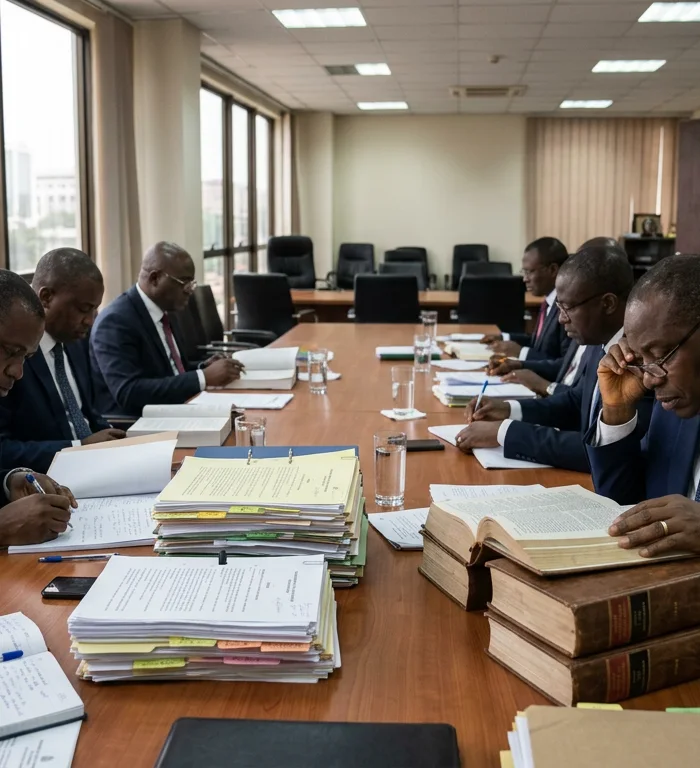
Nigeria’s Attorney-General Lateef Fagbemi said on Thursday that a federal law-review committee identified 269 federal laws for repeal and 663 others for National Assembly scrutiny, a Leadership news report said on Nov. 13.
The exercise matters for courts, public agencies and investors because Nigeria’s official federal code has not had a formal review since 2004, a gap of more than 20 years.
Fagbemi spoke in Abuja while receiving the reviewed Laws of the Federation of Nigeria covering 2004 to 2025 from Olawale Fapounda, SAN, chairman of the committee.
“I am informed that the Committee examined 932 Federal enactments and 731 subsidiary legislations. Of the 932 enactments considered, 663, together with their relevant subsidiary legislation, have been identified for inclusion in the LFN 2025,” Fagbemi said.
The committee described 269 laws as obsolete, archaic and spent. Those measures are expected to be removed from the federal statute book, while the 663 others would go to the National Assembly for review and possible passage as updated laws.
Fagbemi said the Laws of the Federation should provide a dependable reference point for courts, lawyers, public bodies, investors and citizens. He said new statutes and amendments had built up since the last official review, creating the need for a more coherent and accessible body of federal law.
“Ultimately, our objective is to build a modern, coherent and accessible legal framework that promotes the rule of law, strengthens the administration of justice, supports effective governance, protects the rights of citizens and contributes to national development and security,” he said.
Fapounda said the committee spent more than two years reviewing, harmonising and consolidating federal legislation. He identified areas still requiring lawmakers’ attention, including outdated statutory language, difficult cross-references, old chapter numbers and sequencing inconsistencies in some Acts.
Fagbemi said the committee worked through 14 thematic working groups, with retreats and technical engagements used to reconcile the groups’ work and benchmark international practices. He credited support from the ROLAC Programme, the Law Commission of England and Wales, LexisNexis South Africa, the Lagos State Law Reform Commission and Law Pavilion.
The review does not by itself change Nigerian law. Fagbemi said the next step is to present the report to President Bola Tinubu for onward transmission to the National Assembly for legislative consideration and action.
Source: news report, Leadership via AllAfrica, Nov. 13, 2026
More stories
- North Korea changes flag as Kim reshapes national symbols
- Nvidia names Kress interim CEO after Huang exits in scandal
- Lutnick faces White House review over Nvidia AI exports
- Nelson Mandela Bay firms face 76% power tariff premium
- Kallas warns Russia seeks to redirect Ukraine talks
- Europe to join next Ukraine talks, Kushner says
- Melaka vote puts living costs before 687,697 voters
- Syria rejects Yemen role after 600-troop Saudi border report
- Pangilinan questions Davao assessor on 379 sqm SALN lot
Latest news
- FAA halts US departures after communications disruption
- Europe faces unity test as Trump revives Ukraine diplomacy
- Democrats push AI regulation as two state veterans arrive
- Lutnick faces AI chip scrutiny as Bessent faults Commerce
- AI investment boom binds global suppliers to US spending
- Senate Democrats face leadership fight after midterm gains
- Trump extends Jones Act waiver for another 90 days: official
- Russia reports 1% growth as refinery output declines 18%